
Angles of Trajectory
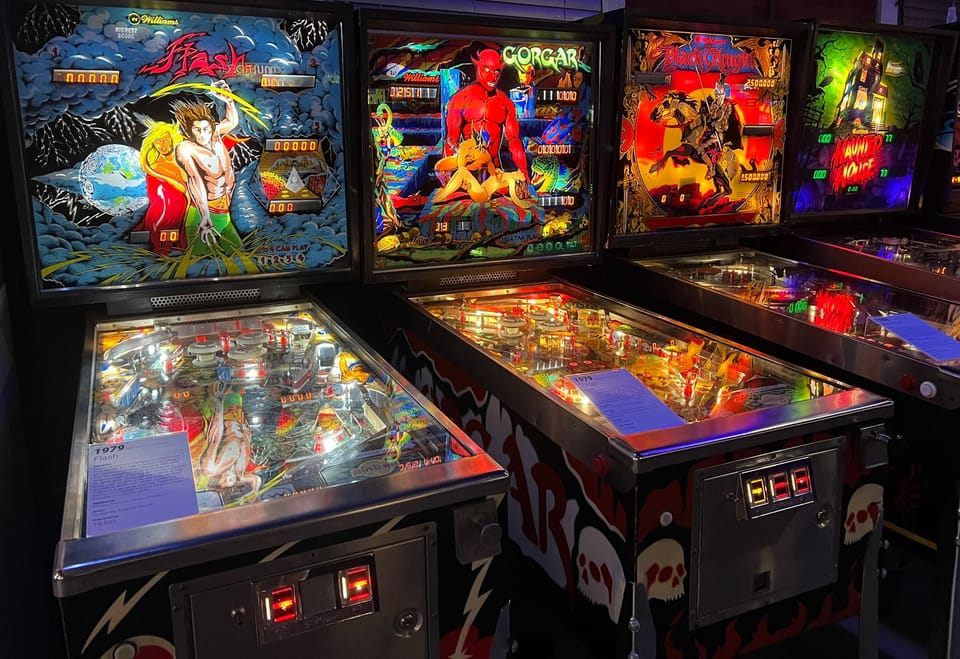
I didn’t expect the sore back. Or in the morning, a wrist so tender that holding a full coffee mug presented a challenge. I’m used to walking miles, climbing stairs, hefting heavy loads without a great deal of complaint from my muscles and joints.
But an hour–72 minutes, to be precise–of game after game of good old-fashioned pinball, on machines ranging in age from 1976 to 1998 had me hurting. Not in the moment, not in the adrenaline-fueled rush of snapping back the plunger, leaning and bobbing while flipping, putting a bit of English on my plays. Not until six hours later.
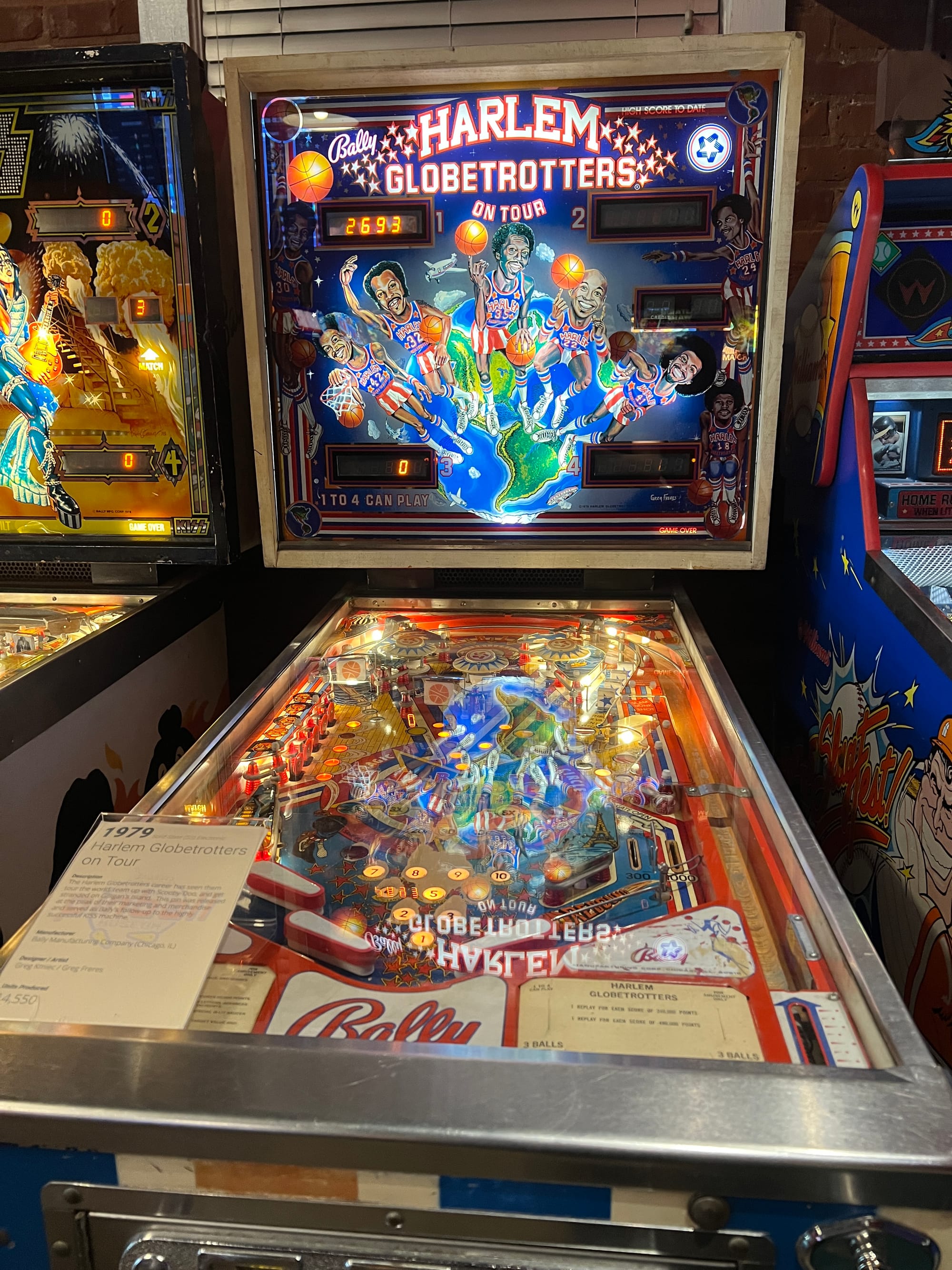
It’s been a solid thirty years since I had a pinball machine at my daily disposal, conveniently stationed adjoining the washer and dryer in the basement. Like most skills, it wires itself into your very bones.
How the balls have their own sense of gravity. How to deftly catch one at the tip of a flipper and hold it to set up a shot, or use one flipper to pass it to the other. How to aim for maximum benefit. How hard to recoil and twist the plunger to send that precious ball flying. How to shimmy the machine the tiniest bit to encourage bumpers to toss the ball around, but not too much to generate a game-over tilt.
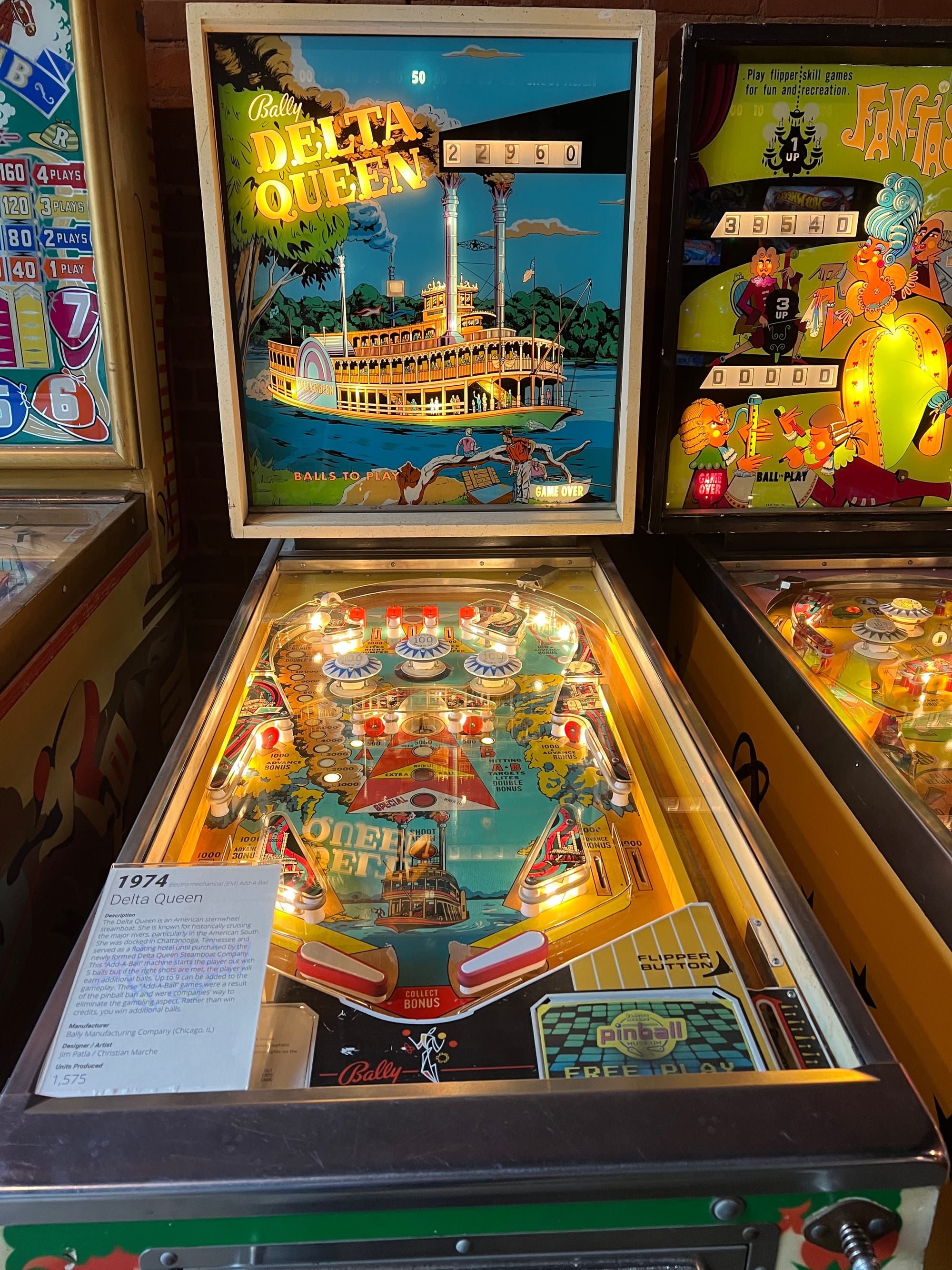
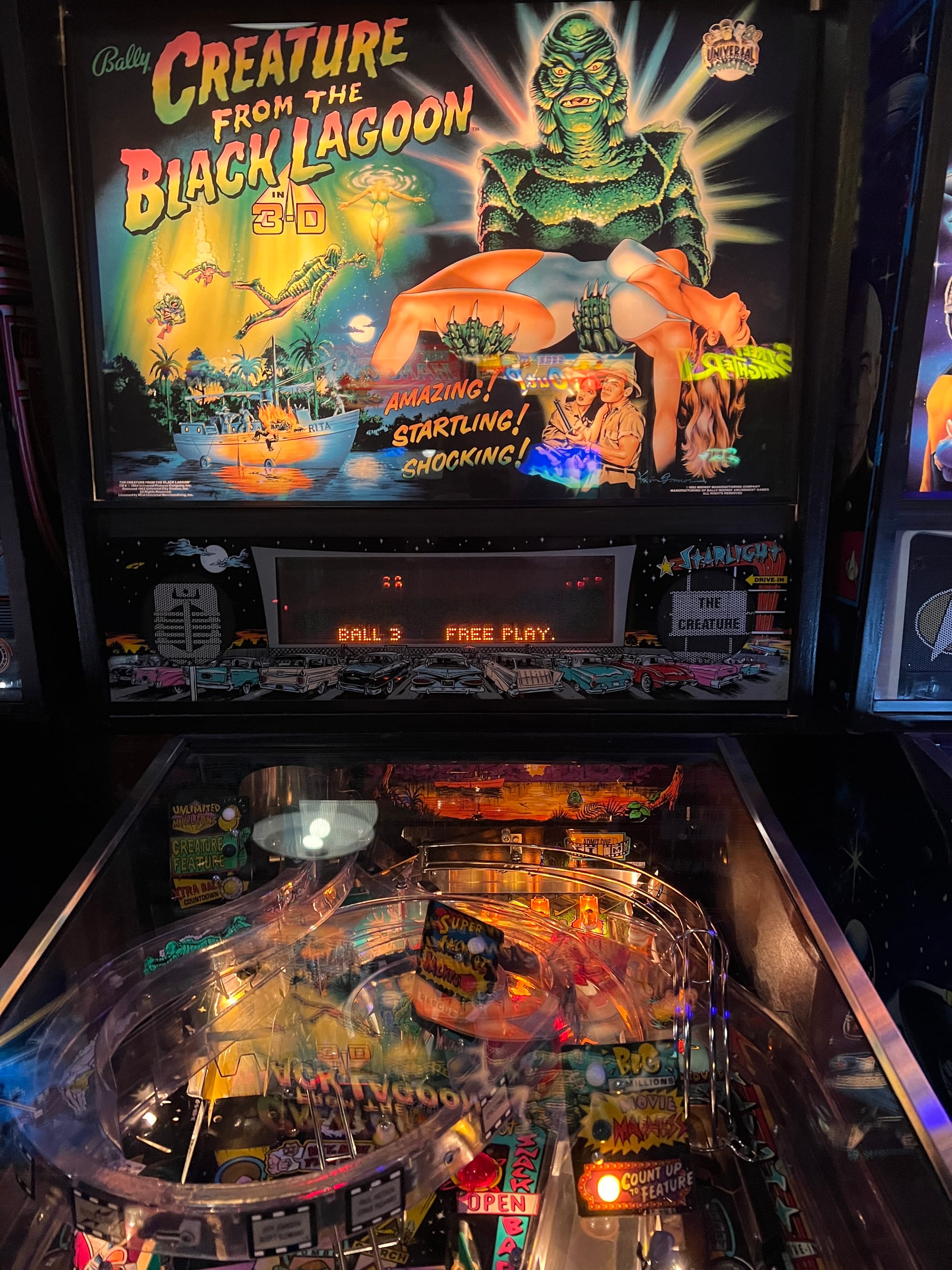
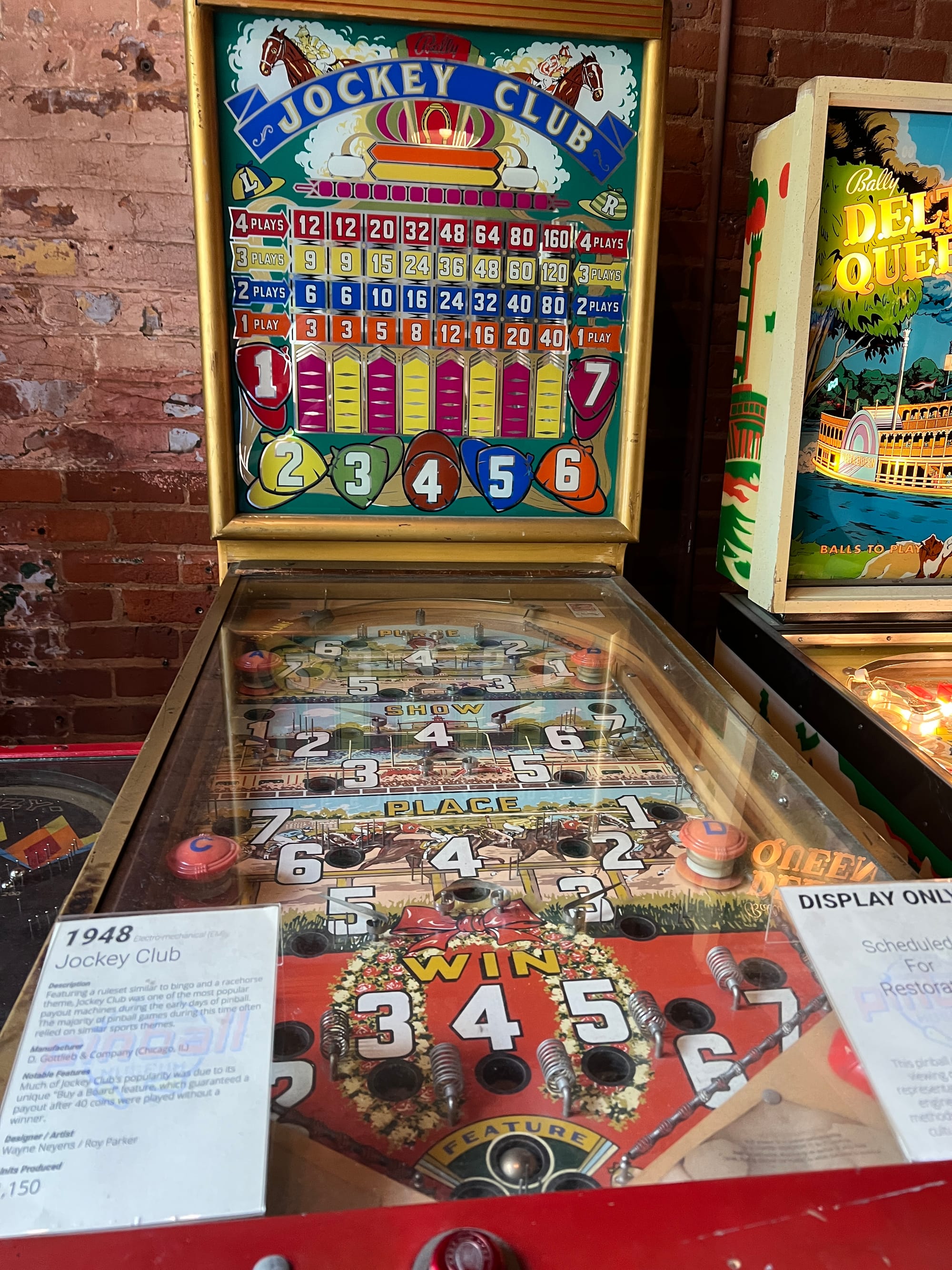
Pinball requires concentration. Constant calculation of angles of approach and subsequent trajectory. How hard should I smack that ball? From where on the flipper? It’s pure mathematics in motion, of the type inherent in a well-thought-out game of pool but at a breakneck pace. Which is why it’s no surprise that pinball’s roots date to Bagatelle, a French miniature billiards game.
Based on that game, British inventor Montague Redgrave filed a U.S. patent in 1871 for a variant with a sloped tabletop, a plunger, and balls appropriately sized for the field of play.
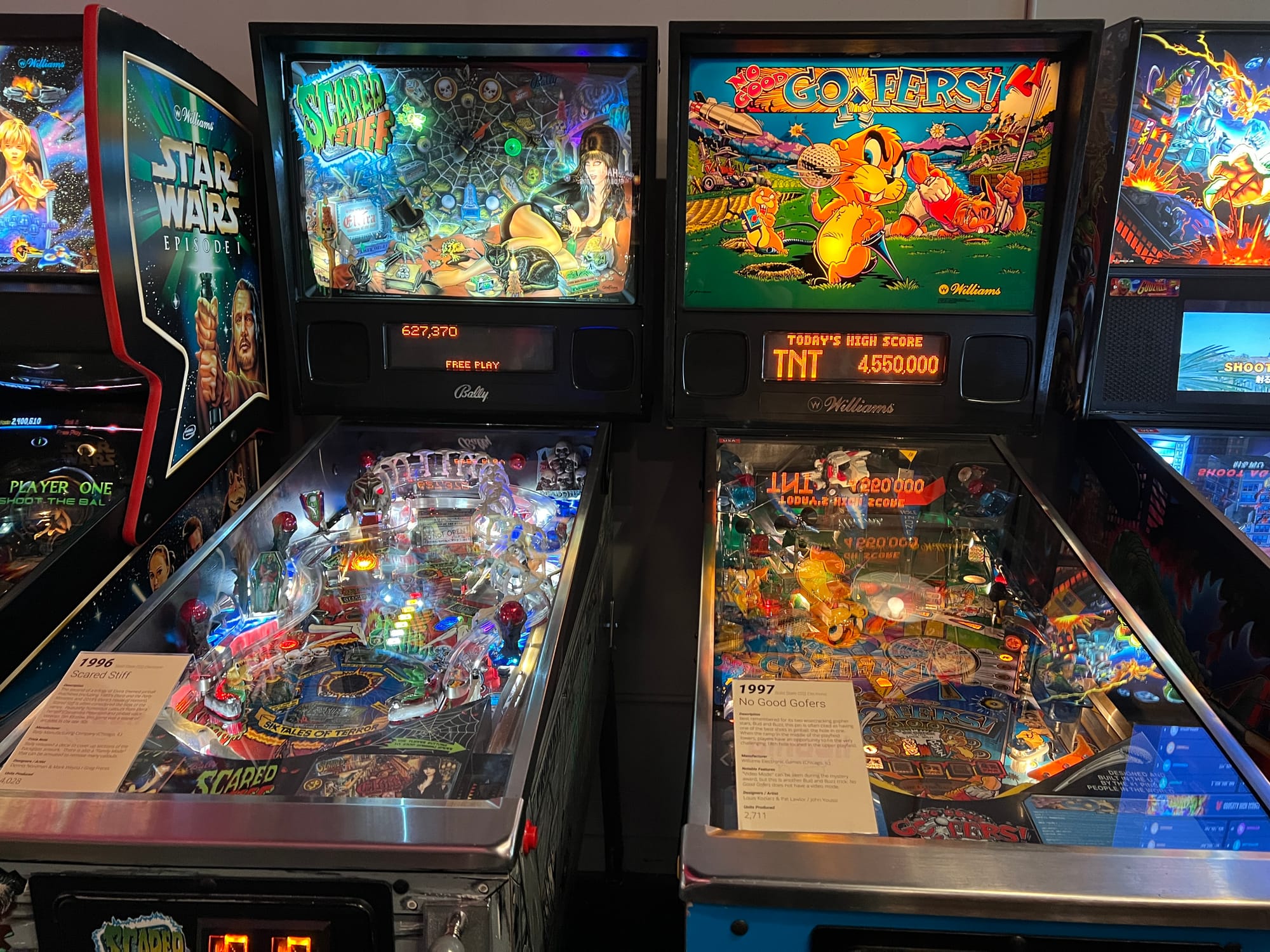
In my day, pinball parlors were a thing: a minor collection of a half dozen to a dozen machines against two walls across from each other. They’d usually be at a bowling alley or pizza parlor or tucked into its own room at a resort. Those expanded into modern-day arcades – based on the bones of the Penny Arcade of our great-great grandparents’ day – with stand-alone video game machines in the mix.
In its early days, the Contemporary Resort at Walt Disney World was the go-to place for its massive bottom-floor space which also had skee ball and air hockey along with its arcade machines and pinball.
Eventually, as Space Invaders and Pac Man were supplanted by floor-space hogs like Daytona USA and Dance Dance Revolution, pinball machines were edged out. Then arcades themselves. Unless you’re actually at an attraction or resort, why go somewhere to play games when you can do so at home with a game console or, eventually, on your tablet or phone?
So the Pinball Museum in downtown Chattanooga is a throwback. Yet, as I’ve learned, part of a rediscovery by younger generations: there’s an app for tracking down places to play pinball.
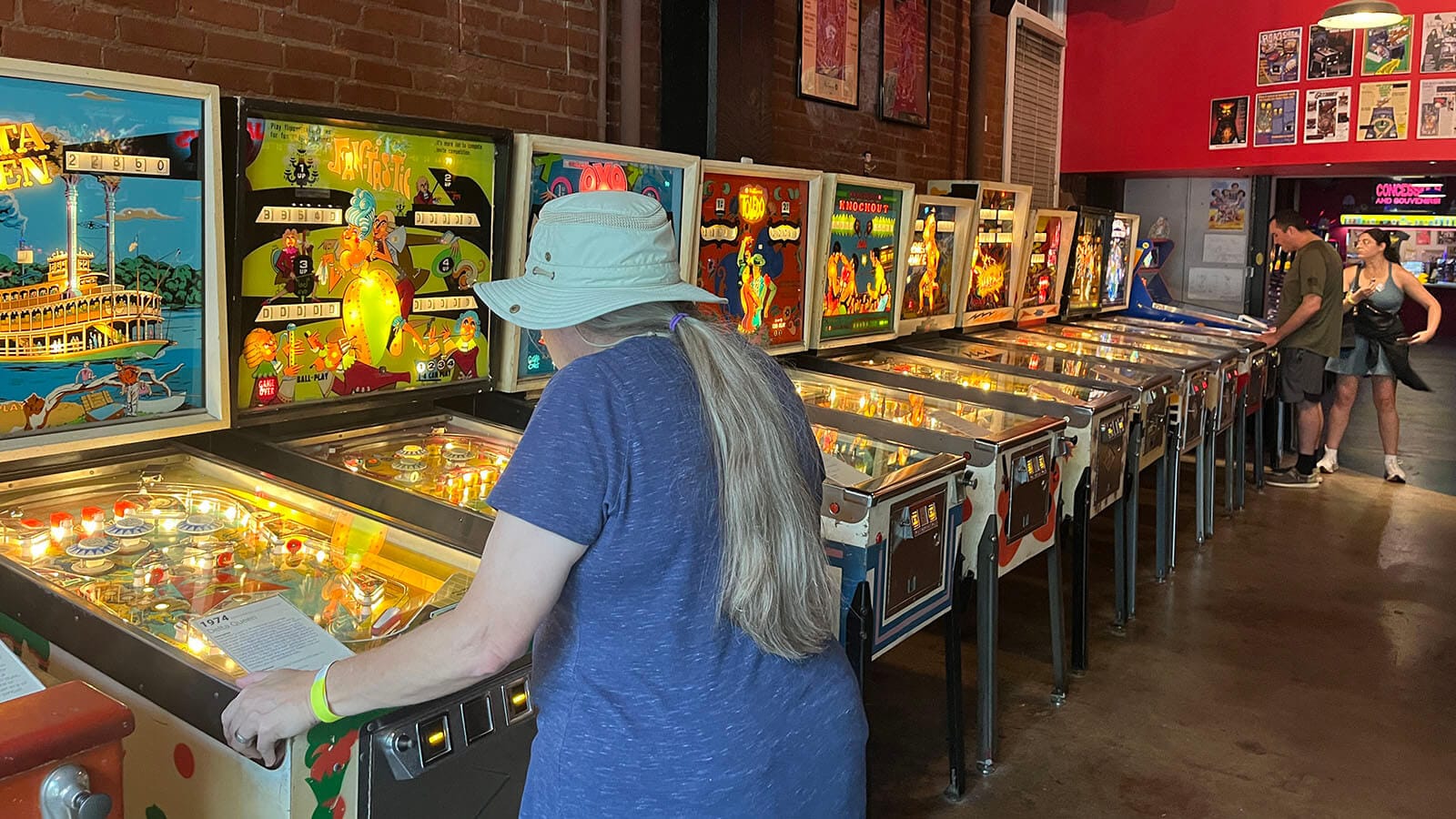
I was one of two women circulating among the rows of pinball machines on a weekday afternoon, but I’m not sure the other one was playing: she was tagging along with a male friend. I was “in the zone” when John arrived to sit and watch, entirely caught up in the game. It’s the nature of pinball to force focus on you. If you’re not entirely living in the moment, you can’t keep up with its pace. Which is why it’s wild that it was outlawed across much of the country as a game of chance.
However, the name of the first tabletop machine in 1931, a Gottlieb product, might have set the tone: Bingo. By 1942, New York City slapped a ban on pinball machines. It took until 1976 before they lifted it, thanks to “The Man Who Saved Pinball,” Roger Sharpe. He showed up at a New York City Council meeting with pinball machines to prove it was a game of skill: he would call his shots before he played them. Point made.
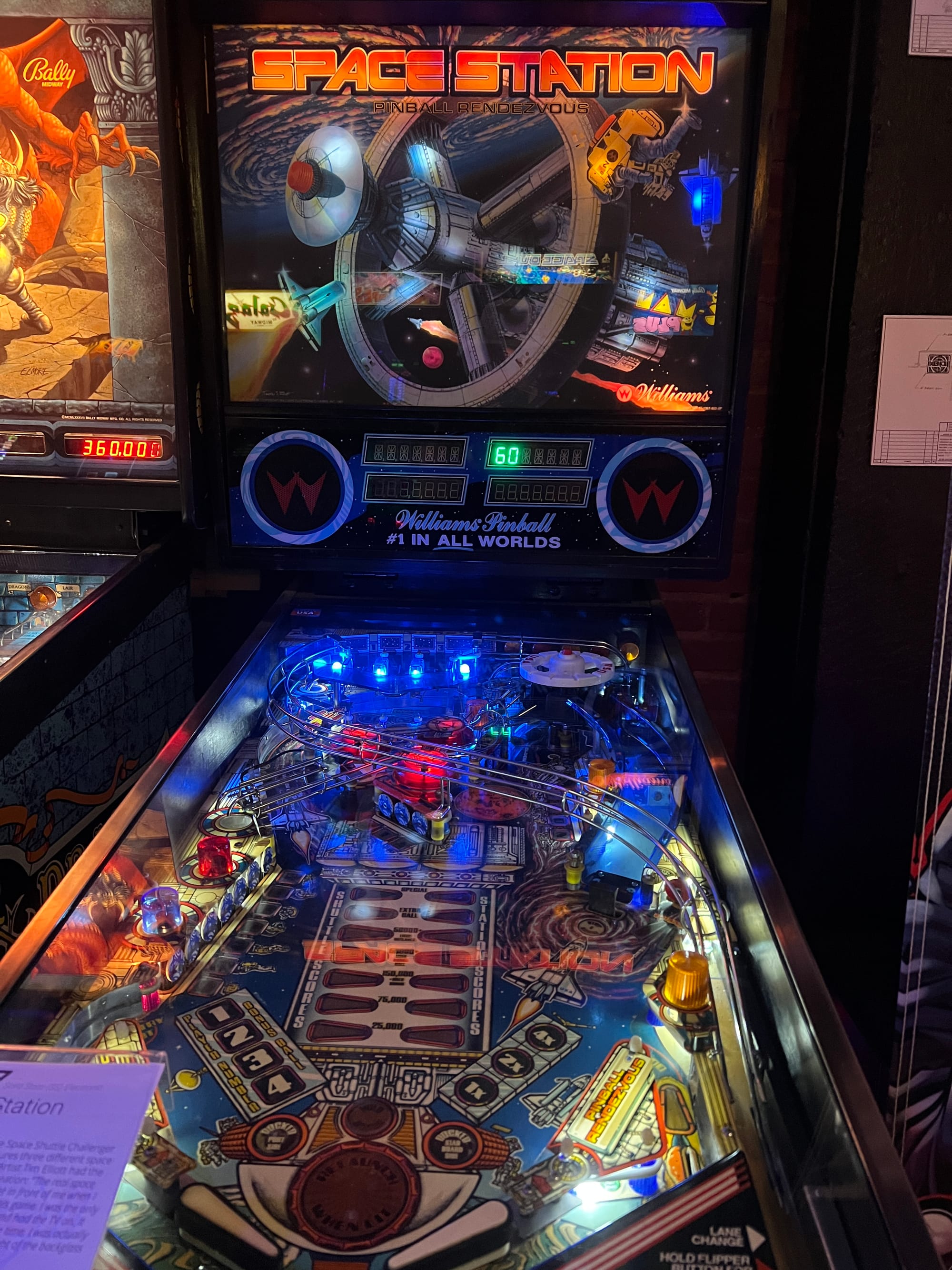
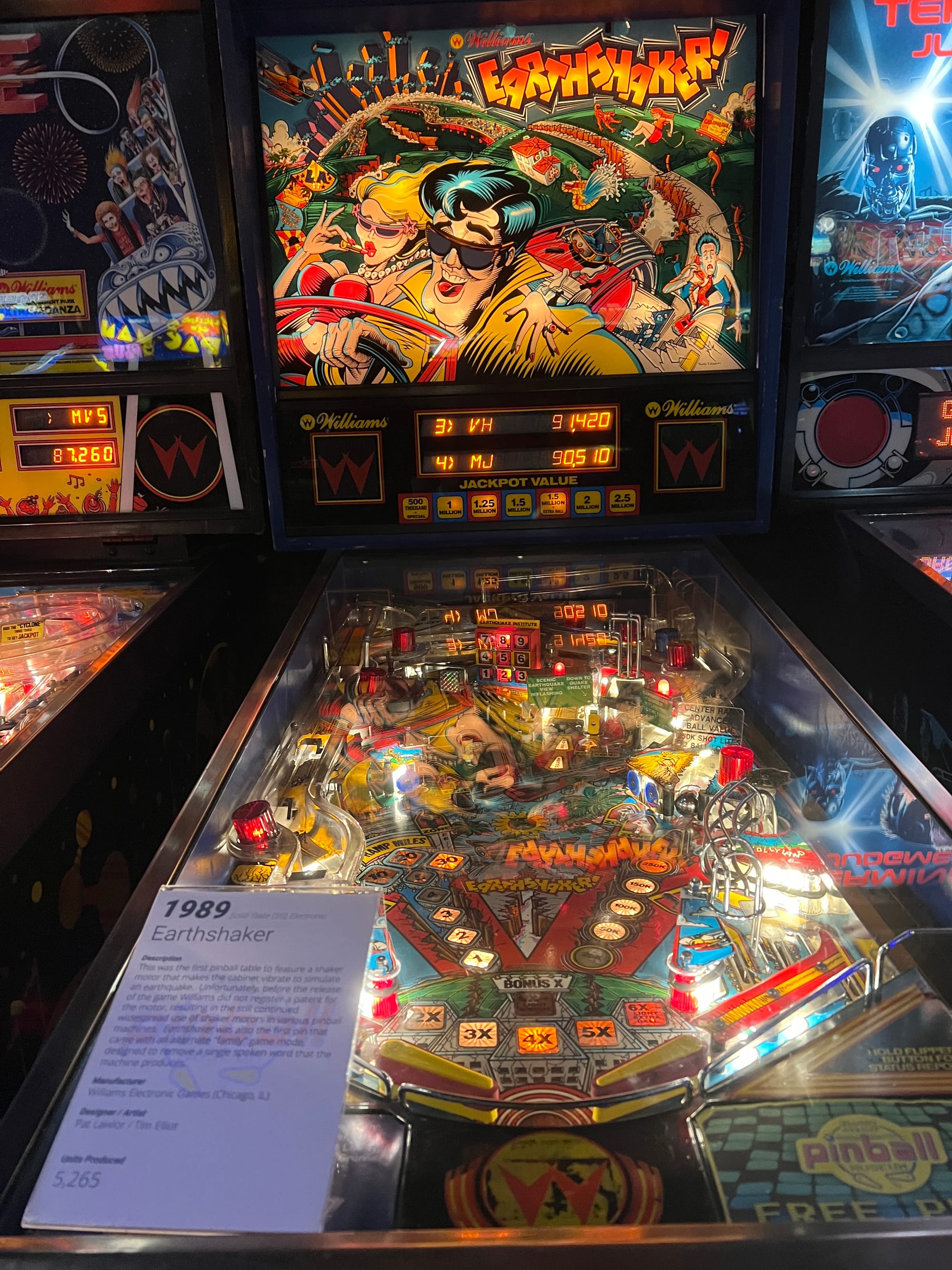
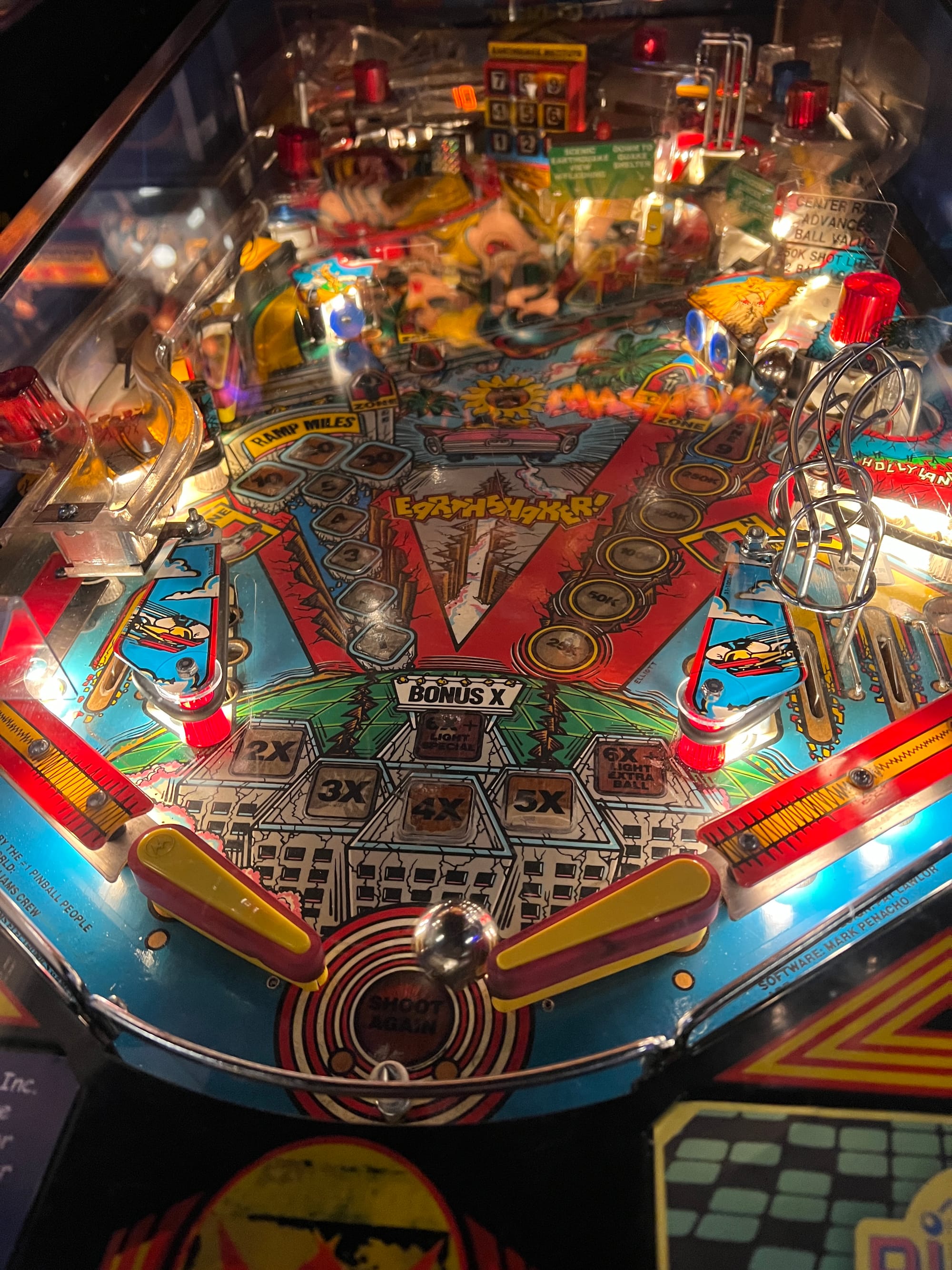
I enjoyed these two machines the most
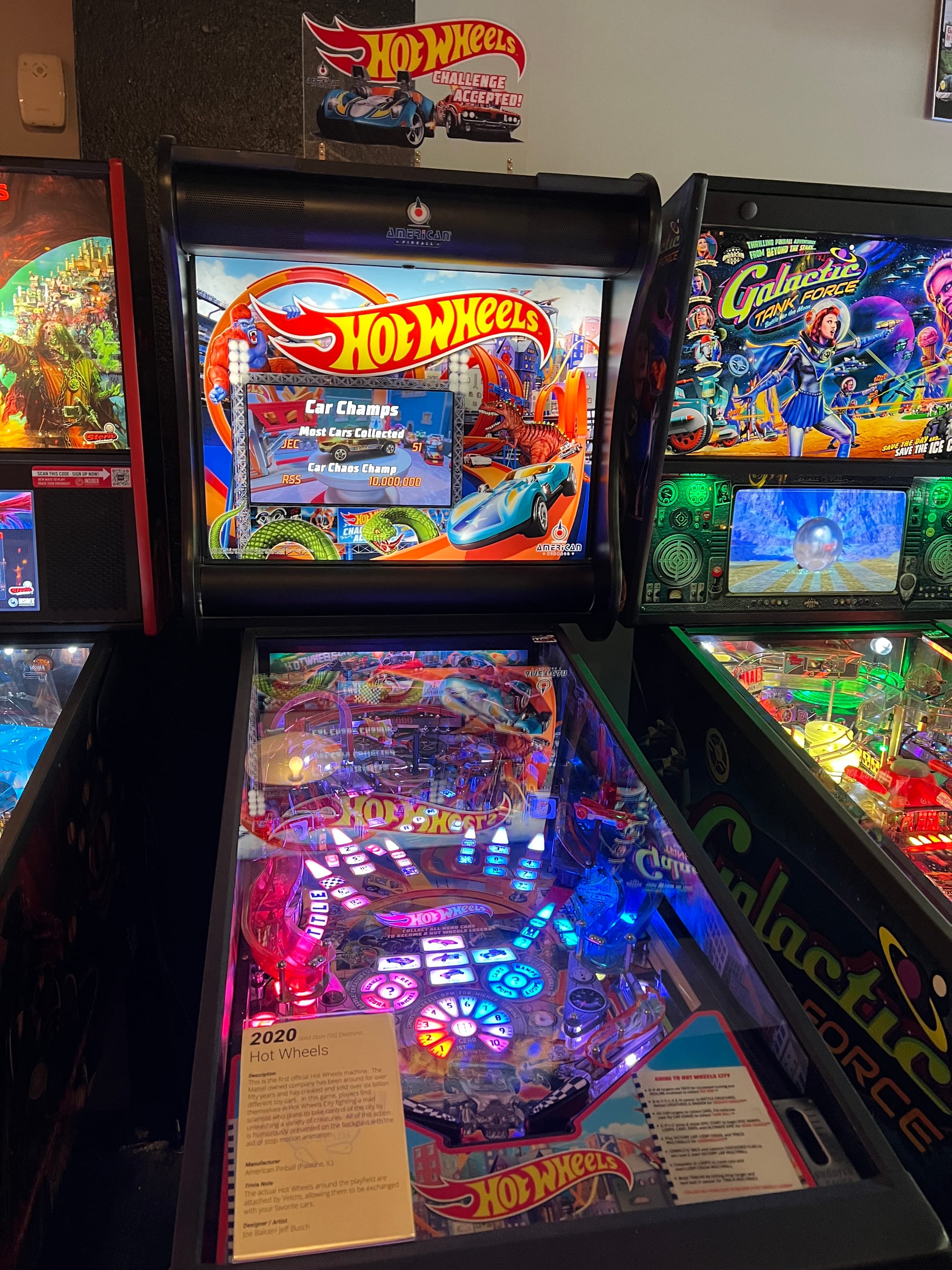
Machines in this museum range from 1940s through modern-day, a rotating collection of stunning pieces of art, all operational. You pay your flat fee for a day of play, with a wristband providing re-entry when you decide to leave. Not traveling alone, I distilled my re-acquaintance with the classics into 72 minutes of play after play after play.
I’d gravitated at first to the Bally from my basement, thinking I could re-master it quickly. Instead, too much of the past clung to it for me to clear my head. After working my way down one wall, switching machines frequently, I settled on a few that spoke to me: I understood their angles. One unexpected commonality: all Williams machines, all with dark corners to aim for to rack up high scores.
Scoring was not the point, however: relaxing was. And so I did, all else forgotten but the trajectory of the moment. The magic of pinball, encapsulated.
Visit the Classic Arcade Pinball Museum in Chattanooga to find your own zen through intense concentration.



Member discussion