
On the Hill
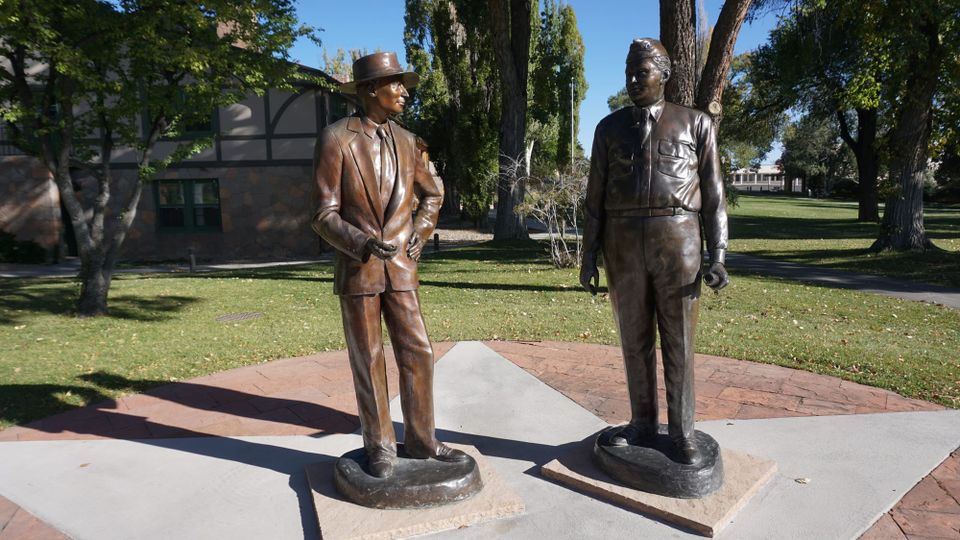
We're standing in line at the grocery store, marveling at an absent-minded professor flustered while paying the cashier, as if Fred MacMurray had stepped away from his Flubber concoction bubbling on the kitchen stove to pick up the milk, bread, and eggs he'd forgotten to buy along with the rest of the ingredients. The shoppers with carts are largely men. Solo. After the dinner hour. Nattily dressed. It's not until we leave the parking lot we realize why.
The lab is quiet for the day.
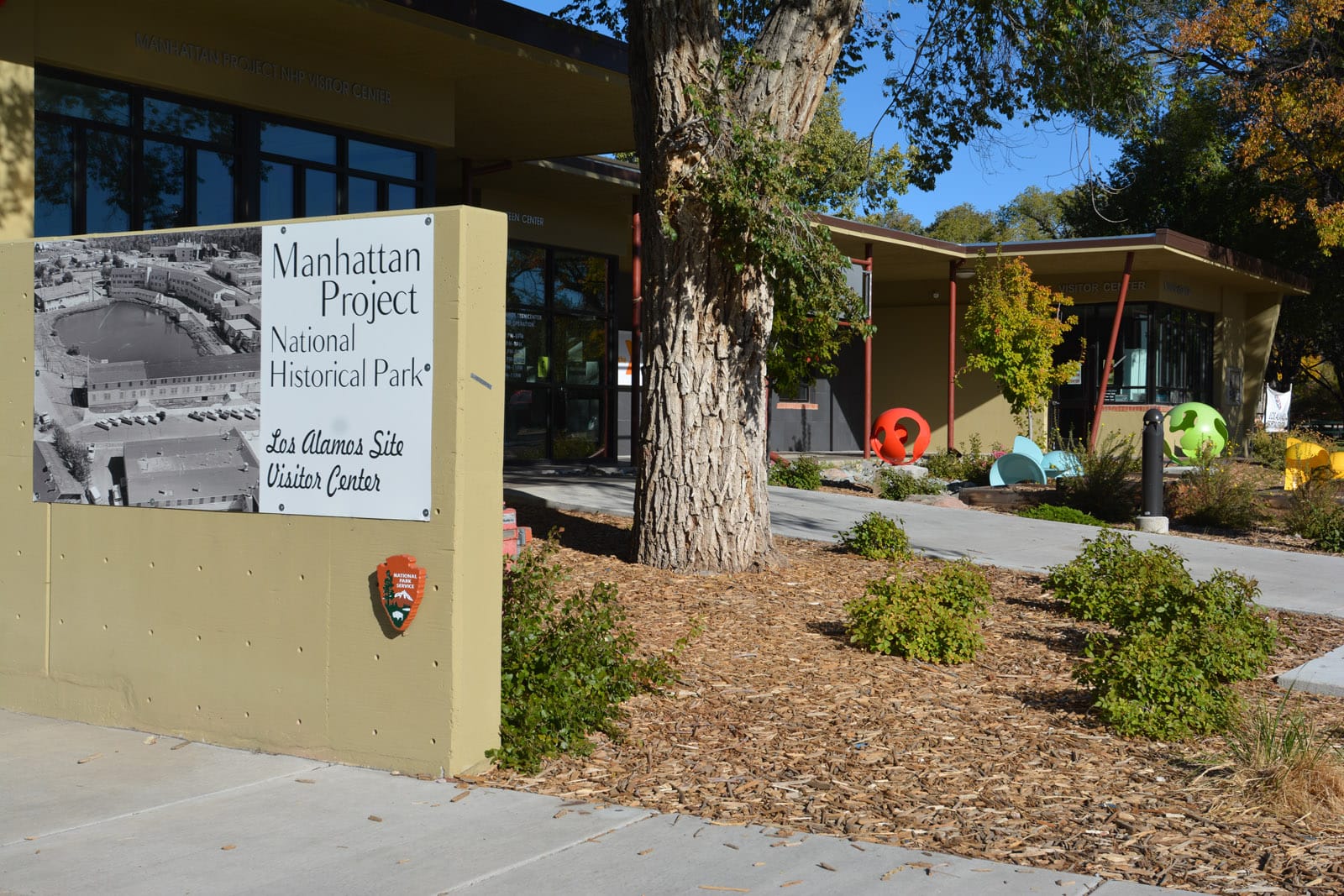
You can see it over there, across the bridge, spanning the canyon, but it's not like you can stroll right in. Surprisingly, they do offer tours. Mainly, the Manhattan District National Historic Site Visitor Center stands ready to point you to points of interest in Los Alamos, a decidedly offbeat travel destination.
On the Hill
We chose it, in part, over the crowds of the balloon festival in Albuquerque that day, but also because a friend had just visited Bandelier National Monument and his photos from it had us intrigued.
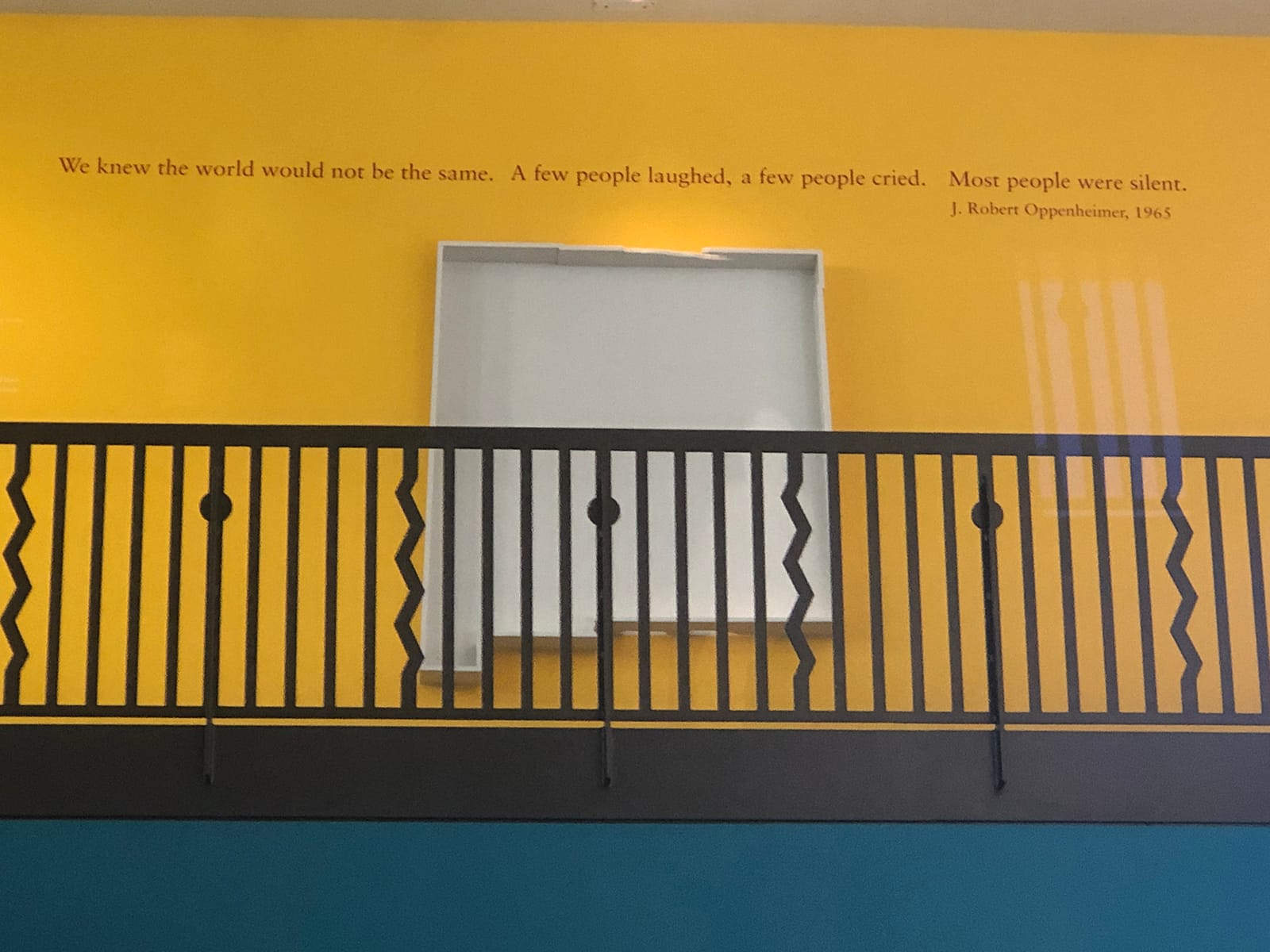
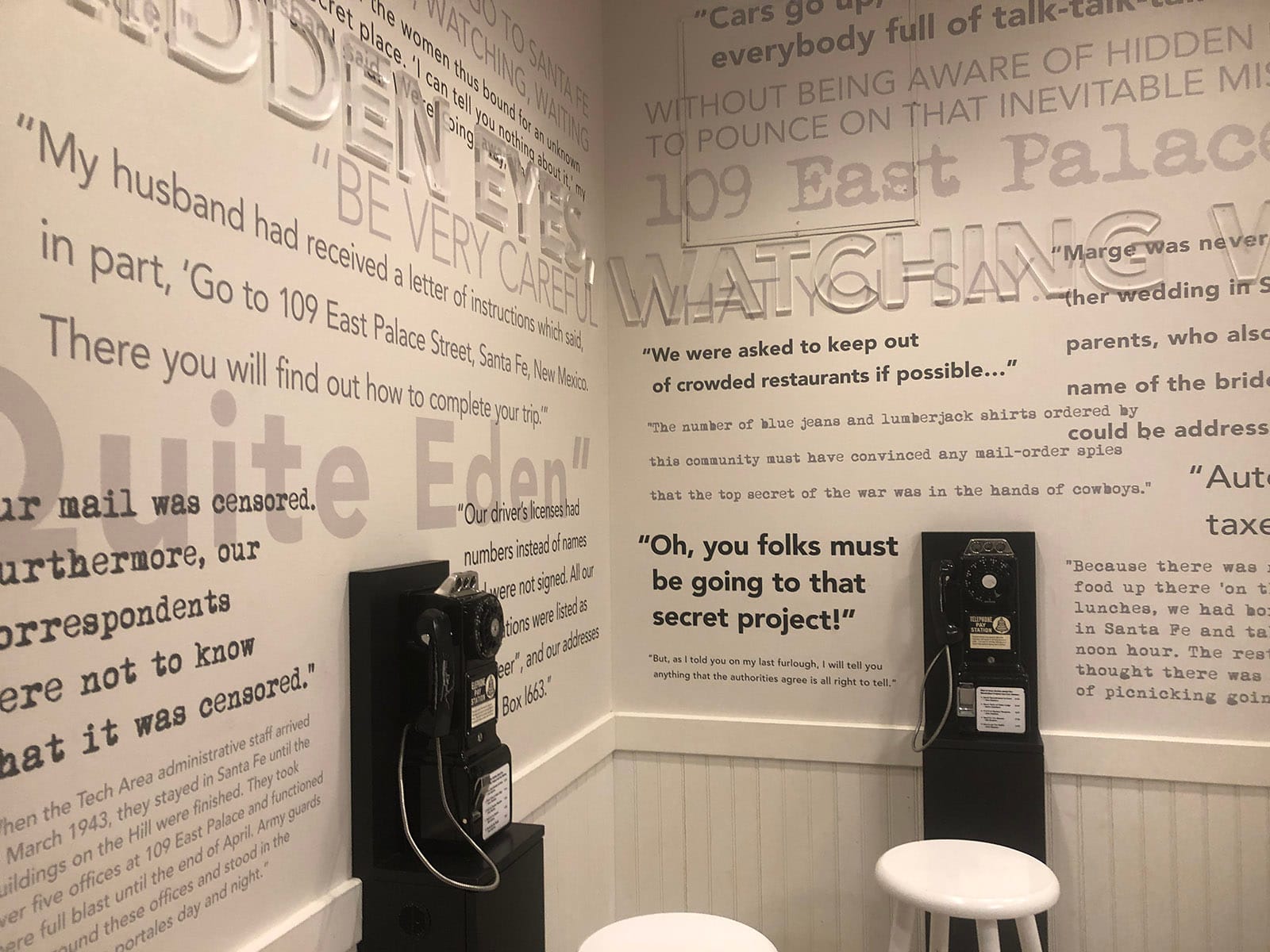
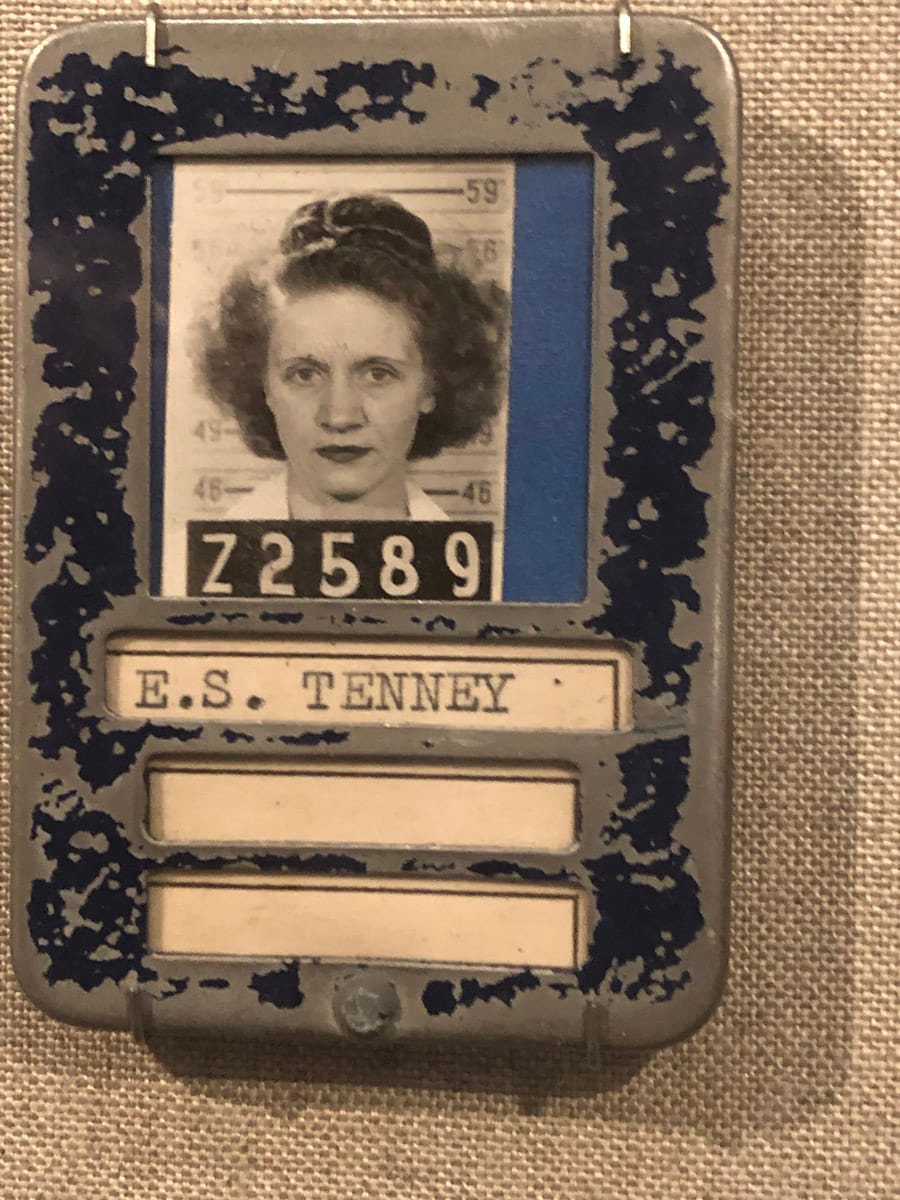
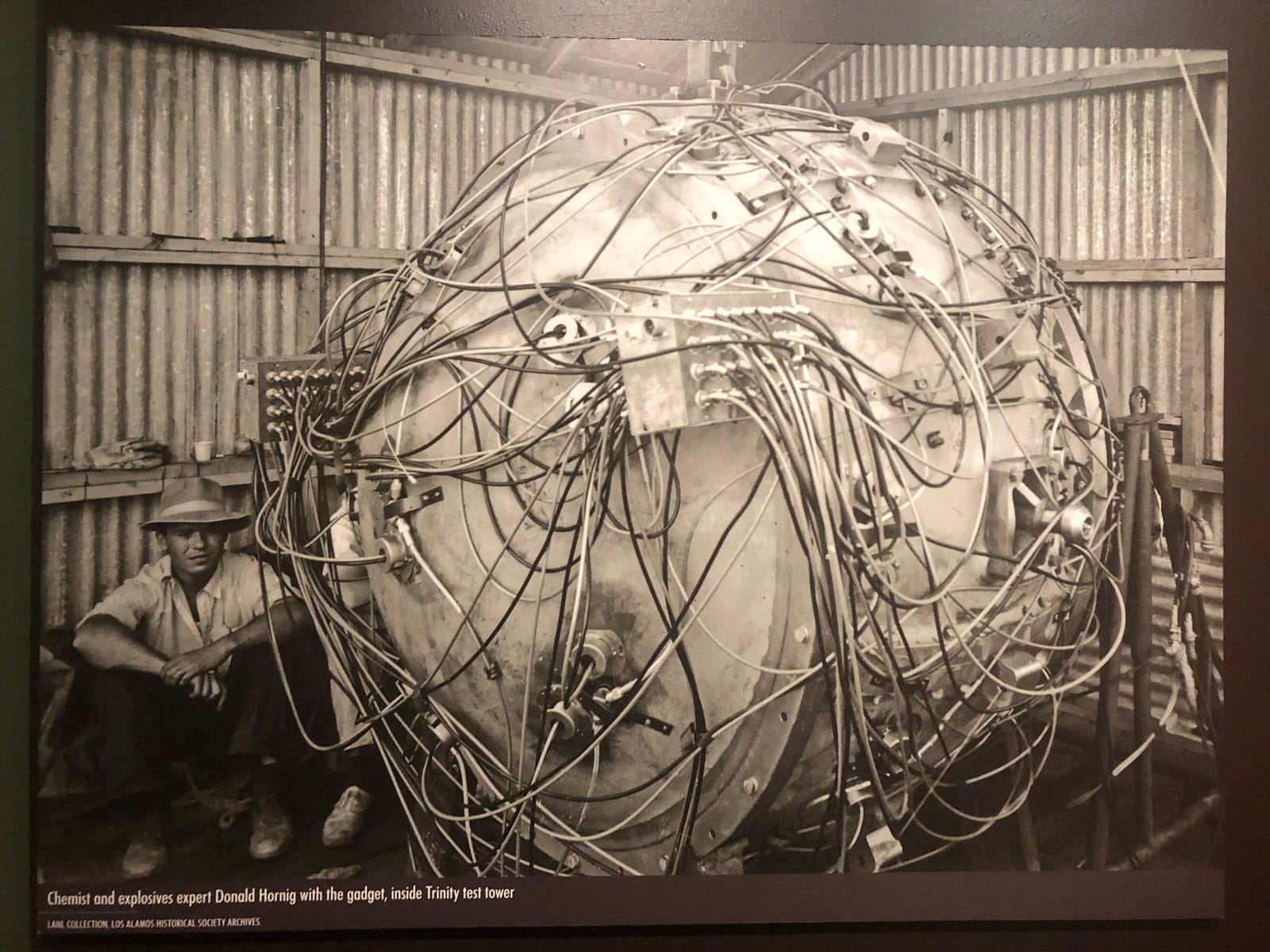
Beyond our own reading of history books, we'd had a reasonable explanation of what to expect thanks to a special exhibit underway during our visit to the New Mexico History Museum in Santa Fe. Unlike within the rest of the museum, where there was a gallery devoted to Los Alamos, that third floor immersion in the Cold War had warning signs not to take photos. Odd, I thought, in this day and age.
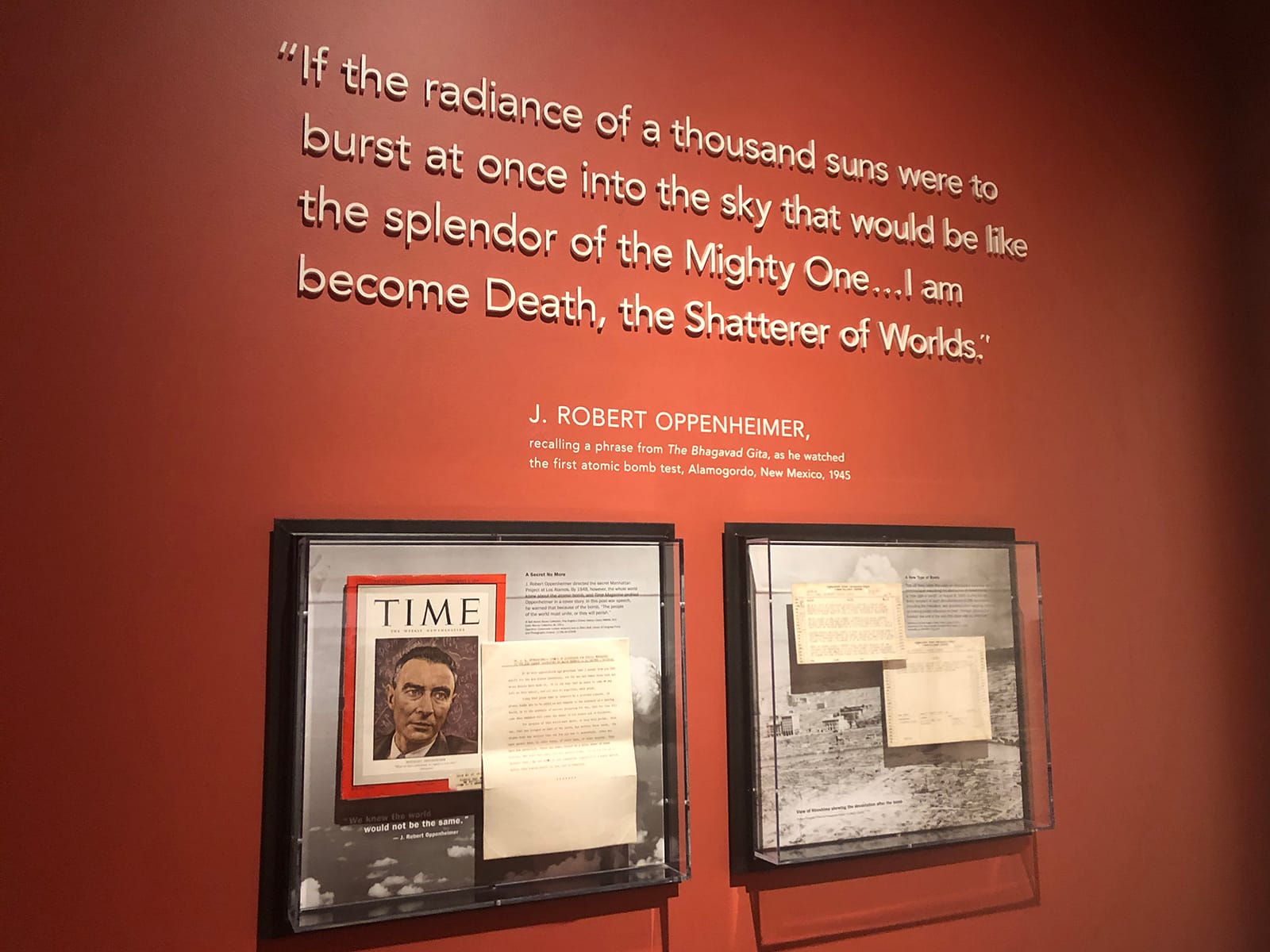
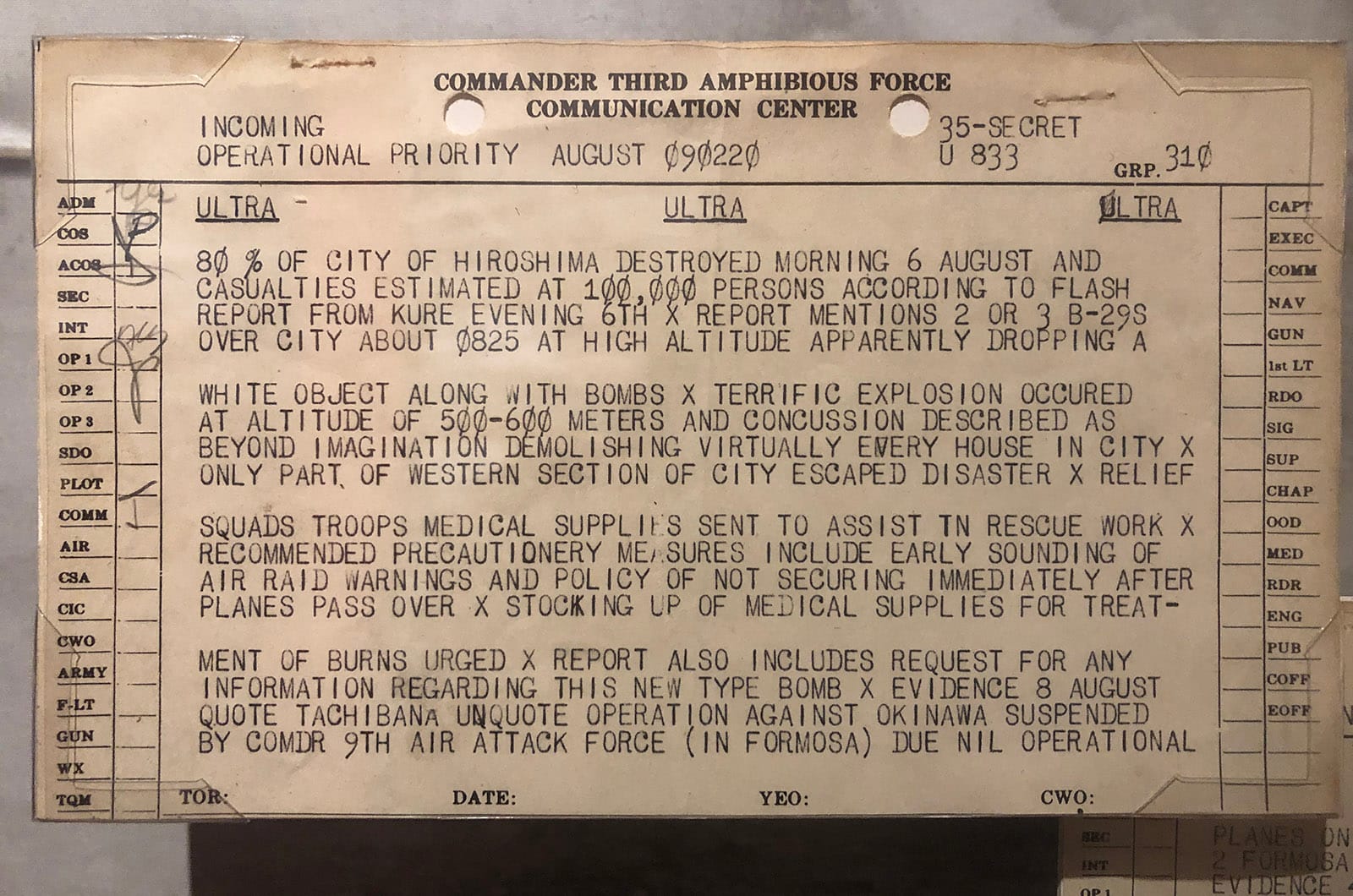
Until I noticed the unusual preponderance of visitors from Eastern Europe and, it seemed, Russia and China. Not just at the museum, but waiting for the bus to Bandelier, too. Discouraging non-campers from driving down the twisty, cliff-hanging road, the National Park Service urged use of their free shuttle that summer from White Rock Visitor Center to the Bandelier Visitor Center, passing miles of "Keep Out" fences posted by the Atomic Energy Commission.
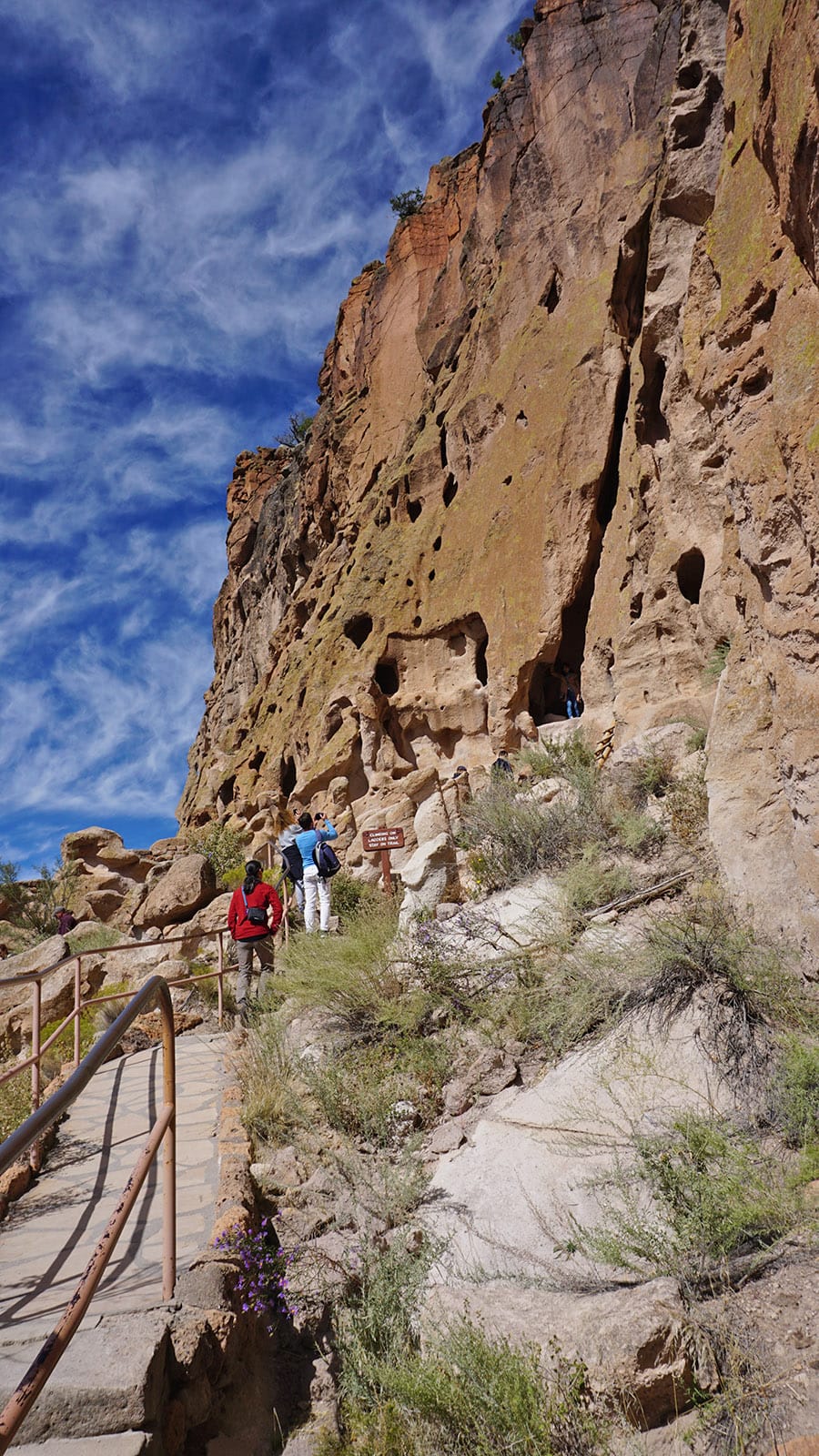
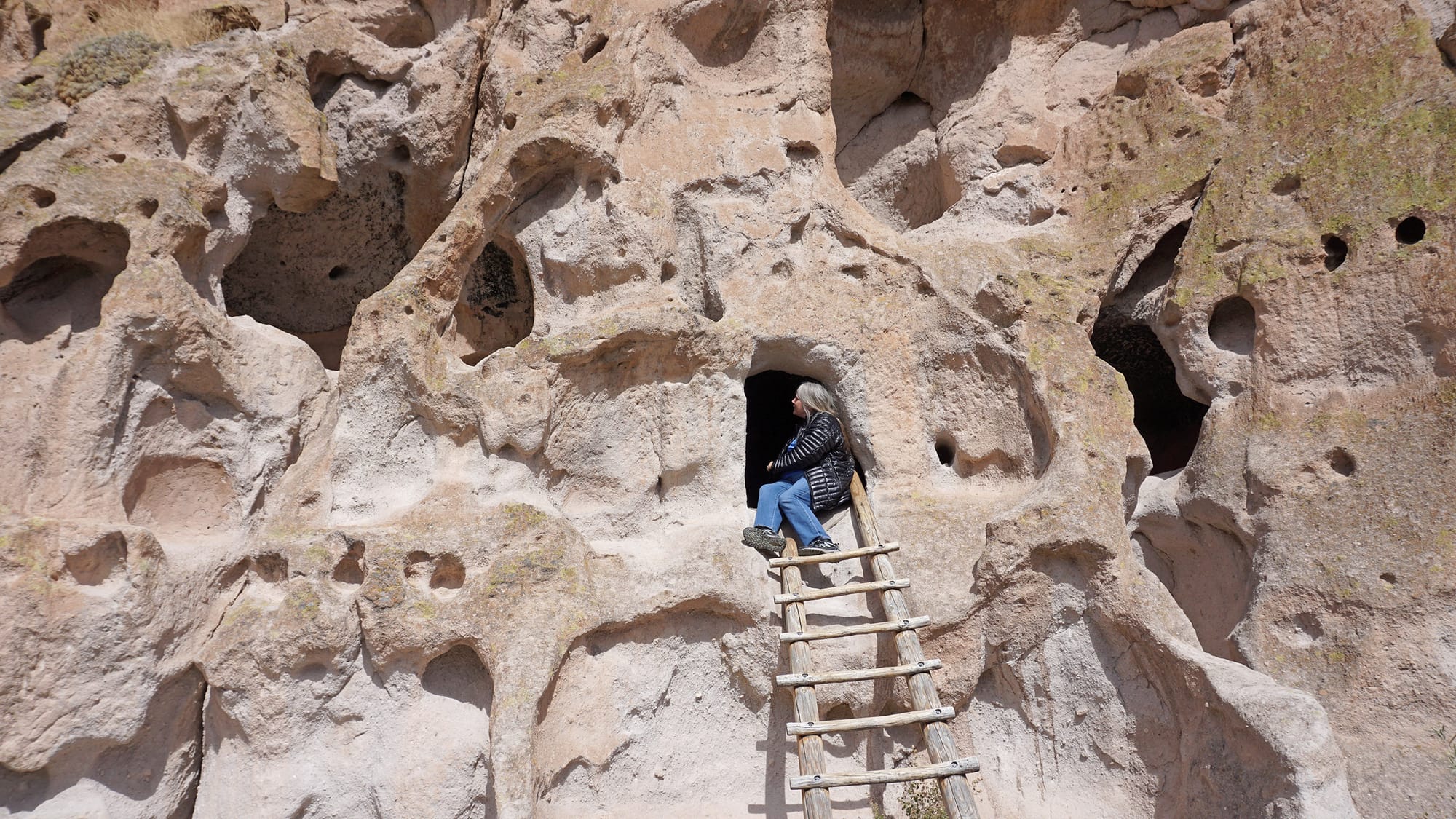
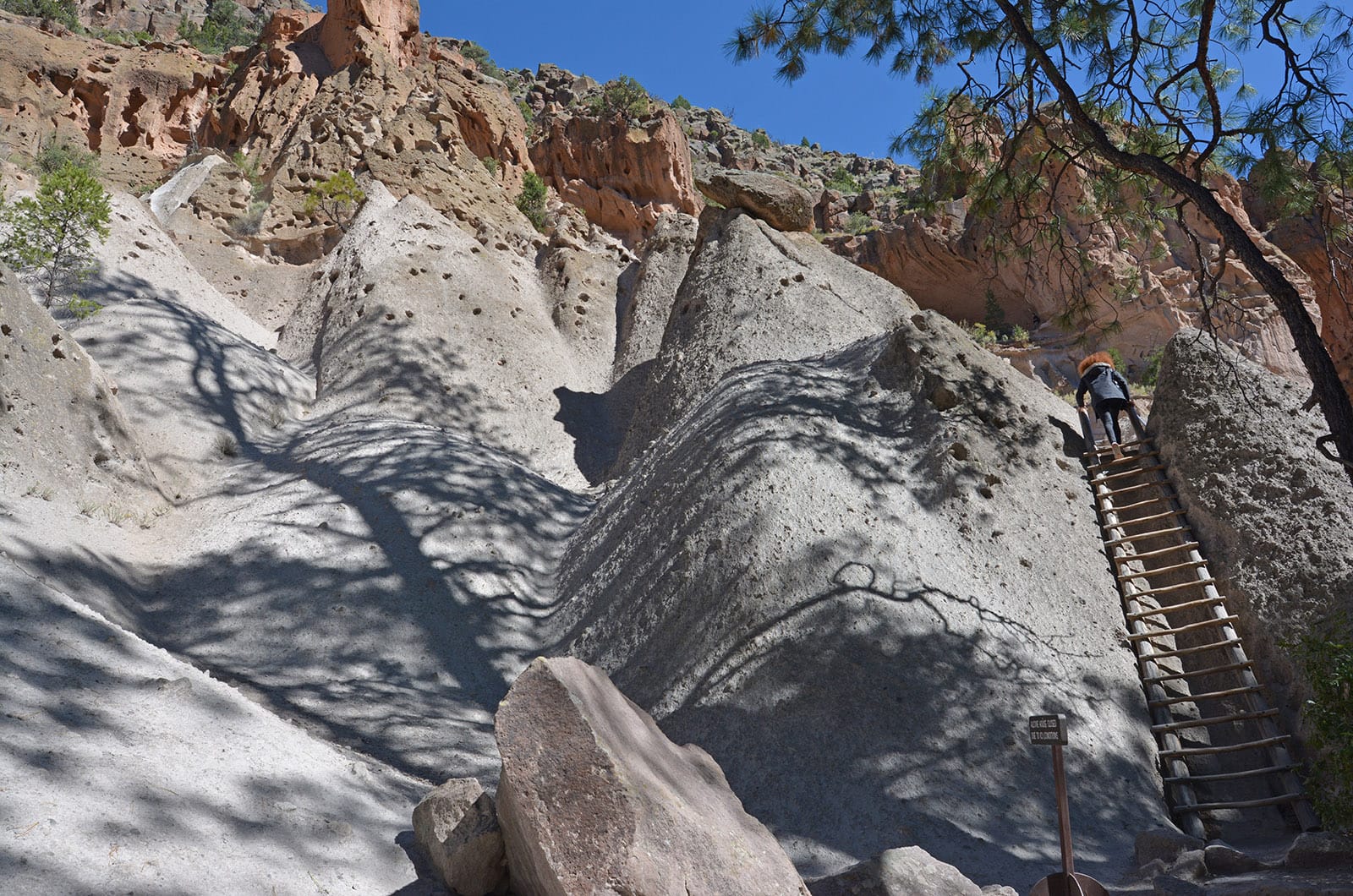
Bandelier National Monument is a worthwhile destination in itself, easily paired with a visit to Los Alamos
Los Alamos isn't history, you see. Secretive work persists at the Los Alamos National Laboratory. Relocated in the 1950s from their original footprint adjoining Ashley Pond - the pond named for a man named Ashley Pond, around which the secret atomic research village of World War II grew - the labs now lie across the canyon from the town where the atomic bomb was developed.
Ashley Pond's success would be his undoing. Purchasing Los Alamos Ranch, he founded the Los Alamos Ranch School in 1917, hiring a national forest ranger, A. J. Connell, to run it. Centered on beautiful Fuller Lodge, which stands to this day, it became a top-notch boarding school. Connell devised a curriculum to build character, melding academic excellence with schooling in social skills and, of course, becoming an outdoorsman. Many were the children of industrialists.
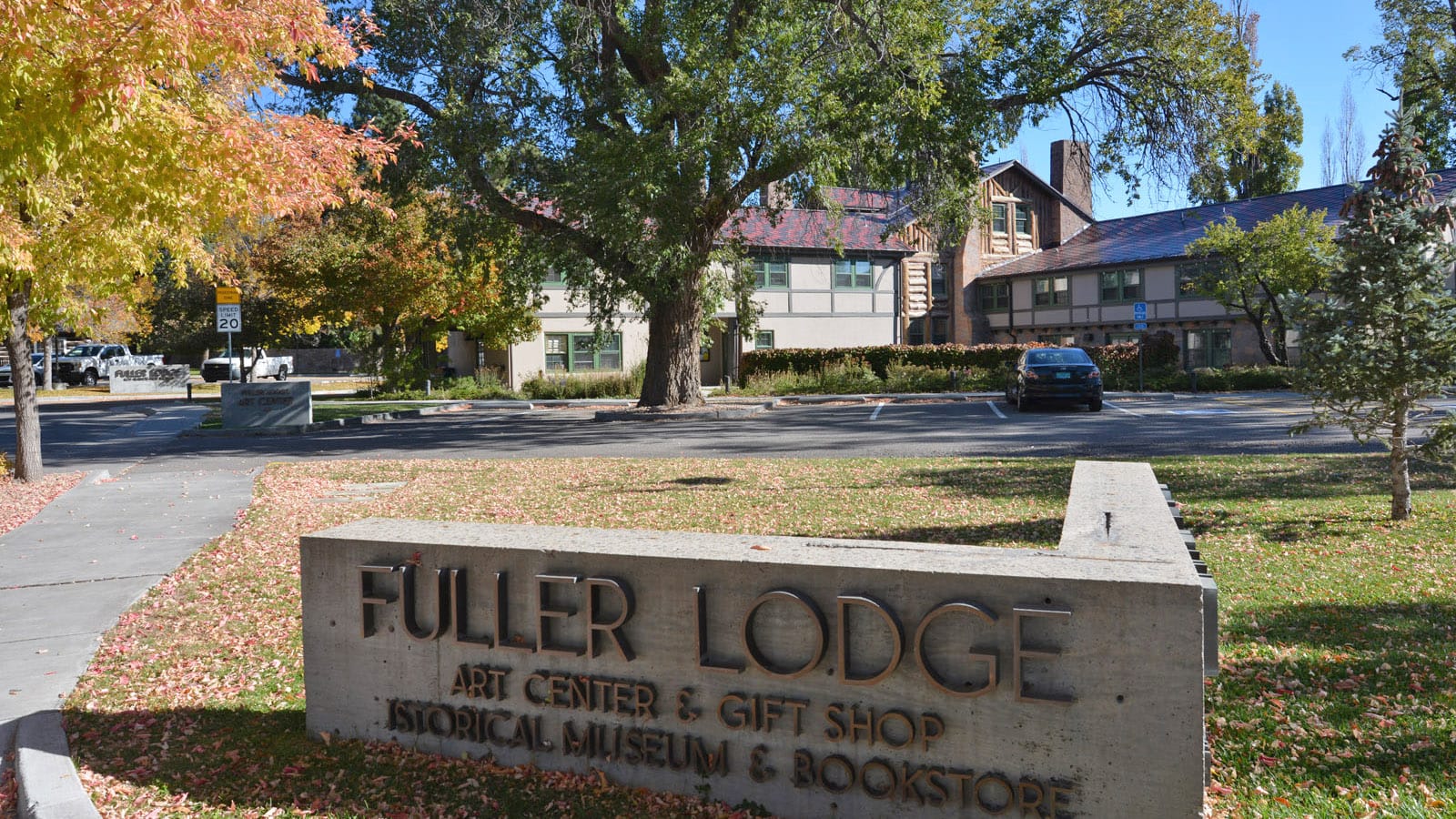
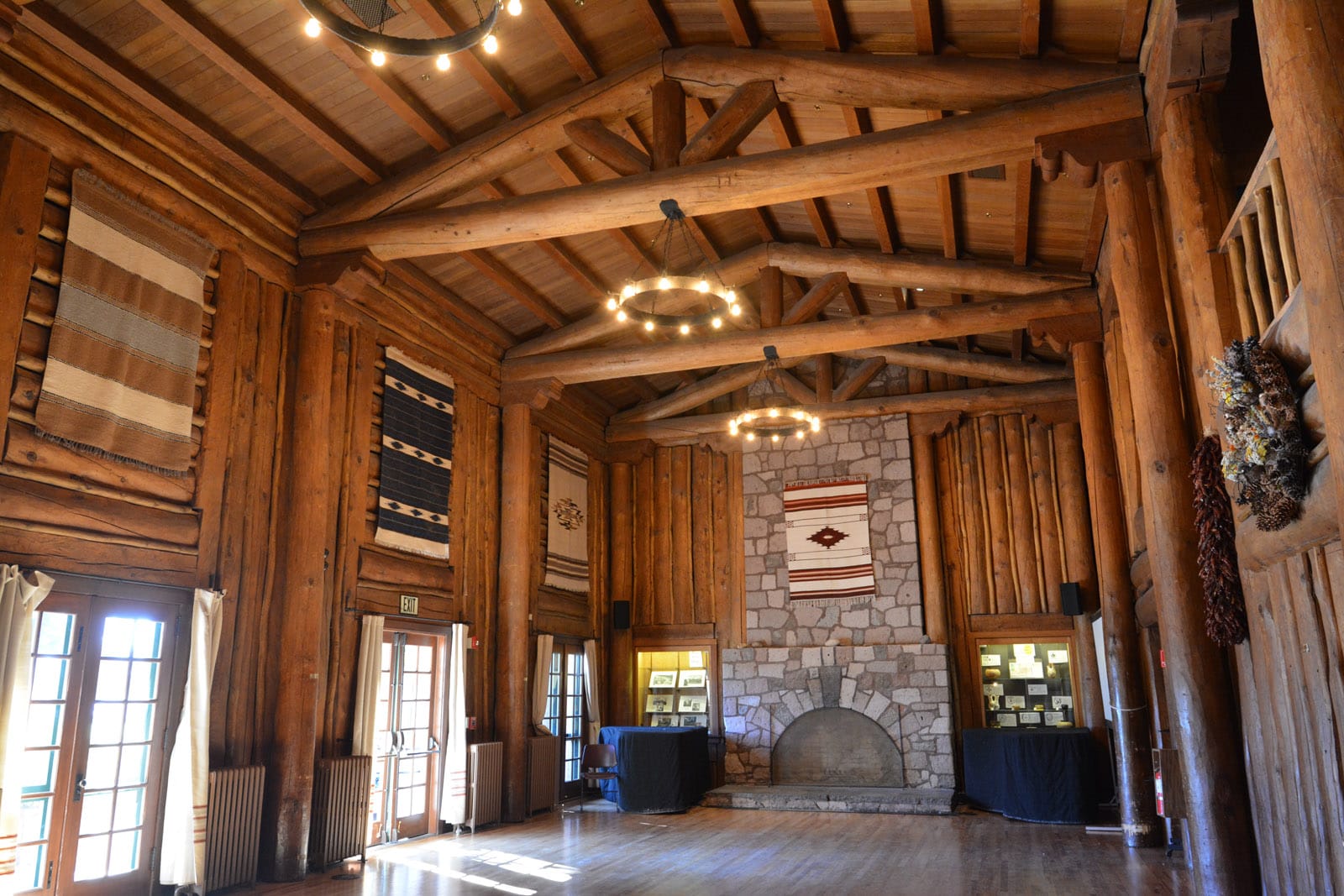
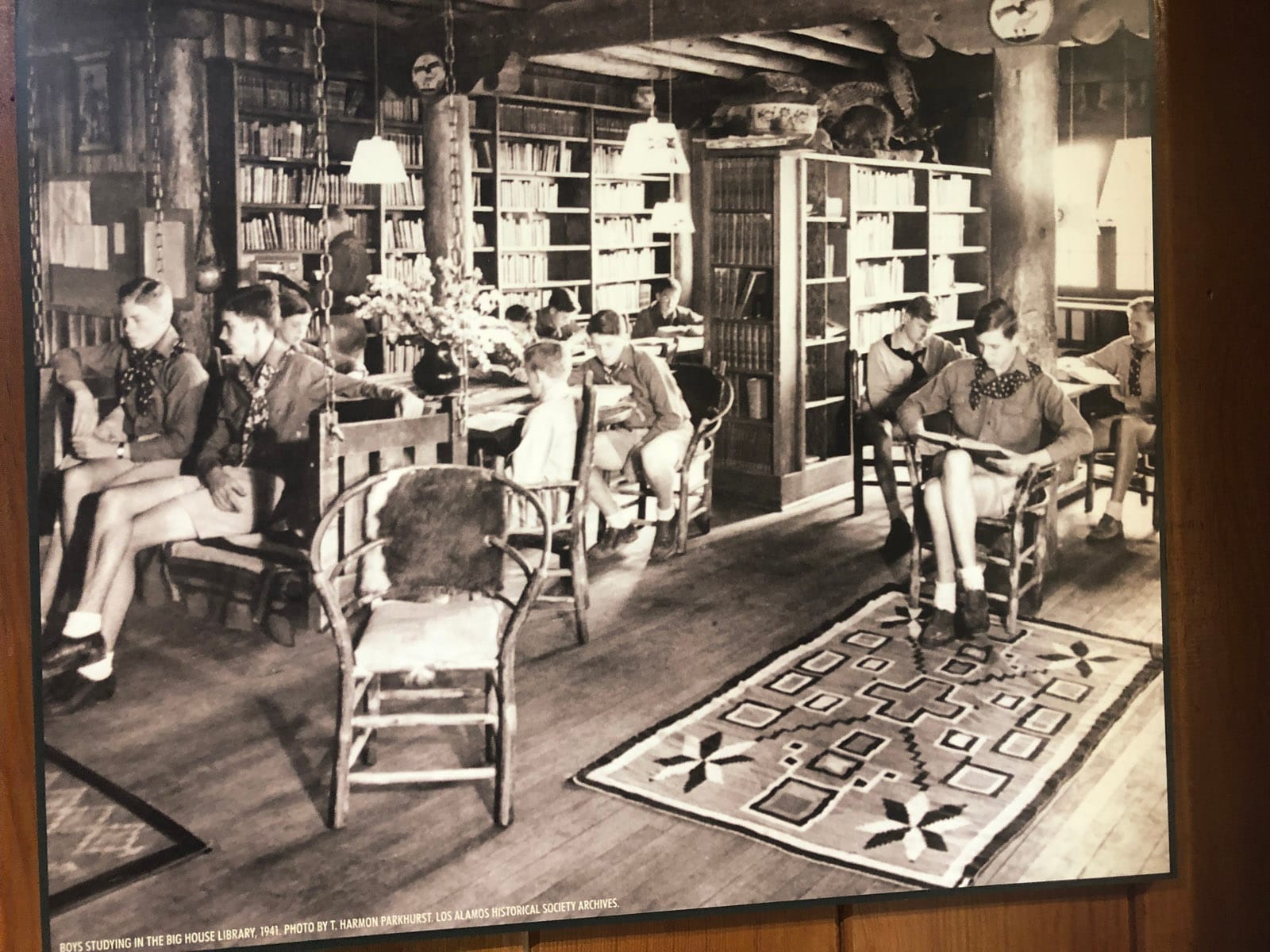
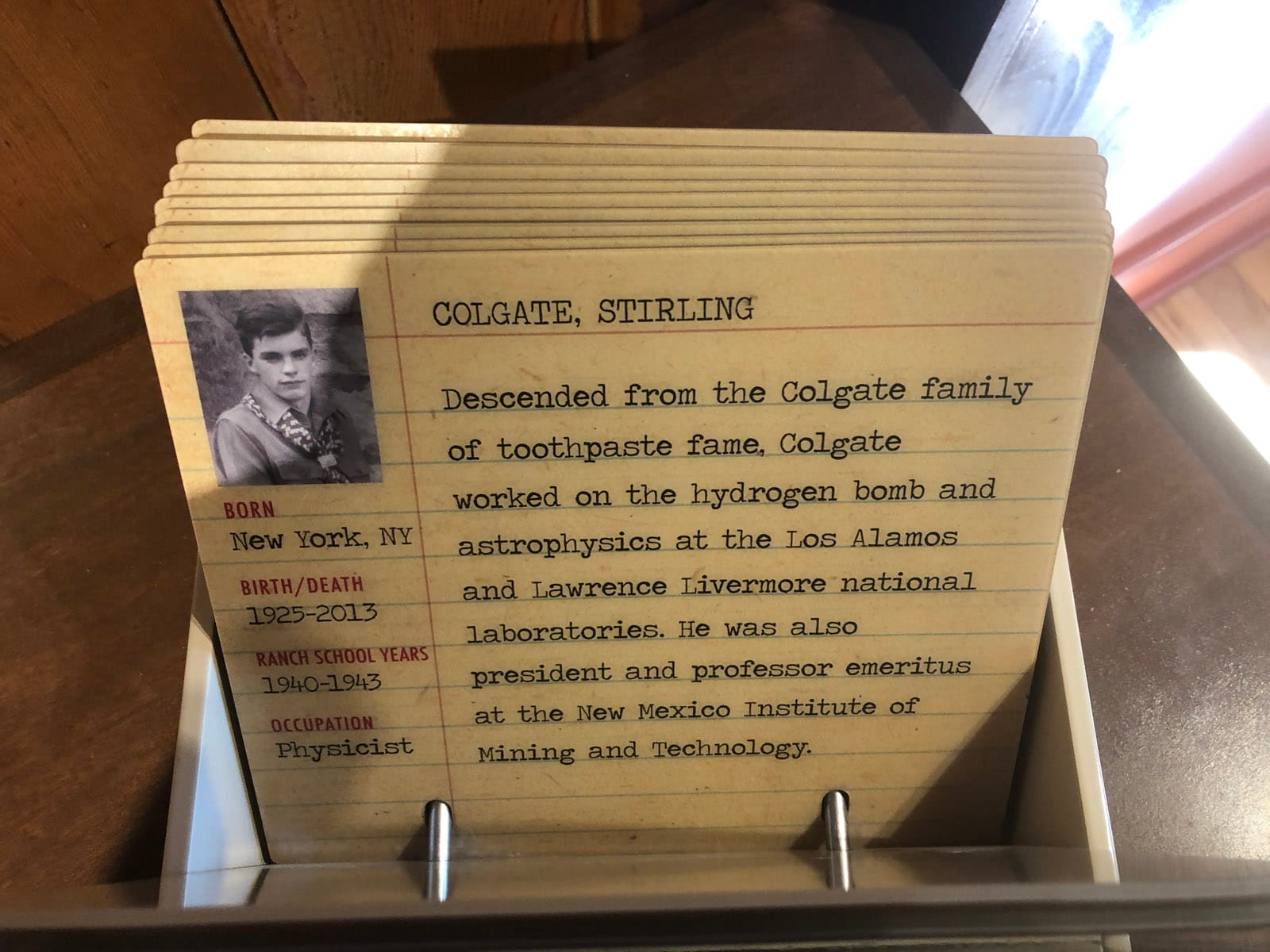
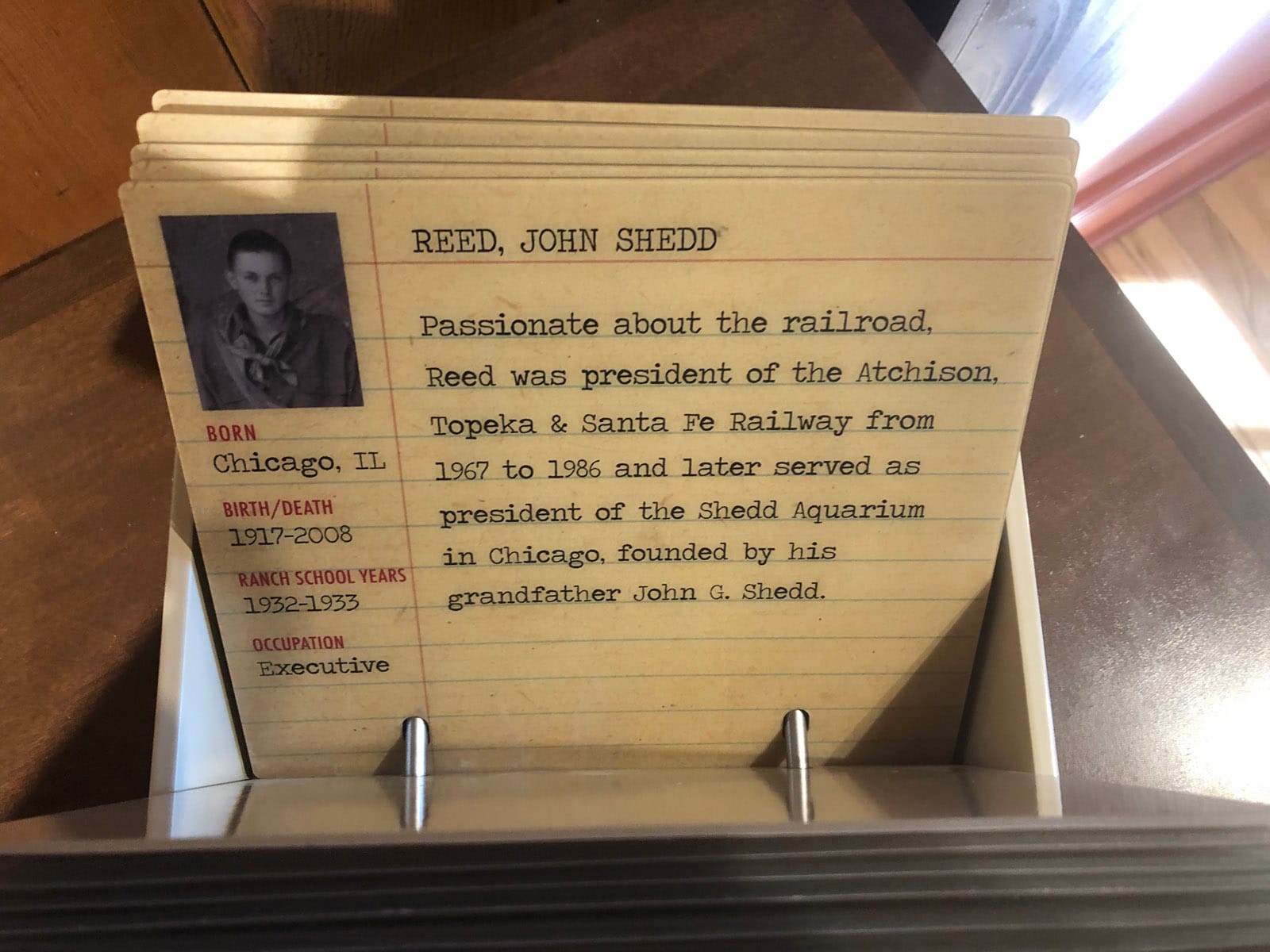
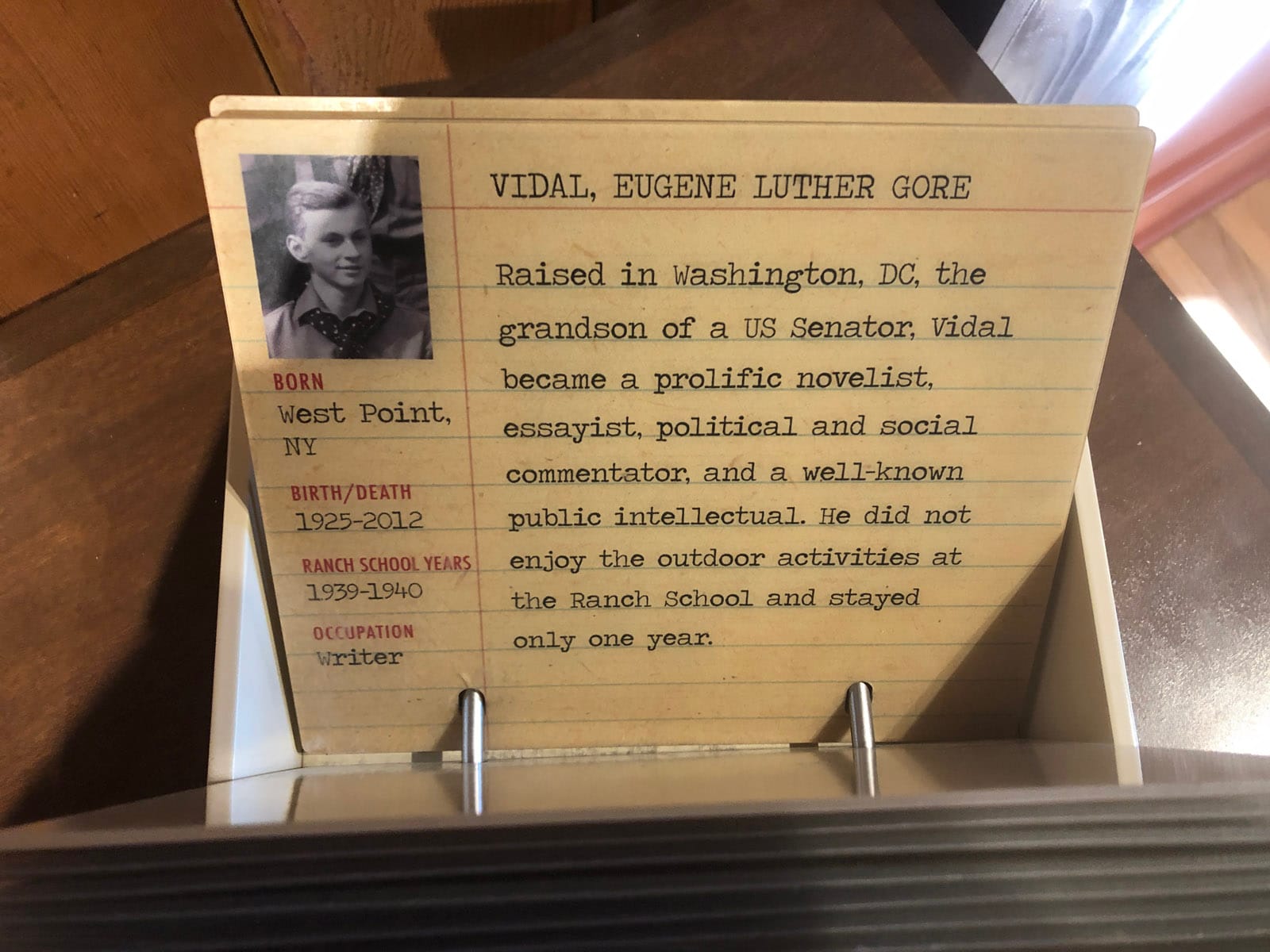
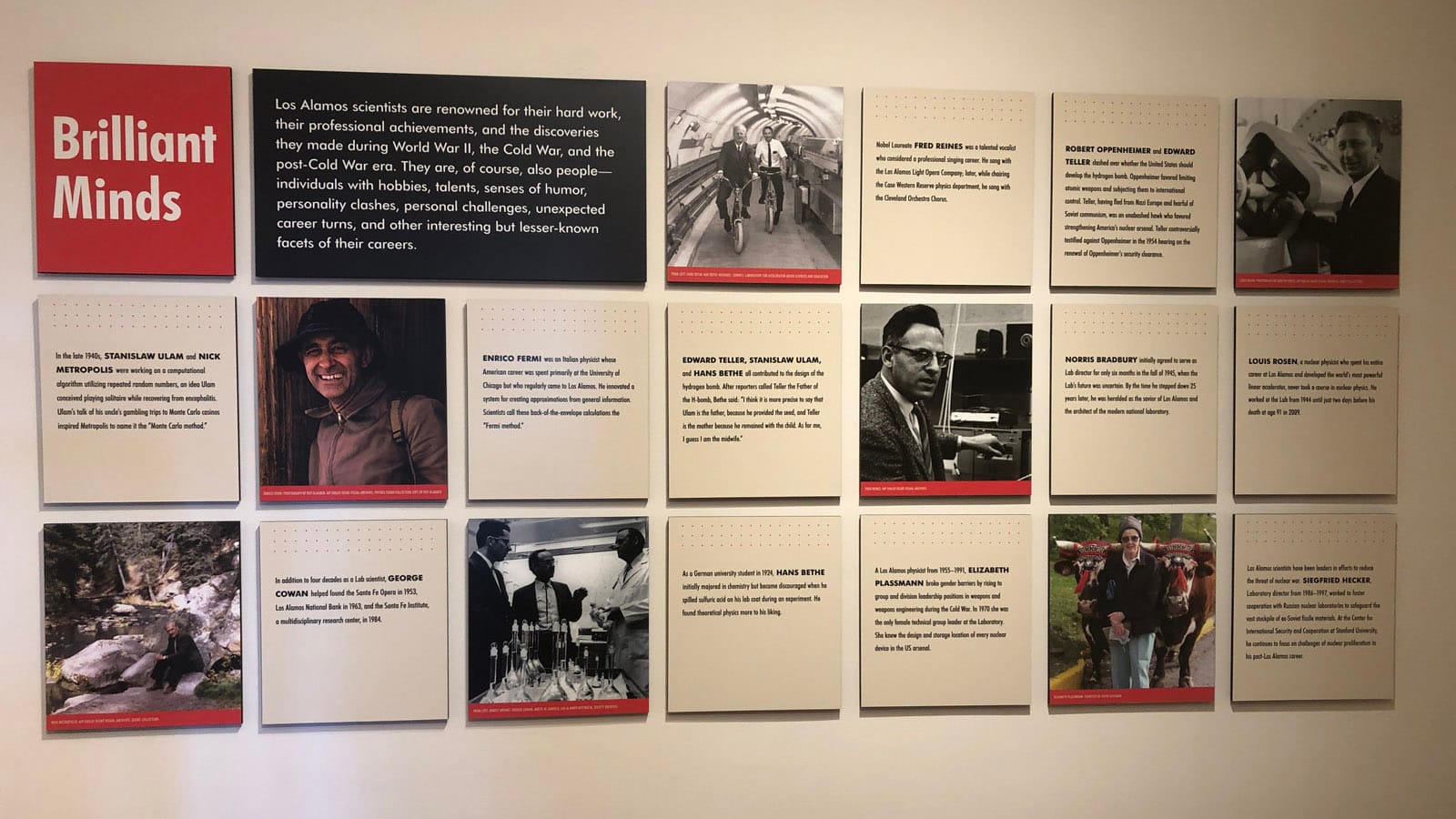
Exhibits in both Fuller Lodge and the Los Alamos History Museum explore the impact of this school on American society. The impact on the school, however, came from J. Robert Oppenheimer. He had not yet entered Harvard when, on a trip arranged by his parents to improve his health, he rode on a pack trip, the school a stop. It took root in his mind as a place of beauty, escape, and isolation.
By mentioning that to General Leslie Groves two decades after his pack ride, Oppenheimer put the secret city into motion. The federal government evicted the school, shocking both staff and students, and seized all surrounding lands from their landowners, evicting them as well.
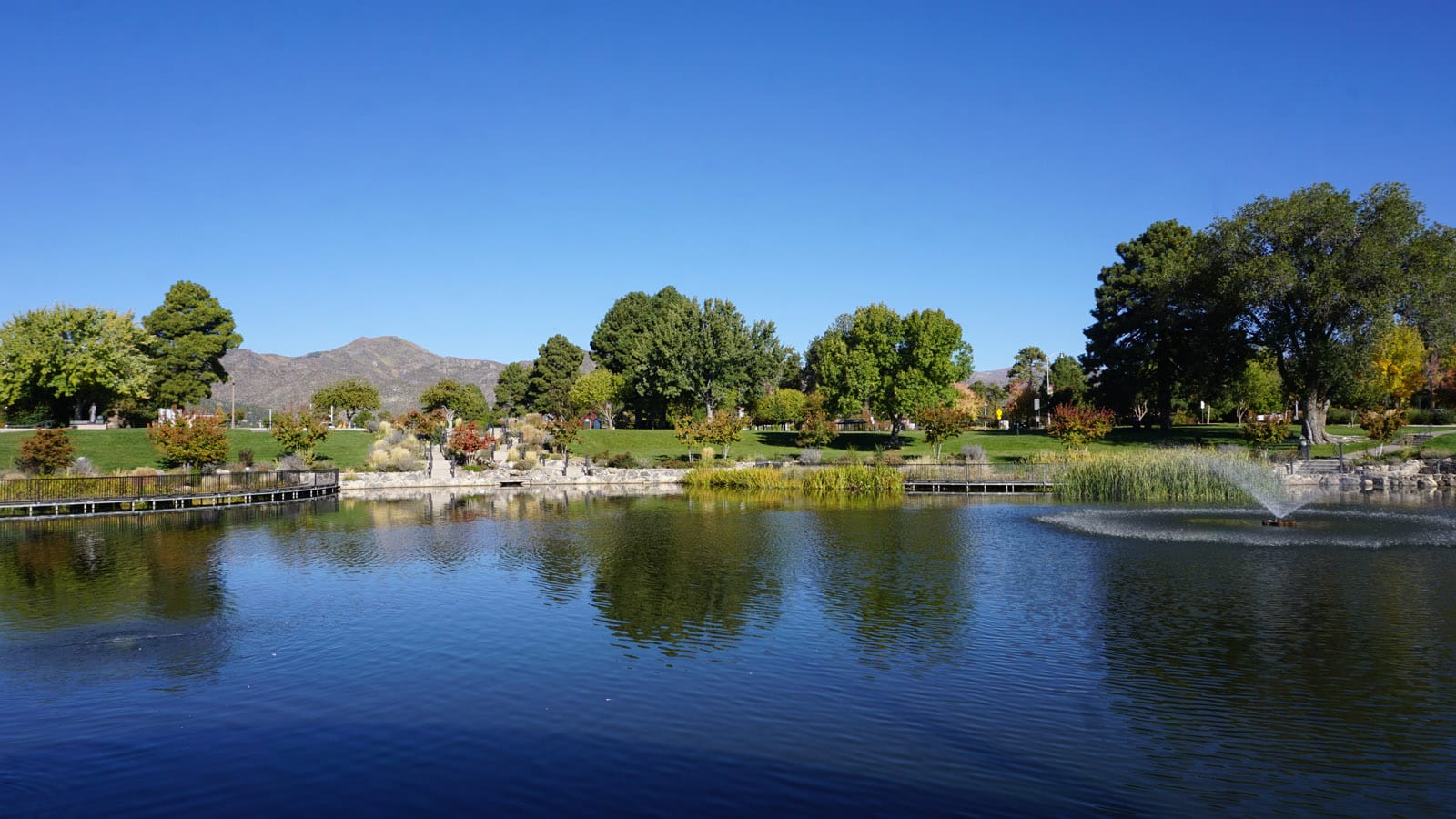
The city of Los Alamos began to rise along Ashley Pond. A stroll along it now reveals interpretative signs and memorial plaques that seem eerily out of place in this lovely setting, but illustrate what was here during the height of World War II.
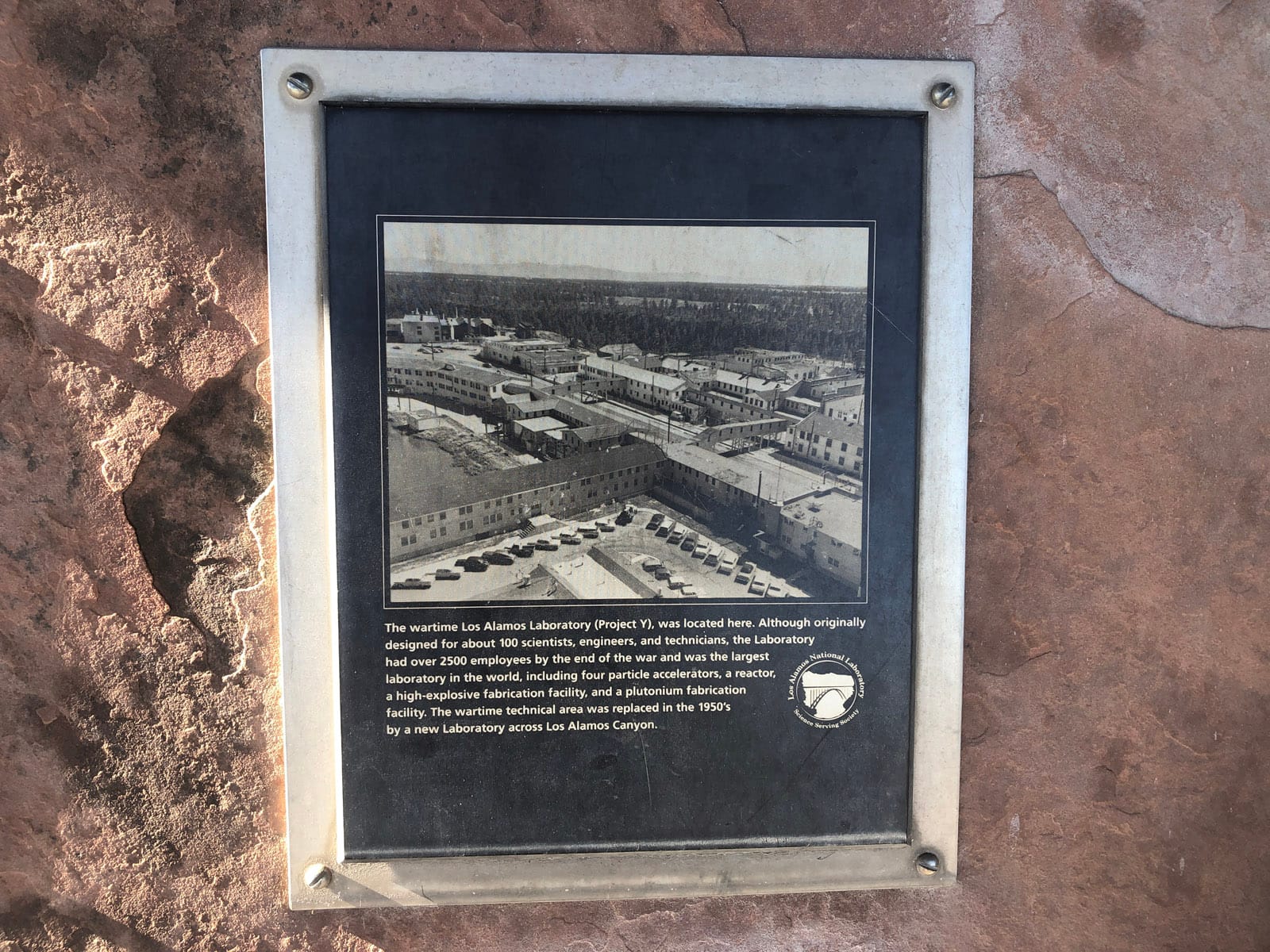
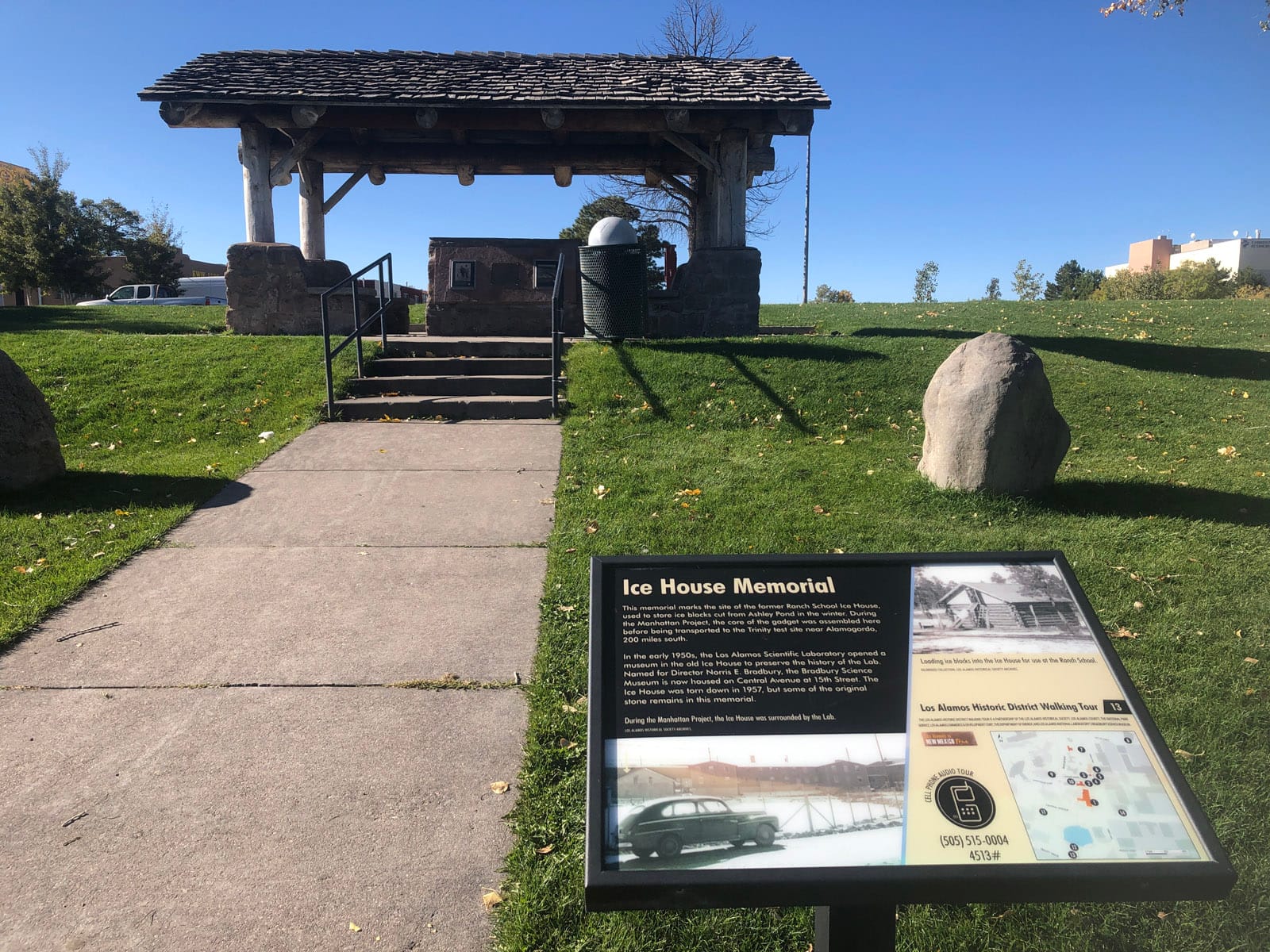
The town was built hastily, quietly. Barracks for soldiers, trailer-like huts for scientists and families. Walkways of mud. Deep mud. Scientists had priority for better housing, but support staff suffered in cramped quarters. Above all, there was no coming and going. A virtual prison for residents, who could not leave without checking in and out at gates manned by soldiers. No one could not share their location with families. They found support in each other as their spouses worked in the labs to bring the atomic bomb to fruition.
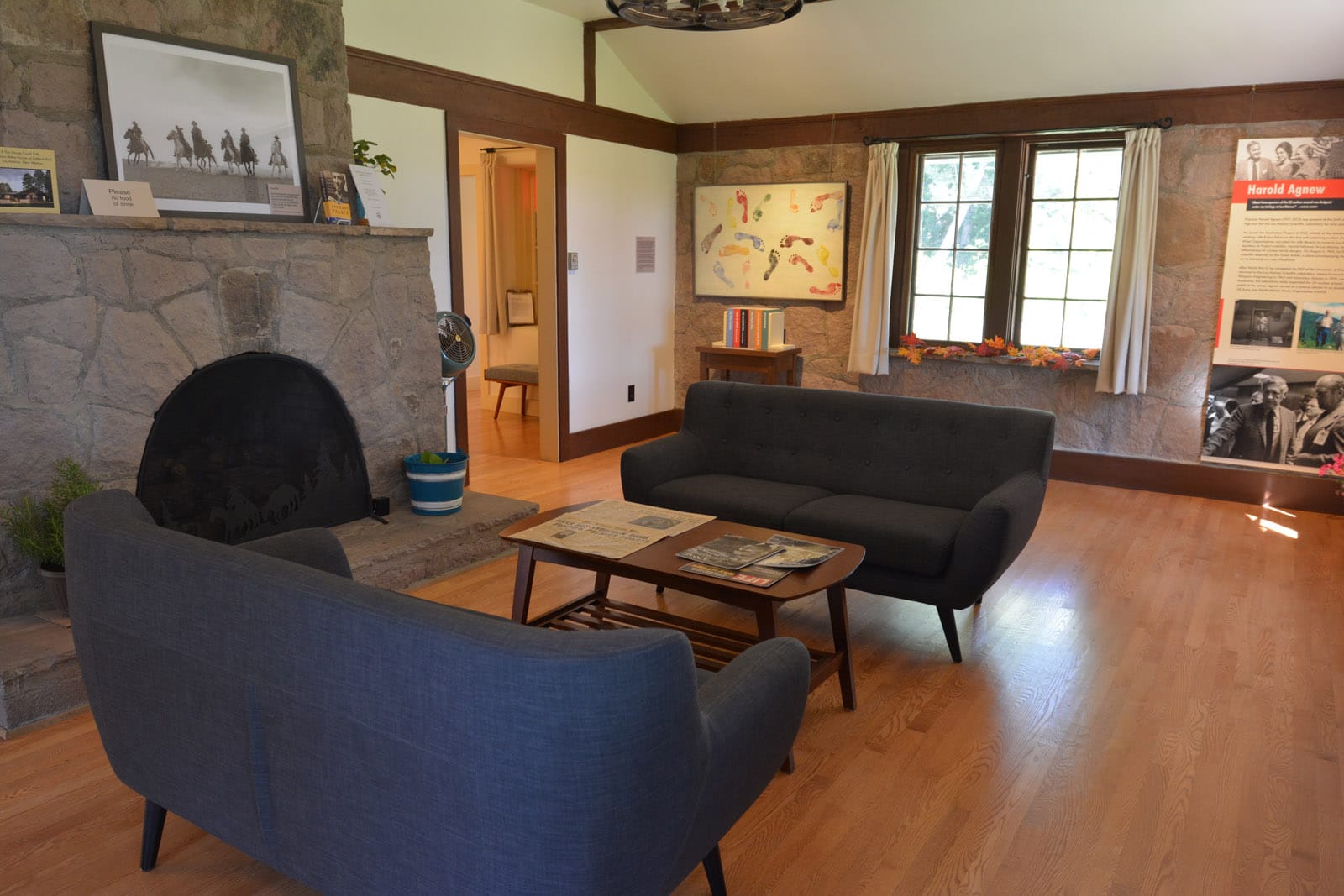
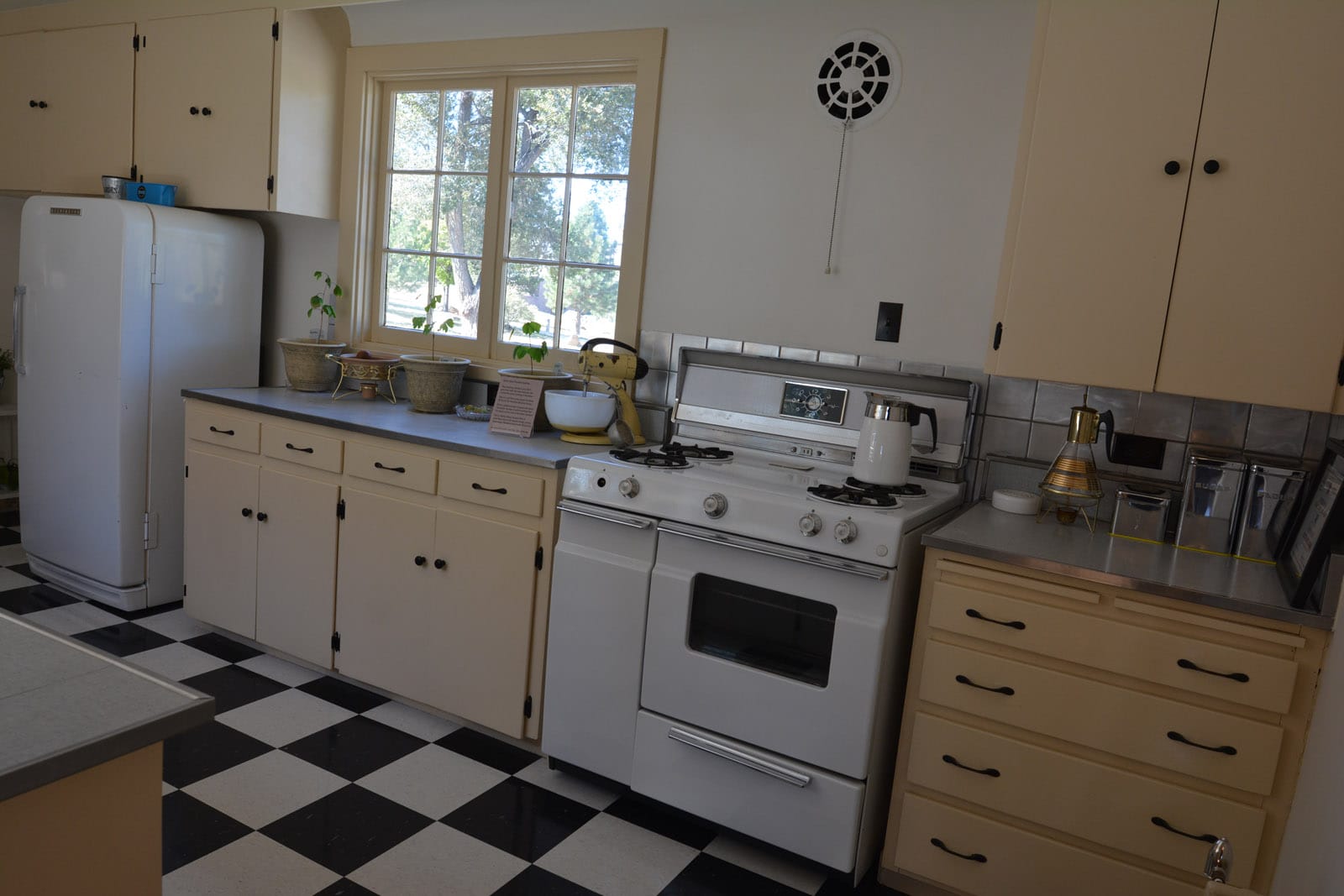
Fuller Lodge became the community center for staff and families on the mesa, Oppenheimer sometimes entertaining on the piano. With his stature as director, he had one of the finest stone homes on the mesa, built for ranch staff. That row of nice homes came to be known as Bathtub Row. Some remain in private hands. We toured Hans Bethe's home, its decor and furnishings a mirror of the mid-century modern we'd grown up with.
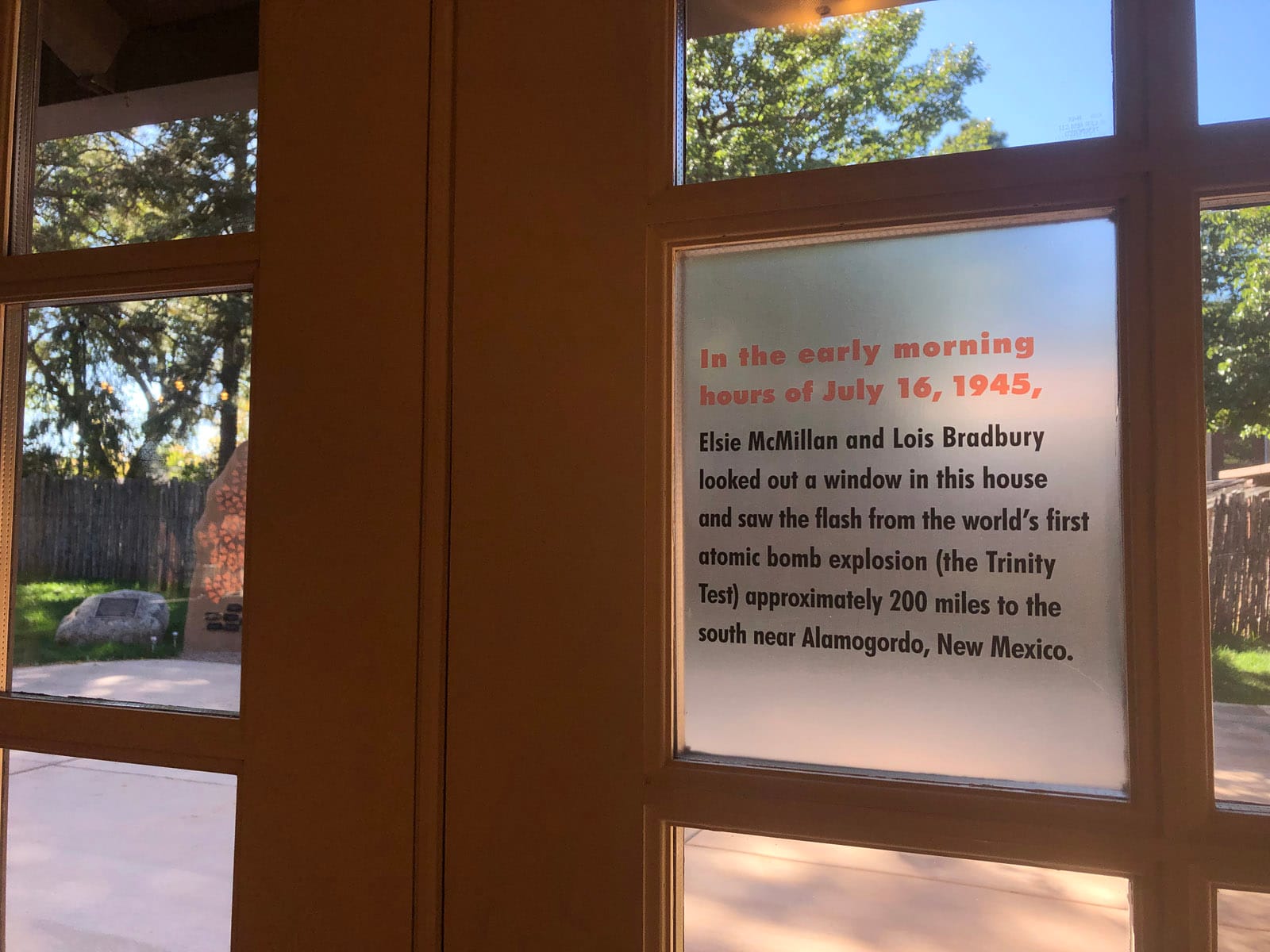
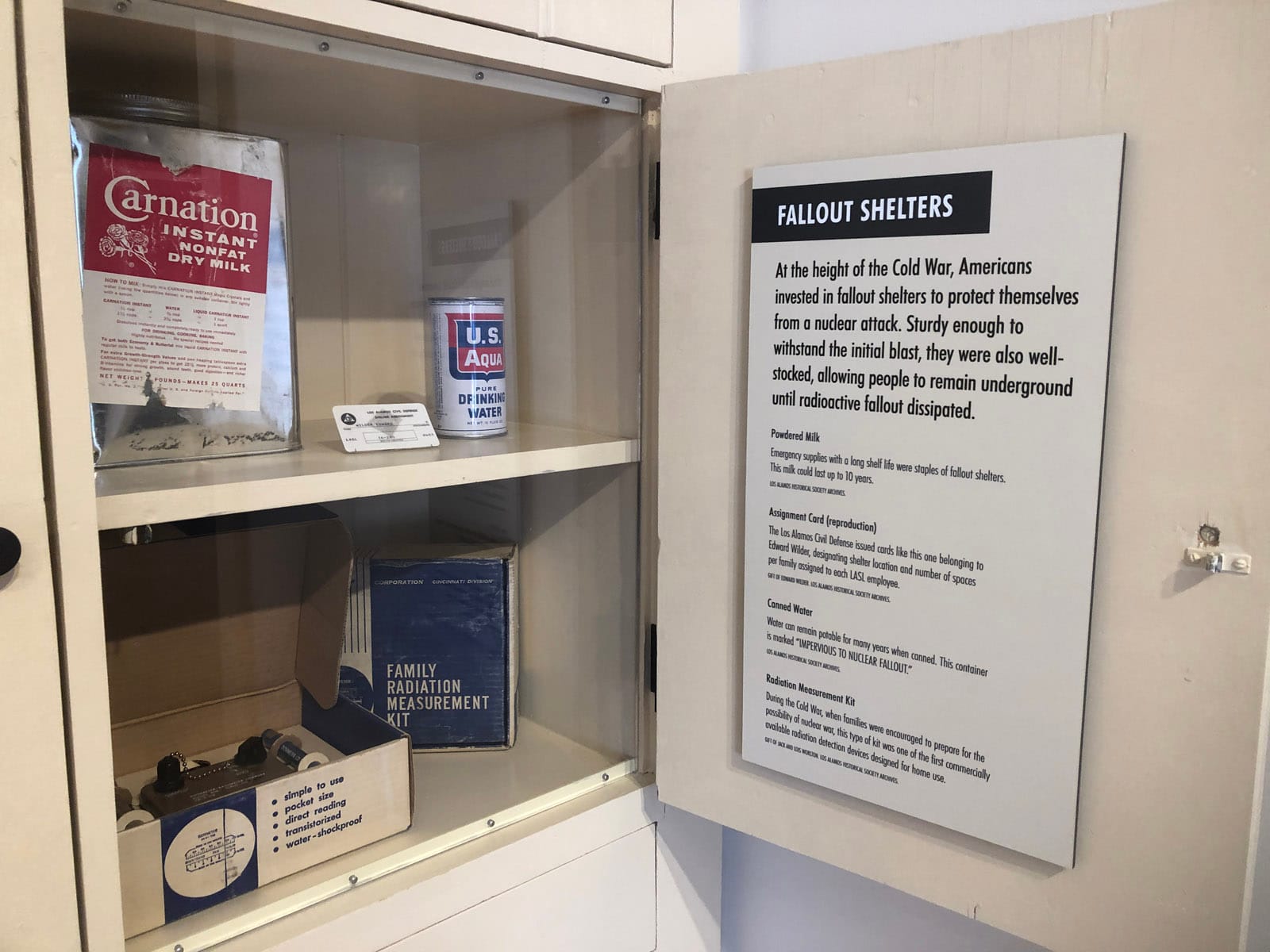
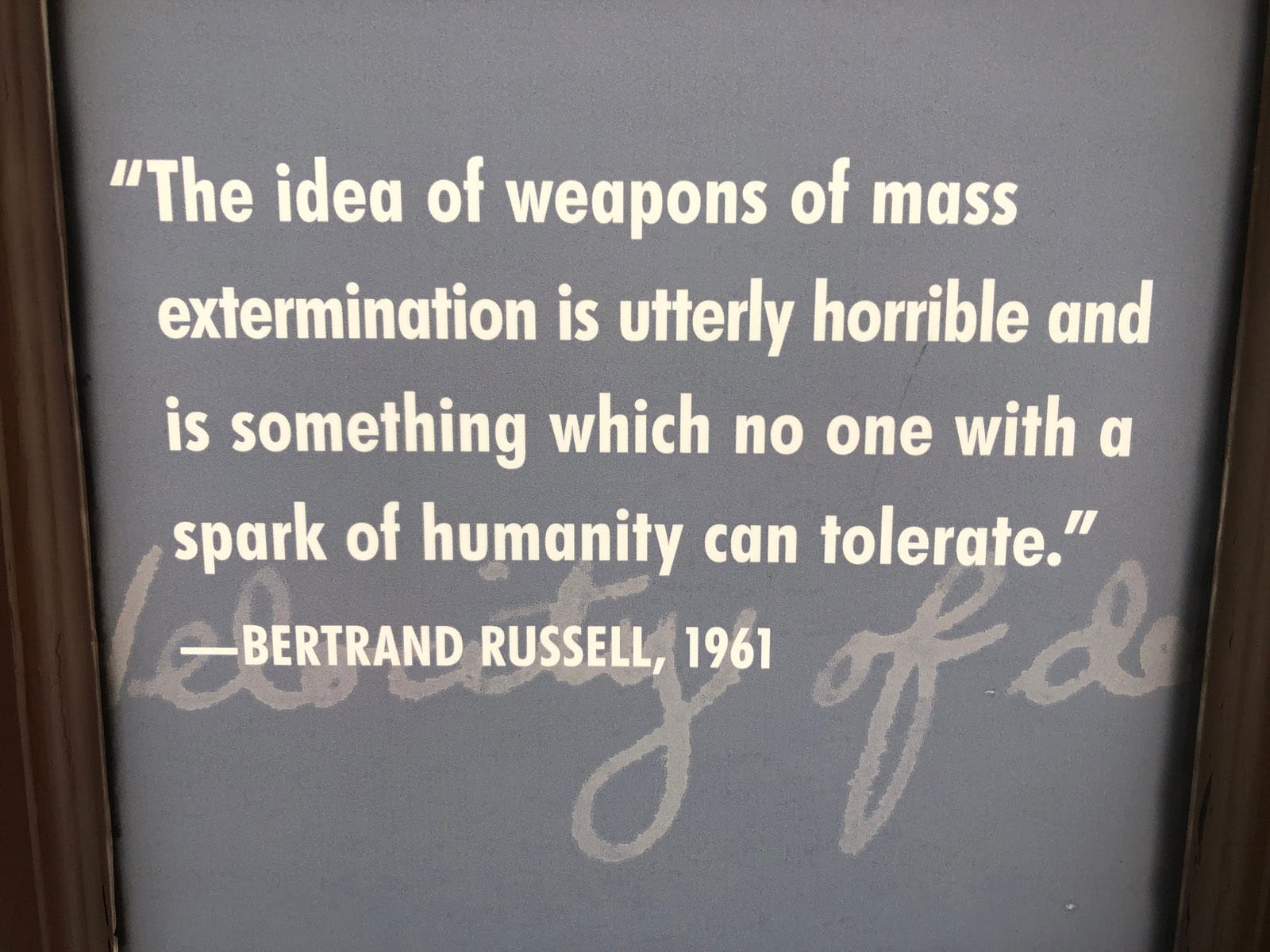
The interpretation, however, told a very different story.
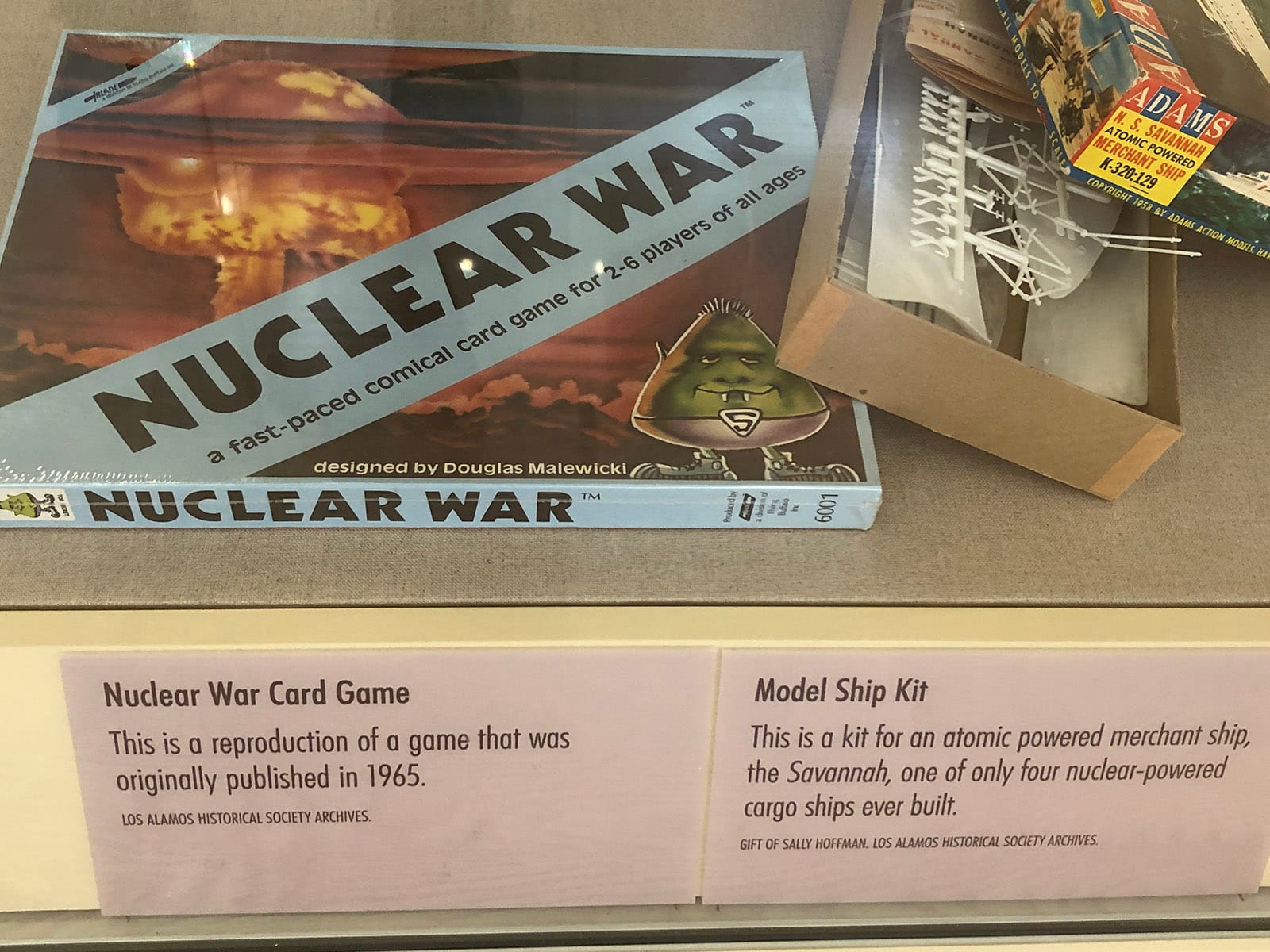
I left Los Alamos chilled. Disturbed. Thoughtful. Glad the National Park Service ensured that the original inhabitants of this plateau were honored with restoration of remaining sites and interpretation, too.
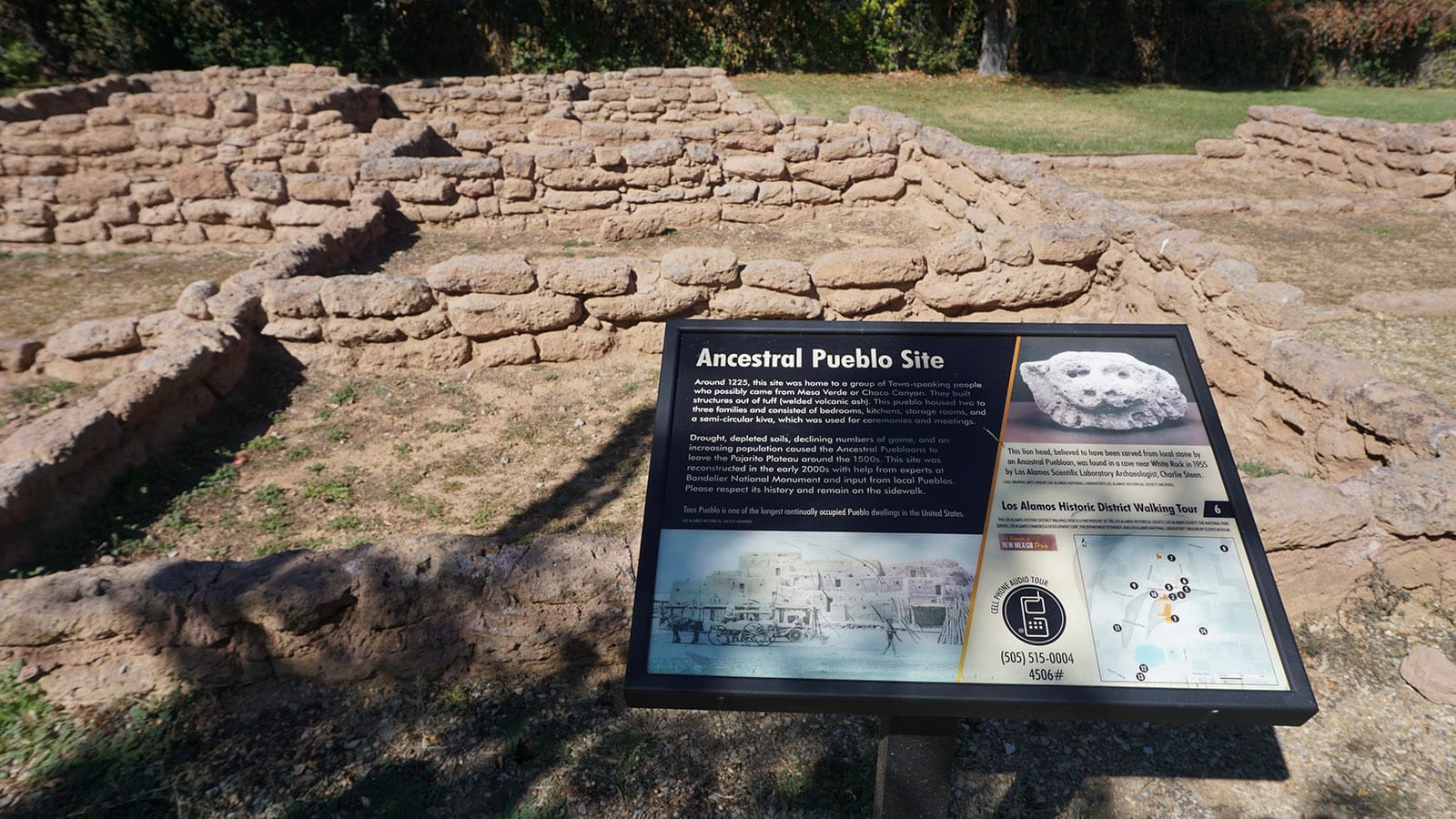
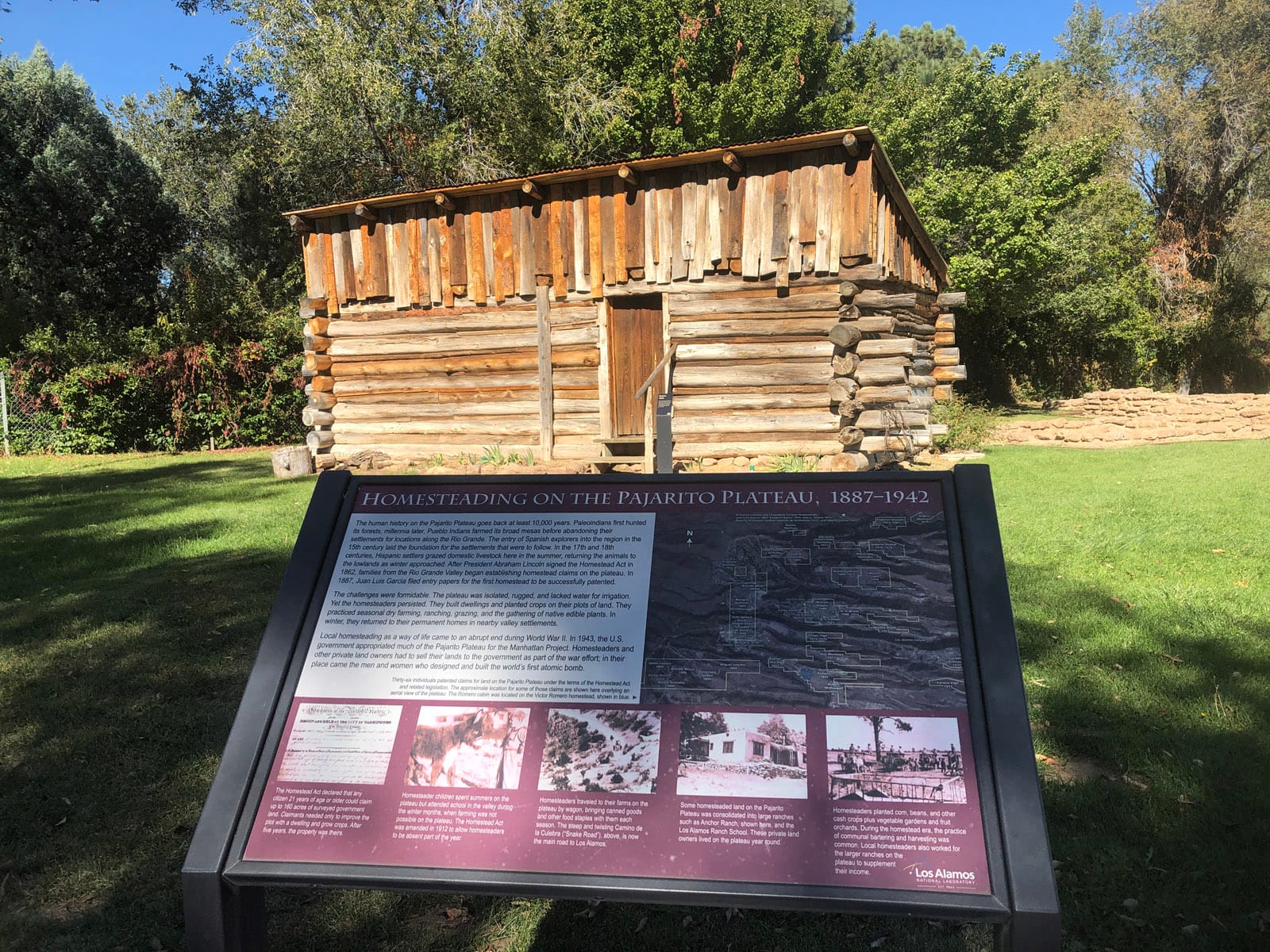
But still bothered. How did living this experience impact the people who did?
I'm of an age where fallout from above-ground testing of nuclear bombs settled in my bones. My parents grew up with "Duck and Cover" as their school drills: not from shooters, but from a nuclear bomb. I read Fail Safe and John Hershey's Hiroshima as a teen. Re-read Hiroshima more recently after absorbing memoirs going into detail of the horrors of the war in the Pacific. Was dropping that bomb the right choice?
I'm glad I wasn't the decision maker. Harry Truman was. But as a writer, the push-pull of the topic, the existential angst surrounding nuclear weapons, gave me an excuse to read deeply, breathe deeply, and put those arguments into the mouths of my characters in what will be my debut novel, which I'm actively pitching now. My story is set in the late 1950s in Alamogordo. Los Alamos plays a key part through its impact on the scientists and residents who emerged from that crucible of silence, its setup of above-ground nuclear testing in the "Wild West" as a norm of the Cold War era, and the development of ICBMs - Intercontinental Ballistic Missiles - that led to the space program.
Los Alamos an interesting place to visit. For what it sparks.
Member discussion