On a Bartram Adventure Tour
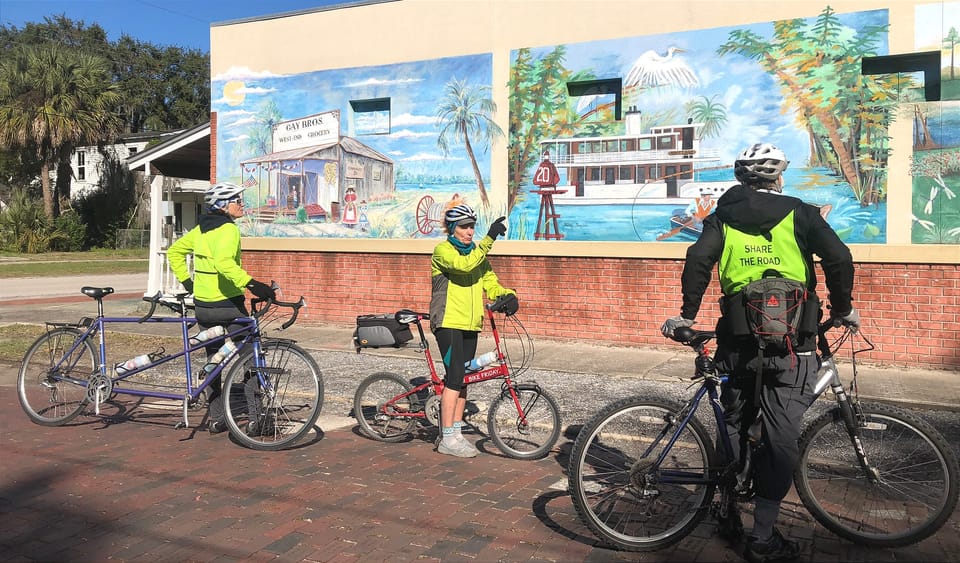
Taking my morning walk down to the St. Johns River at sunrise, I was delighted to see the river swaddled in a light fog, the anchored boats mere shadows, the mist a screen capturing the rays of the rising light.
I had driven through the South Historical District of Palatka hundreds of times in my life, but this visit was a first, to experience the city on foot and by bike. When the invite came in, we looked at ourselves and said "Palatka?"
We'd stayed along the edge of town before - and even camped nearby - to hike public lands that cradle the city in a gentle arc that reaches from just north of the Fort Gates Ferry and Salt Springs up around to Etoniah Creek State Forest, connected by the Florida Trail. I'd walked the pathways of Ravine Gardens as a child, and dozens of times more as an adult. But downtown Palatka never called to me to linger, despite its colorful murals and historic buildings. I'd stop for lunch or to peek into an antique shop, and continue on.
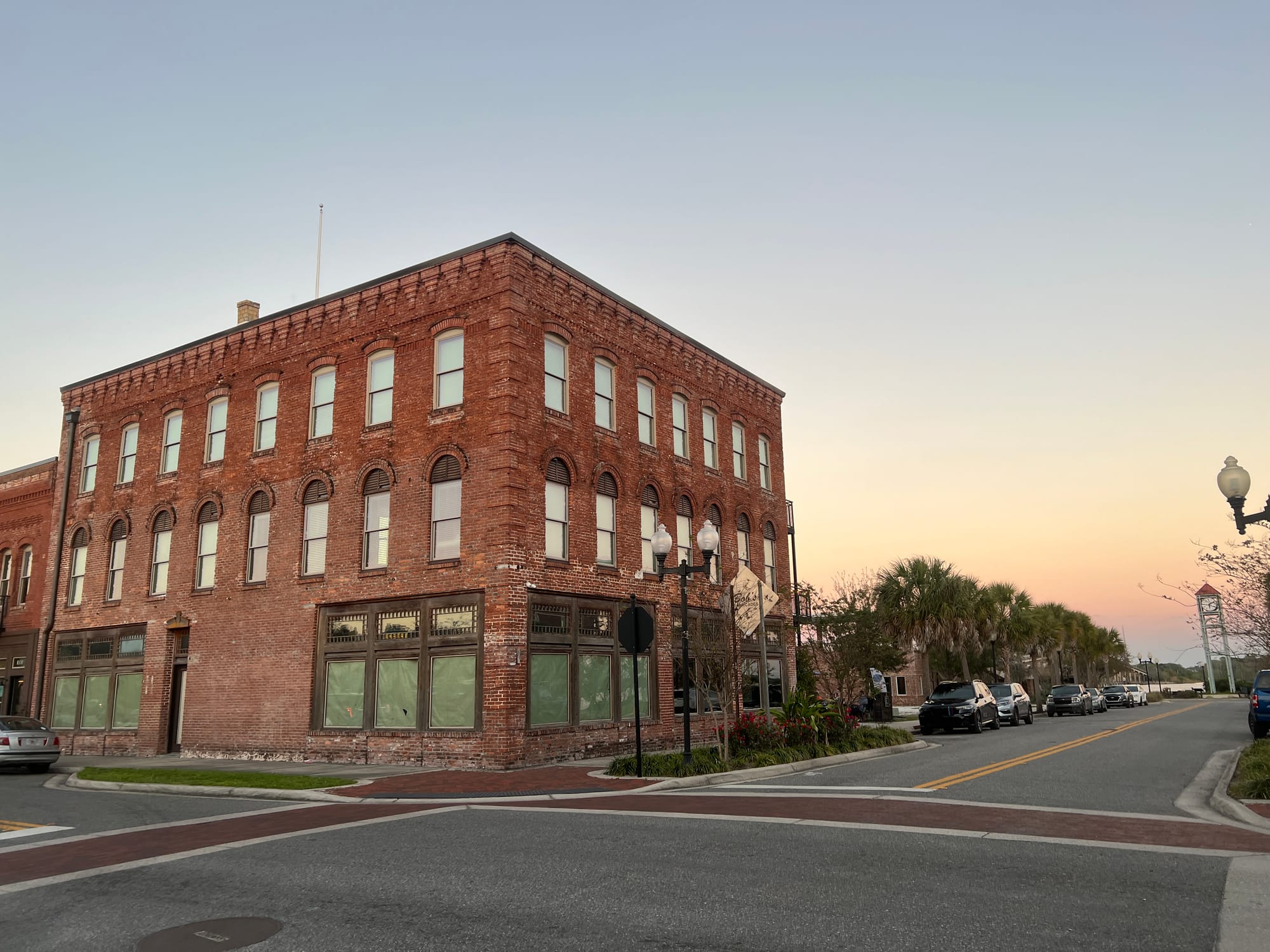
It was during our research for our recent edition of Explorer's Guide North Florida & The Panhandle that we stopped to see what had changed in Palatka and discovered some major surprises. First, a total rebuild of the waterfront park along the St. Johns River. Second, a new hotel sprouted, with a river view.
What made us park the car and go explore was the National Recreational Trail sign we saw in front of a new building along the riverfront drive, the St. Johns River Center. Inside, we discovered a environmental education center devoted to interpreting the river. It was mainly geared to kids, but as we talked to the docent there was a dawning realization that Palatka was on to something bigger than itself.
They'd discovered Bartram's Travels.

Bartram's Travels
For naturalists interested in what Florida - and the rest of the Southeast - looked like before the Europeans descended on the New World in hordes, Bartram's Travels is one of those must-reads. Although the English of that time is very different than today, it's worth wading through the language to get to the meat of the book: descriptions of what William Bartram saw as he journeyed by horseback and canoe in 1773 and 1774. Particularly here in Florida.

What was never clear to me - until we spent a week with folks who live and breathe the Bartram story - is that there were two Bartrams, both naturalists and writers.
John Bartram, royal botanist to King George in Colonial times, headed up the first expedition to Florida. His mission was to search for and send back new plant species to England. He took his son William along, who did illustrations to accompany his father's accounts of Florida. John's account of the journey was published in Britain in 1766.
William returned on his own in 1773, just before the American Revolution. It's his story that's sat on my shelf for more than 30 years, the one you're more likely to find in a bookstore, filled with detailed descriptions of his journey and what he encountered along the way. Among the thousands of tidbits in Travels, he offers one of the first-known descriptions of a gopher tortoise, as well as accounts of meeting with the native peoples of that era.
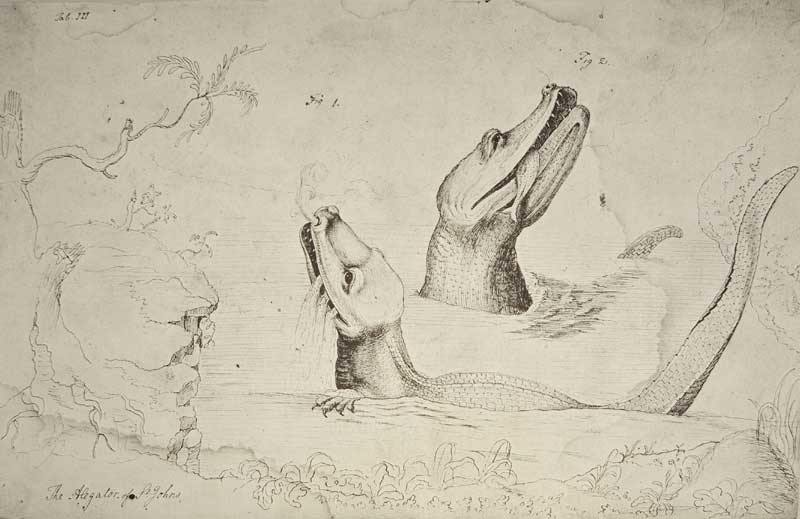
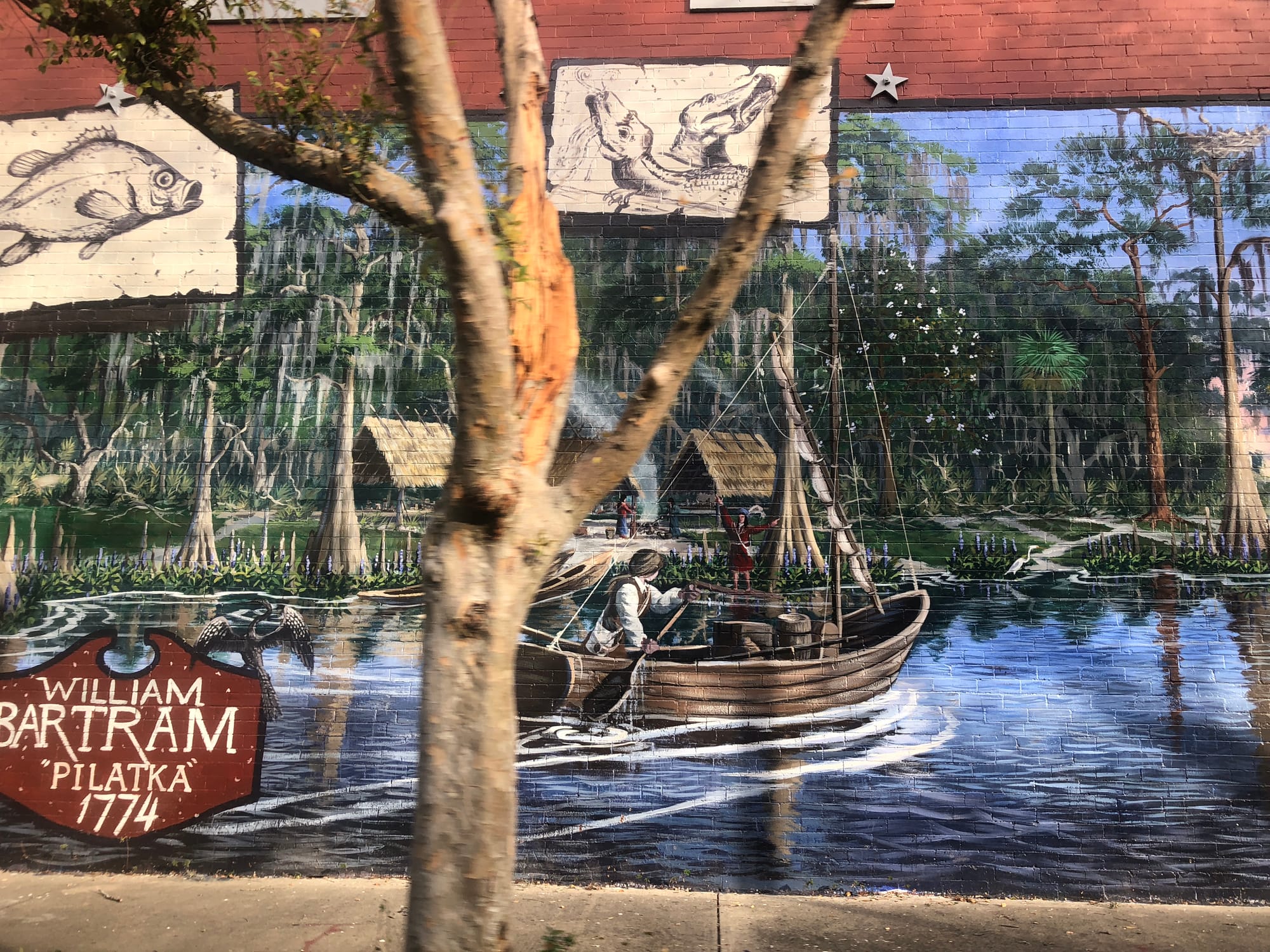
William also recounts numerous encounters with alligators along the St. Johns River, describing not just their behavior - "I have seen an alligator take up out of the water several great fish at a time, and just squeeze them betwixt his jaws" - but also alligators coming after him and his boat.
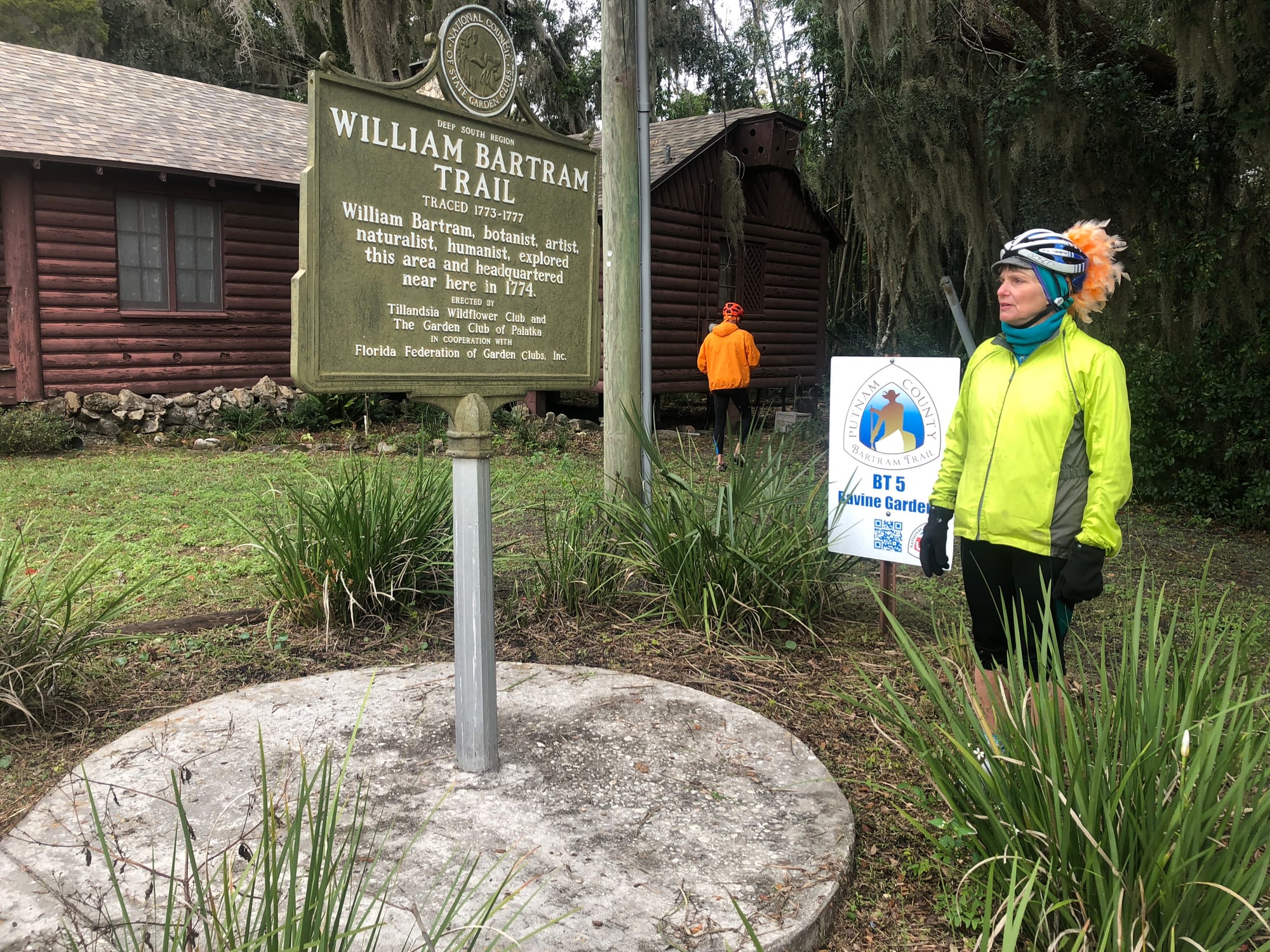
When you read through both journals carefully, you can easily identify the locations both Bartrams visited in Florida. In the 1970s, metal historic markers began to appear at parks in Florida to commemorate the William Bartram Trail, placed by the Florida Federation of Garden Clubs. I recall the first ones I saw being at Paynes Prairie and Manatee Springs. So I filed away in my mind that there was a Bartram Trail, of sorts, but it would take some work to figure out how to follow it.
Bartram by Bike
Bundled up on a very chilly December morning, we assembled with a handpicked group in the backyard of the Bartram Inn. We didn't know this Palatka B&B existed until we stayed in Stony Brook, New York, at a bicycle-themed B&B and the owner told us about it.
That very evening, in a total coincidence, we received an invite from Linda Crider, the proprietor of the Bartram Inn, to join her for a "shakedown" tour of the Bartram Trail. After our visit to the St. Johns River Center, we were certainly curious. So when we learned that Linda and her colleagues planned to show us how to follow the Bartram National Recreation Trail, we were in, paying a nominal fee to participate.

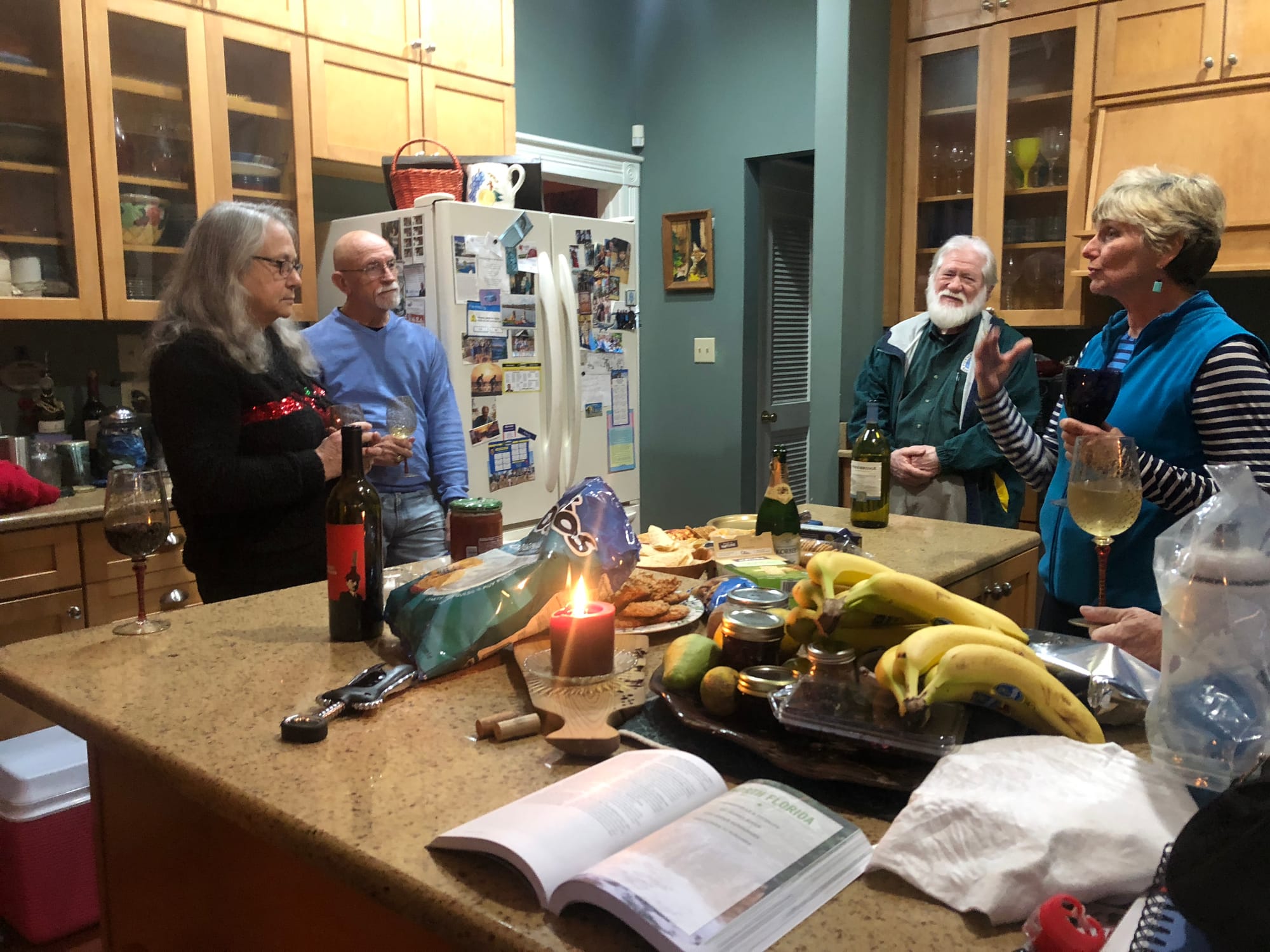
Riding with us were two old friends, Robert Seidler and Laura Hallam, and a new-to-us cast of characters. We'd met them all the night before, sitting around the living room of the inn while listening to a scholarly discussion of Bartram's Travels. Among the new-to-us revelations - but certainly not to locals, who'd been putting on a living history event called the Bartram Frolic for quite a few years - was that there was a Bartram Trail in Putnam Committee.
Led by Sam Carr, this core group of Bartram enthusiasts included retired scientists, professors, and parks and recreation experts. It was through their efforts the National Recreation Trail came about. They'd been to the oldest surviving botanical garden in North America, John Bartram's Garden in Philadelphia. They'd visited the British Museum to collect copies of William Bartram's original illustrations.
Most importantly, they'd done the on-the-ground work to find each significant site in the Bartrams' two books and document it. The result is a signposted trail along the Bartrams' route through Putnam County.
Our first day's exploration would be by bike. With tour leader Bob Stevens guiding the way, we headed along the riverfront to downtown. A new riverwalk starts in front of the St. Johns River Center. At the base of the highway bridge, Ken Mahaffey showed us the first of numerous National Recreation Trail markers we'd see throughout the county. This one, Marker 4, called attention to Palatka itself, where the Bartrams encountered a Seminole village having a festival - the reason for today's Bartram Frolic.

Returning back along the waterfront of Palatka Riverfront Park, we stopped to admire a newly built playground with a very natural feel, and an iconic sculpture of a largemouth bass tucked under a trio of lily pads. Dedicated in 2014, it was created by local artist Doug Hays, depicting William Bartram's description of the "trout" he saw along this part of the river.

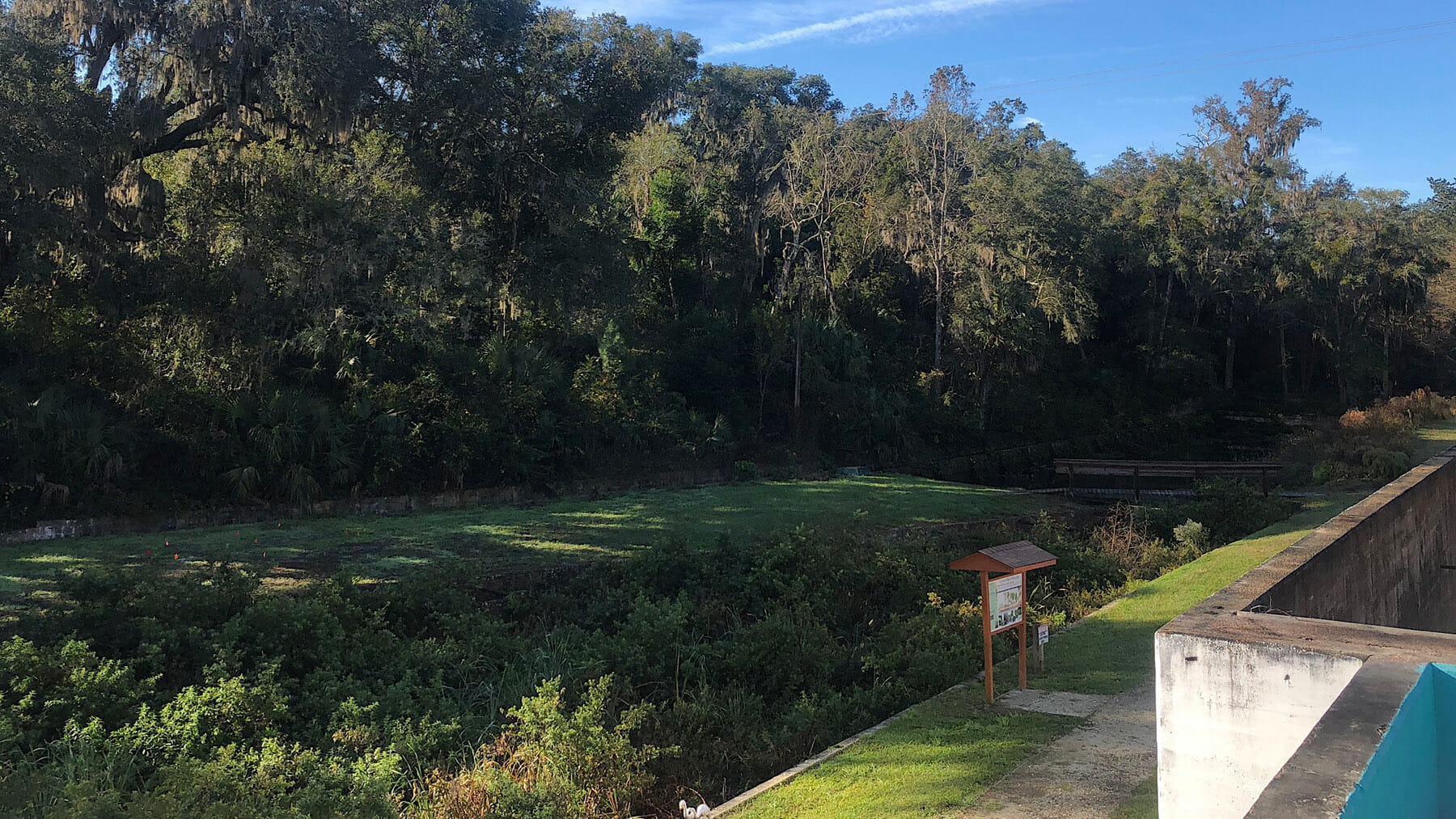
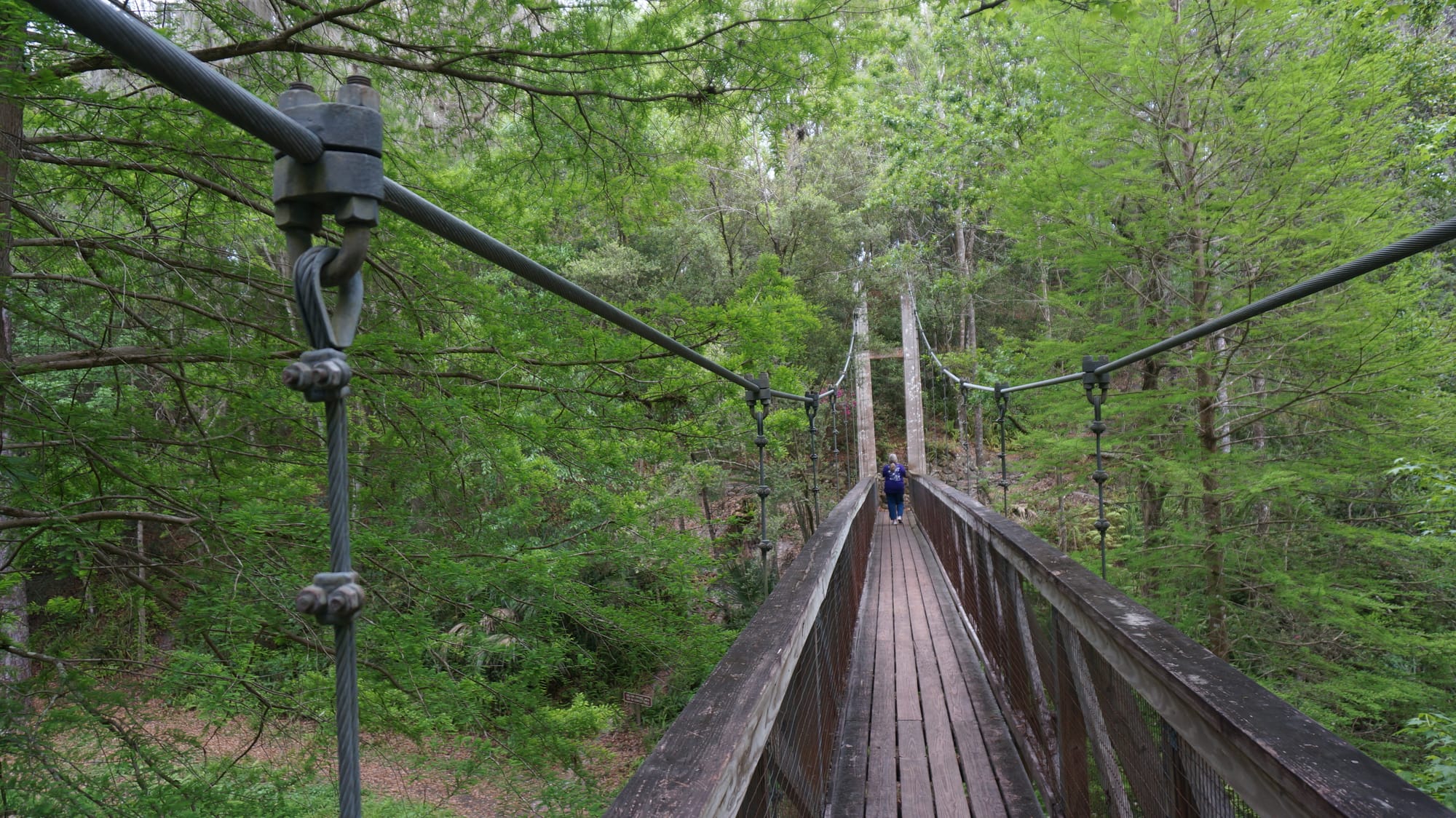
After another stop to peek at an old riverboat awaiting restoration, we navigated the brick streets of old Palatka to Ravine Gardens, built in the 1930s by the Civilian Conservation Corps. The loop road around this state park has been closed to cars because of a landslide, but that doesn't stop visitors on foot (or bikes) from following the ravine rim.
After stopping at a spring and at that Bartram Trail marker I first noticed as a kid, we made our way south through a residential district and on canopied back roads to a kiosk to commemorate Spalding's Lower Store. It was an important trading post along the St. Johns during the Bartram's time.

On the return ride, we stopped at the historic Peniel Baptist Church, established in 1871. We'd ridden past several churches, but this one held special meaning for Palatka's history. It was here that the Reverend Billy Graham began his life of service. After being baptized in a nearby lake, he was ordained here as a minister in 1939. Now I understood why a mural downtown featured Billy Graham.
After nearly 25 miles by bike, it was time to refuel and recharge. John rode, and I walked, down to Angel's Diner, the oldest diner in Florida. The weather had warmed up to a perfect temperature for our group to swarm the picnic tables and enjoy a hot lunch.

The remainder of the afternoon was ours to enjoy relaxing and exploring on our own. In the early evening, we gathered together over wine and cheese to meet our guides for the next day, with a program on Bartram's botanizing: "Puc Puggy & the Franklinia." It was then time to ramble downtown for another meal.
Bartram Hikes
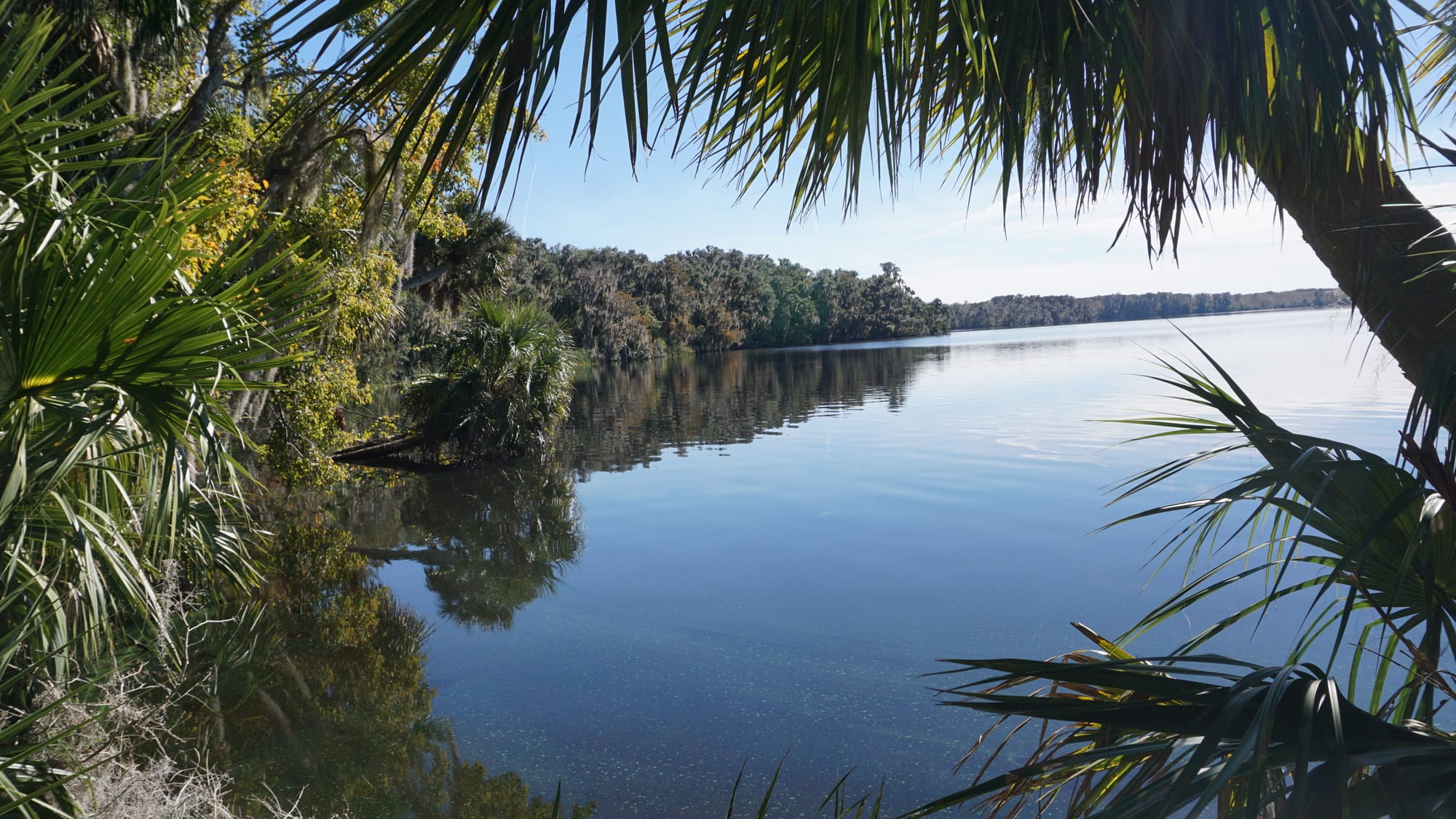
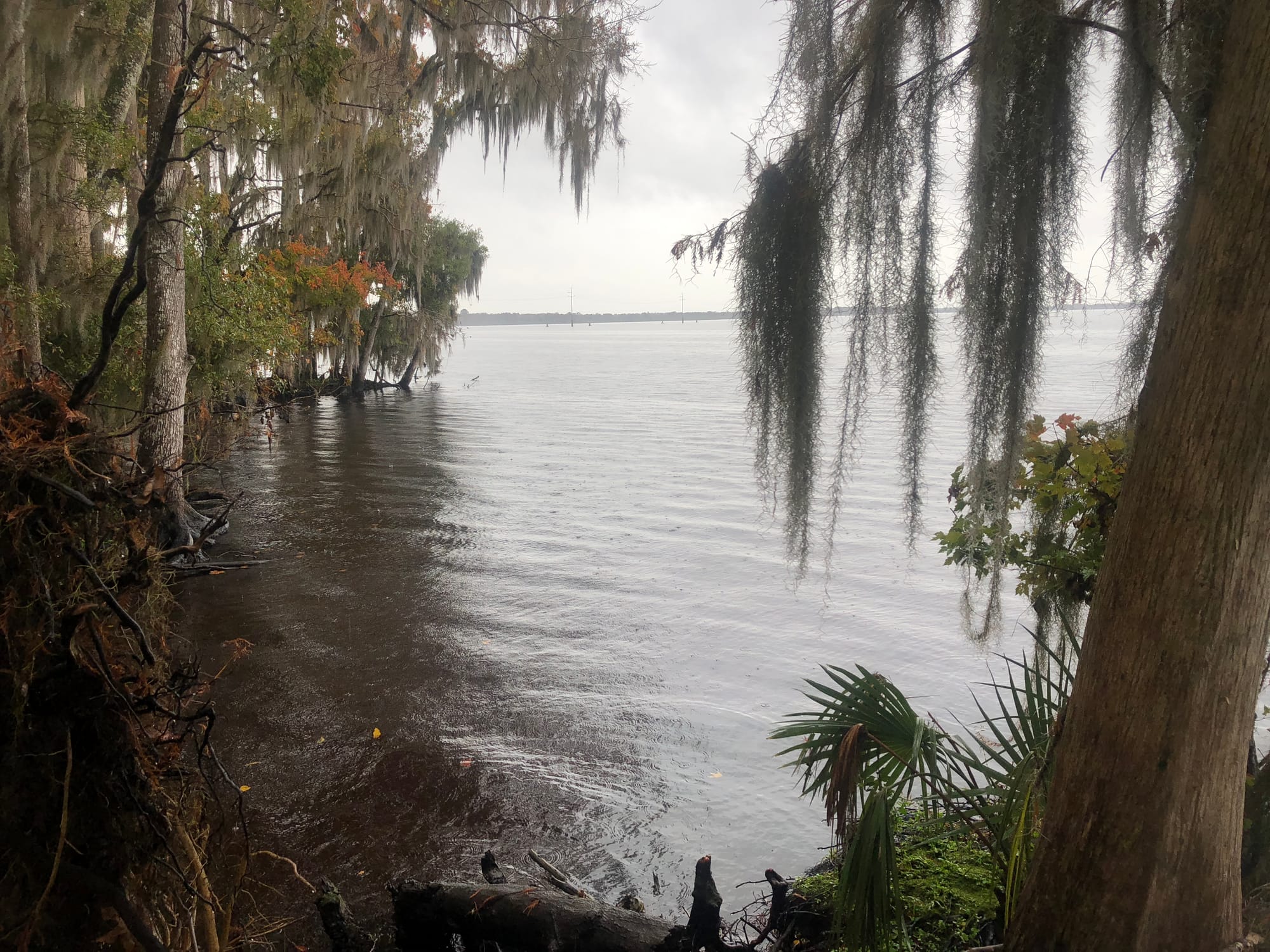
Walking along a wild shoreline at John's Landing in Welaka State Forest, I was grateful that it had finally been opened up to hikers. Mud Spring was my first-ever hike here. When I walked the rest of the trails for 50 Hikes in North Florida, I was a little disappointed that they followed forest roads and only touched the river twice. That's no longer true. Thanks to efforts led by volunteer Mike Stallings, a new footpath leads along the riverfront between Orange Point and John's Landing.
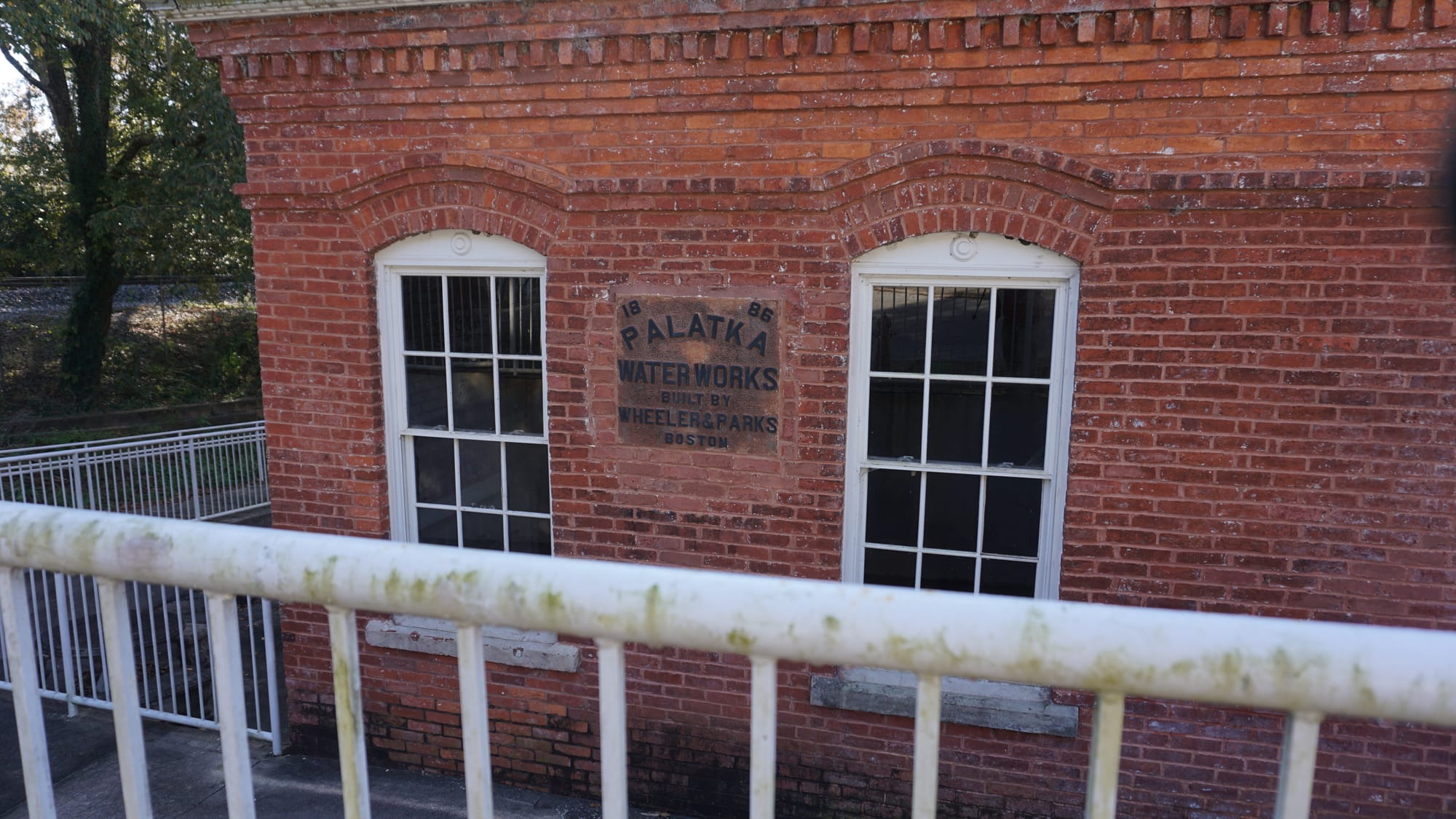
Before we made it to this beauty spot, we spent the morning roaming the grounds of the historic Palatka Water Works, home to the Water Works Environmental Education Center. Volunteer Shann Purinton showed us around the facility, which was built in 1886 to provide drinking water for the city of Palatka, as well as water for firefighting in the wake of a fire that destroyed downtown.
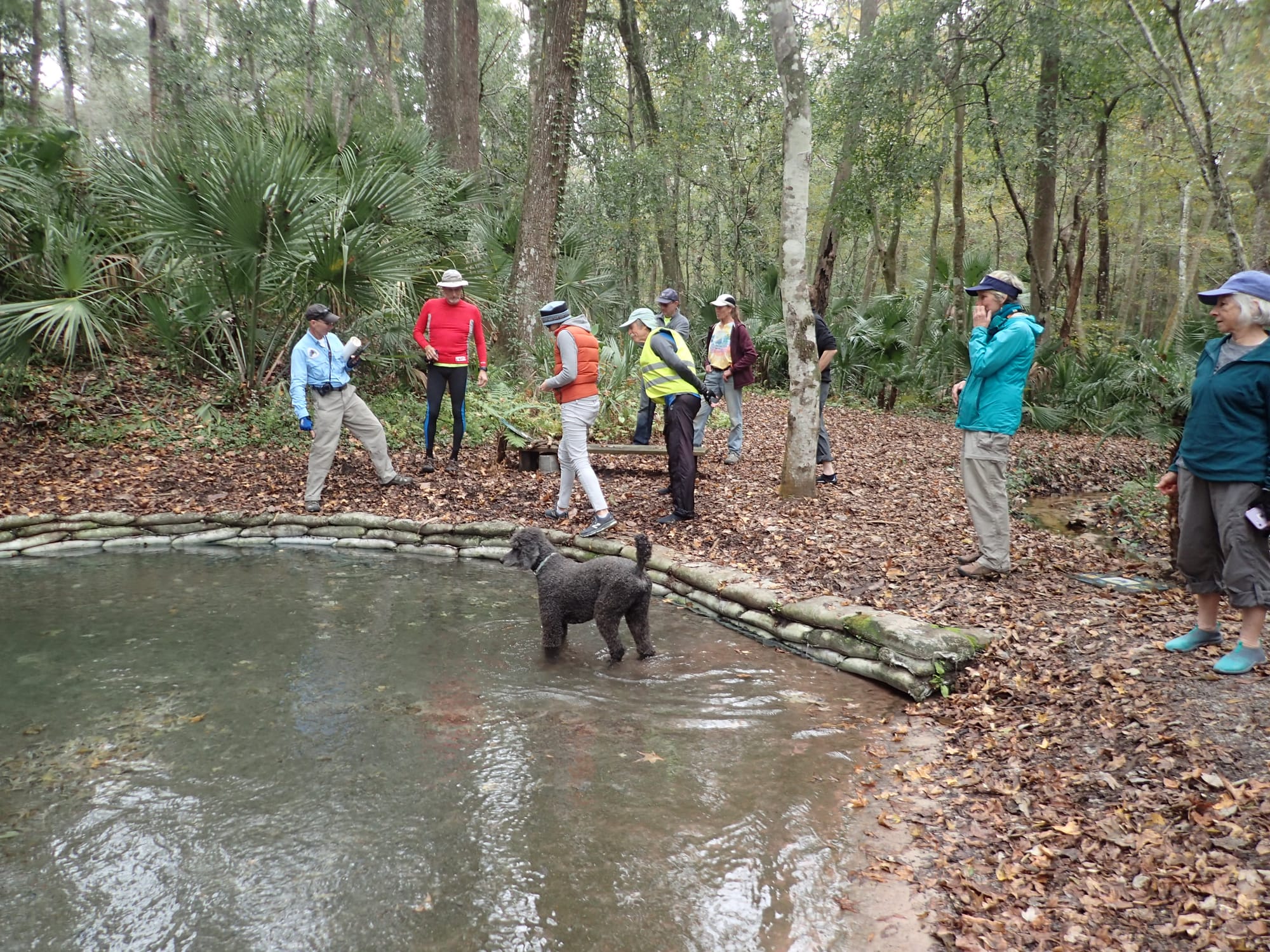
Dick Franz, who enjoyed a career as a scientist at the Florida Museum of Natural History, led us along the Puc Puggy Trail, an interpretive walk in the woods based on Bartram's Travels. A highlight of the short hike was seeing the large gopher tortoise enclosure for rescued tortoises, set atop a sandhill habitat.
From there, we made a brief stop at Rollestown, where the Bartrams made several visits. As was true with many other Bartram sites, the actual archaeological site is on private land, in this case a power plant. It did not occur to the state of Florida a century or more ago to set these special places aside. The historic marker sits in a small wayside park along US 17.

After our hike at Welaka State Forest, Sam had a treat for us. We visited Mount Royal, a notable historic site. One of Florida's larger burial mounds, it sat in the middle of a large village that the Bartrams visited in 1765. It sits just outside the edge of Welaka State Forest, surrounded by a subdivision. An 1894 archaeological expedition discovered copper tools, beads, and pottery. A later dig uncovered the remains of a Spanish mission circa 1587.
Atop the mound, Sam read a passage from Bartram. Beneath the ancient moss-draped oaks, atop this ancient burial site, it felt like a prayer.

Bartram by Water (and Land)
On our first stop in Welaka, we paused to visit a kiosk pointing out the many springs that the Bartrams visited along this shoreline of the river. Having only known of Mud Spring, I had no idea that the St. Johns had so many in such a compact area! And that's why the last full day of touring was devoted to them.
Dean Campbell led the group out on the water, following the Bartram Trail markers up and down the river between Welaka and Satsuma. During his years as a scientist for the St. Johns River Water Management District, Dean used John Bartram's journal to help him research sites as a part of his work. Thanks to his in-depth knowledge of both explorers' stops along the river, he developed the overall map of locations that you'll see inside the St. Johns River Center.
Being the paddler of our duo, John headed out on the water with Dean and the group, and wrote a nice recap of his adventure visiting the springs.
 John Keatley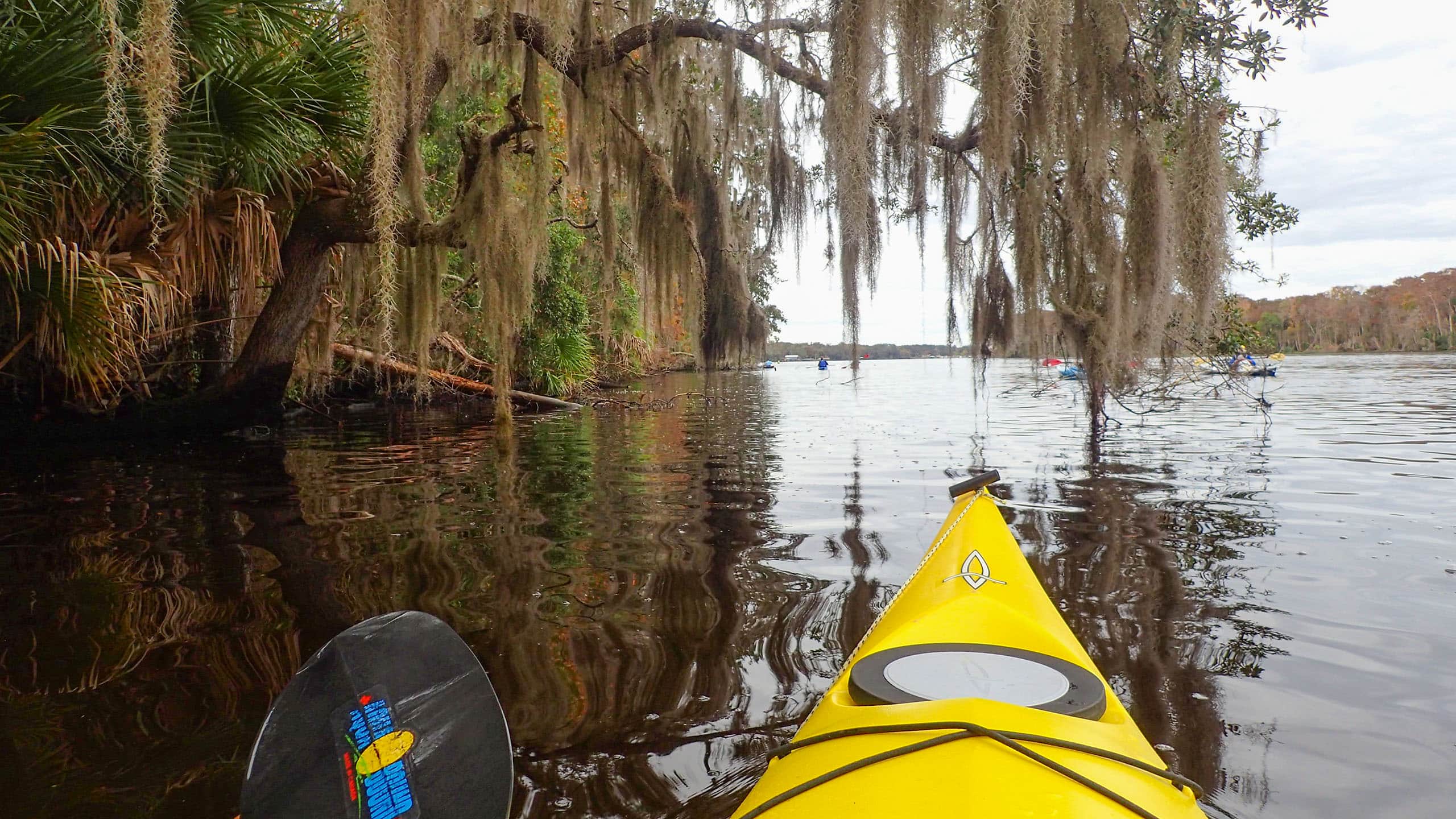
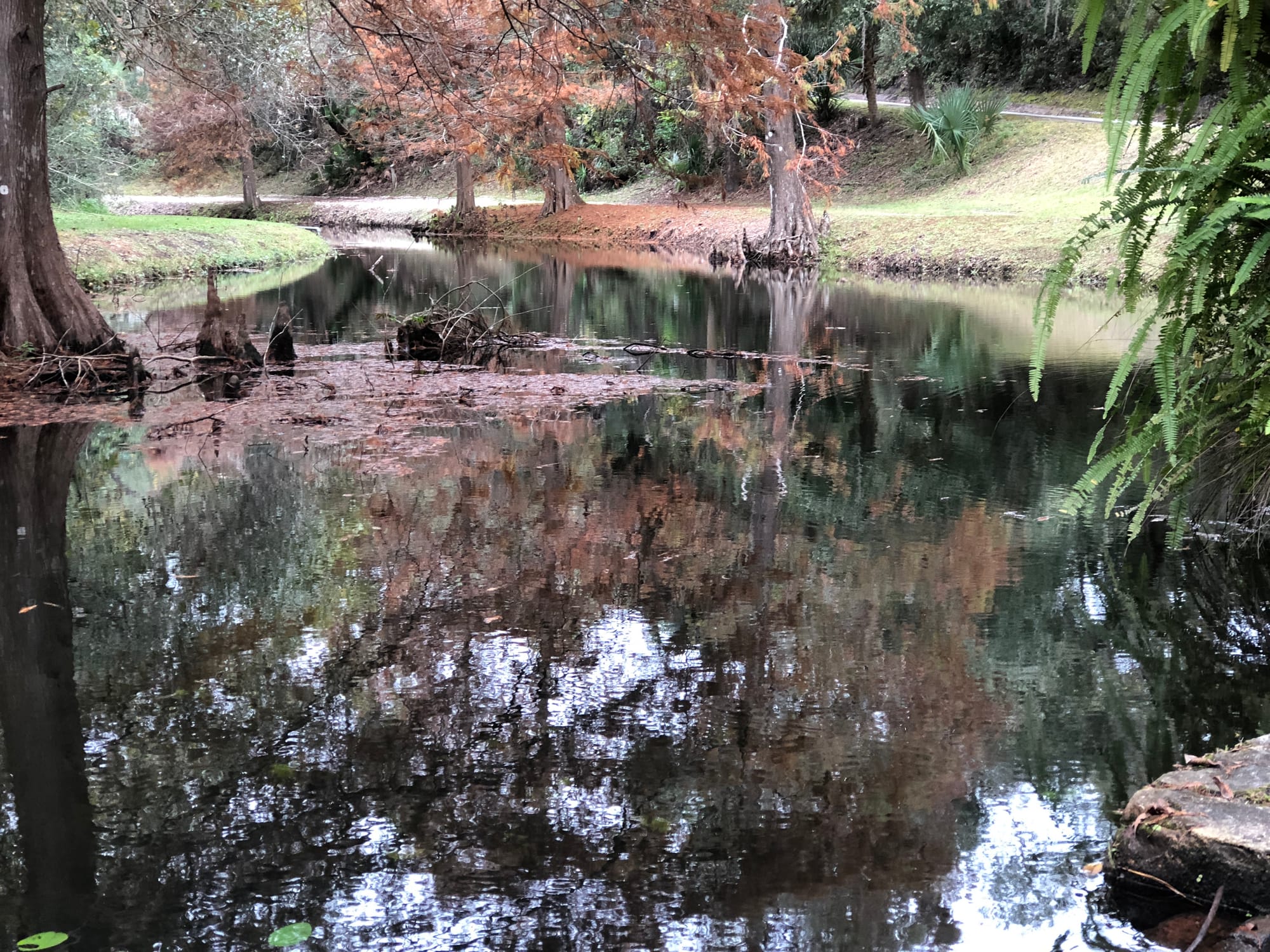
I decided to dig more deeply into Bartram's travels on land around Welaka. My first stop was Ravine Gardens, to hike the loop again and count the springs. I hadn't done the full loop in more than a decade. I found two bubblers and the more notable sulfur spring we'd stopped at on the bike ride, all feeding Whitewater Branch, which in turn fed the Palatka Water Works for nearly 70 years.
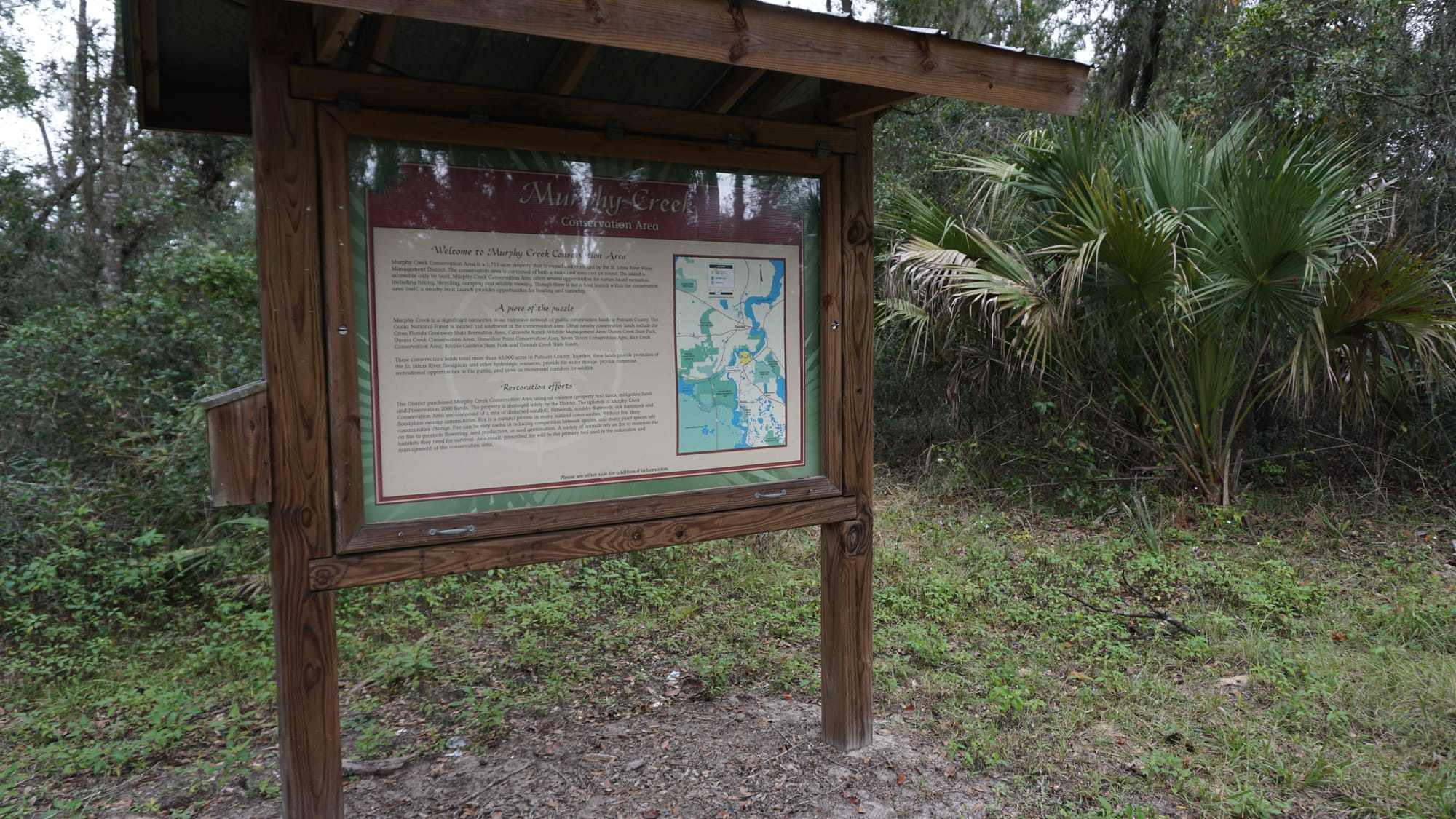
Next stop was Murphy Creek Conservation Area in Satsuma. I'd hoped to find a way on their trail system to be able to see Murphy Island - which John Bartram described as "a high shelly bluff, where thousands of orange-trees surrounded us, with red cedars and live-oaks" - from the land side. No luck. The trail was a simple loop, optimized for equestrians.
I headed on to the Beecher Run Nature Trail at Welaka Fish Hatchery, which I'd visited more than 15 years before with my parents after our one and only ride together across the river on the Fort Gates Ferry. I had only a dim memory of the trail, and didn't know it had anything to do with Bartram's Travels. As the spring is not far from Mount Royal, it's thought the Bartrams followed the run up to its source. A trail marker is affixed to the observation tower at the trailhead.
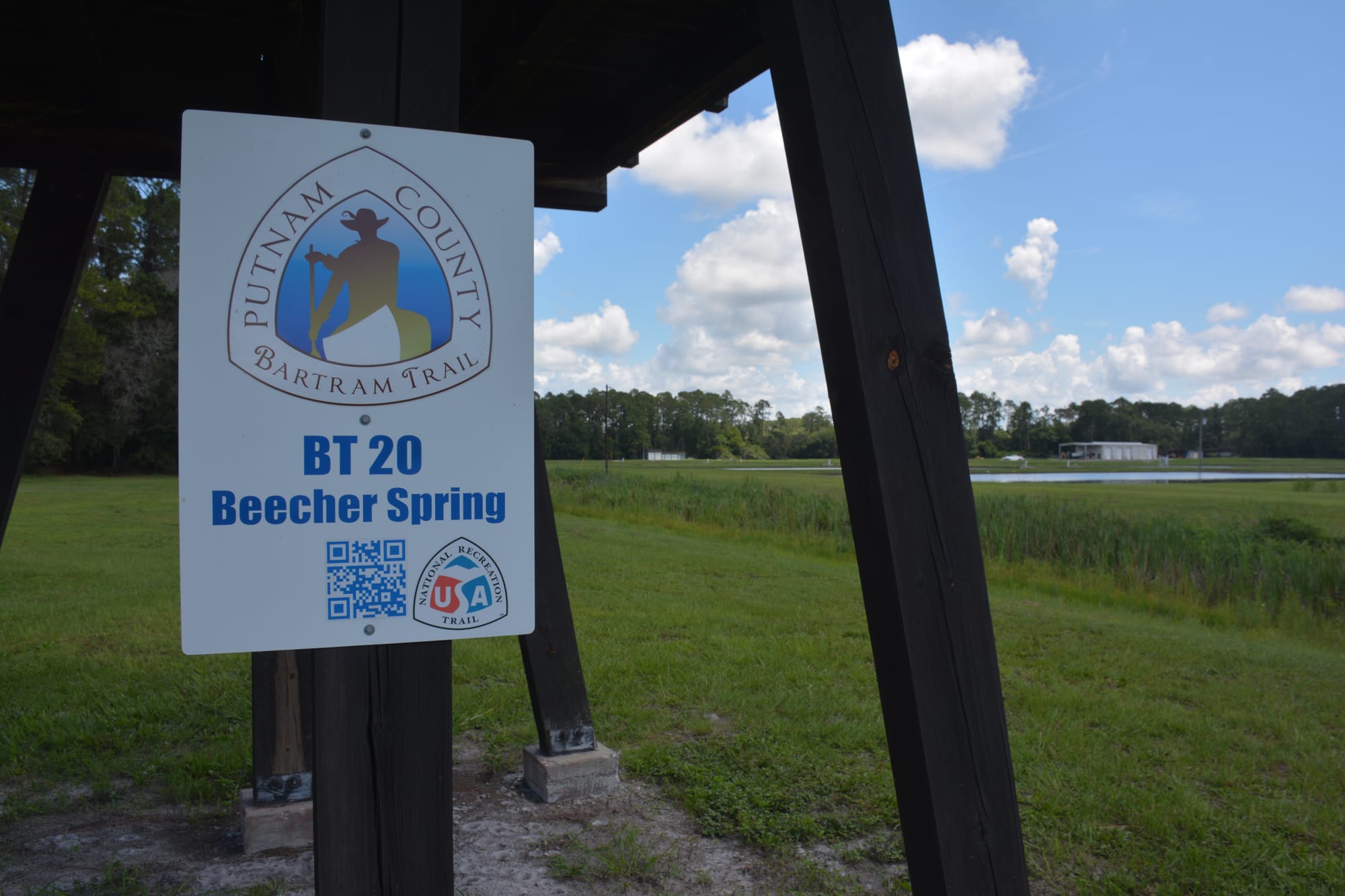
Walking the short loop, I was delighted to see the age of the pine trees, and the fact that you could walk out to a small bluff to look out over the spring-fed ponds of the fish hatchery. Established in the 1920s, this federal hatchery diverted the spring water for its use. While you can't walk to the spring, the run that flows past the bench at the overlook is crystal clear. As I stood there watching the wading birds in the ponds, a pair of bald eagles circled overhead.
Just up the road at 40 Acre Park, I was delighted by the bird life and the quiet. This small city park has recreational facilities, but the hidden gem is the old ponds that the hatchery abandoned decades ago. They've become rectangles of swamp, with worn paths between them. As I walked down the causeway, two sandhill cranes looked up, curious.
Trails Connect
We tend to pack as much research as we can into our trips. So during our "unscheduled" time, John and I slipped away with Robert and Laura for a ride on the newest portion of the Palatka-Lake Butler Trail.
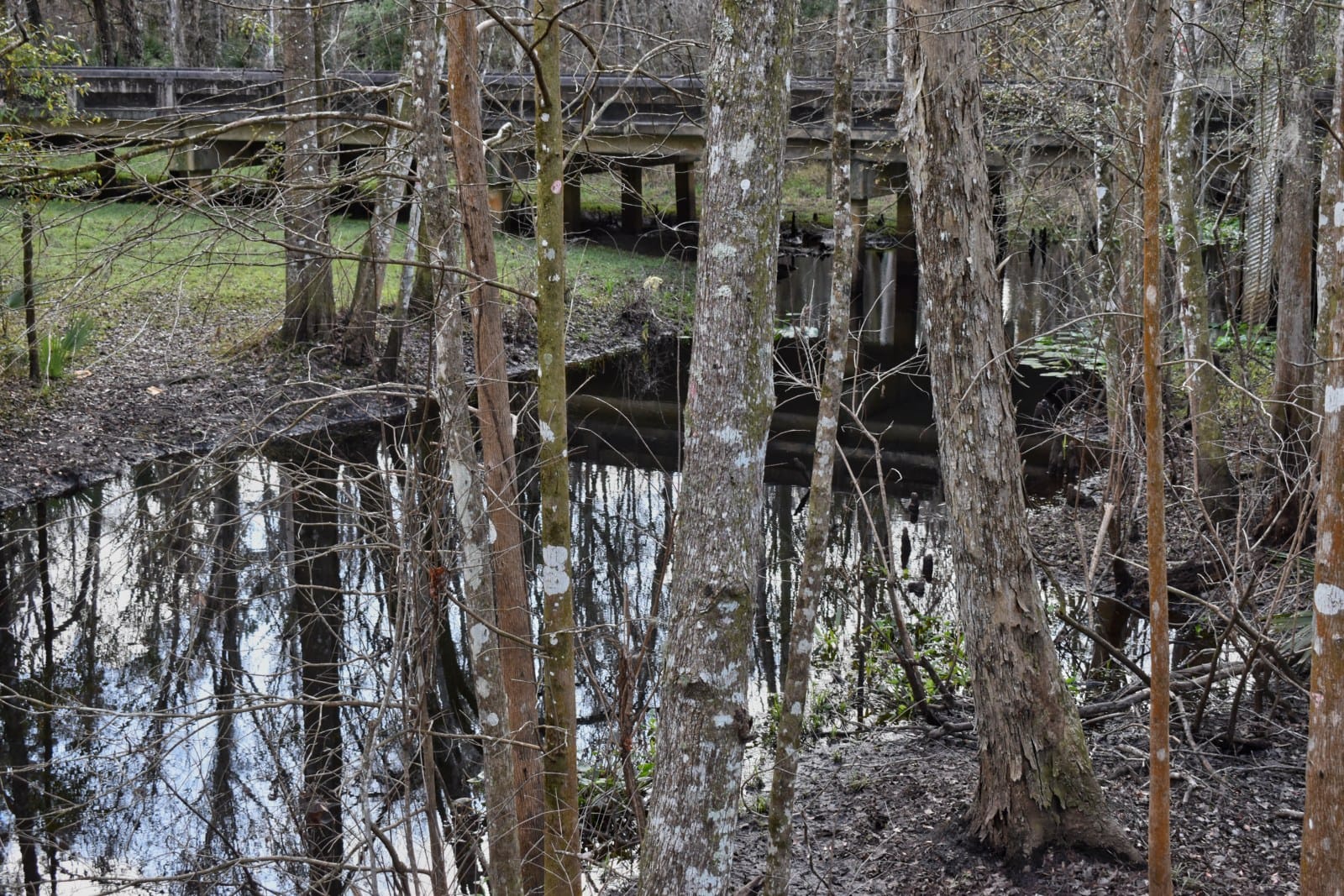
This paved extension from Carraway into the edge of Palatka, ending not far from St. Johns Water Management District headquarters, meant a radical change at Rice Creek. I'd hiked over the beautiful old railroad trestle there more than once, as it was part of the Florida Trail.
We found it replaced by a long-span bridge that a truck could drive across, with a new causeway supporting it. Remembering the beauty of the creek crossing, I wasn't fond of the "progress" to make the bike trail happen. The trail had officially opened the weekend before we arrived.
Another trail, heading in the opposite direction from Palatka to St. Augustine, was close to completion and we'd expected to ride it as a group before we all departed the next morning. Nasty weather that morning made our plans change. Mike Adams, who assumes the persona of William Bartram at special events, invited us out to his riverfront plantation instead. In full Bartram regalia, he led us on a hike out to the St. Johns River.
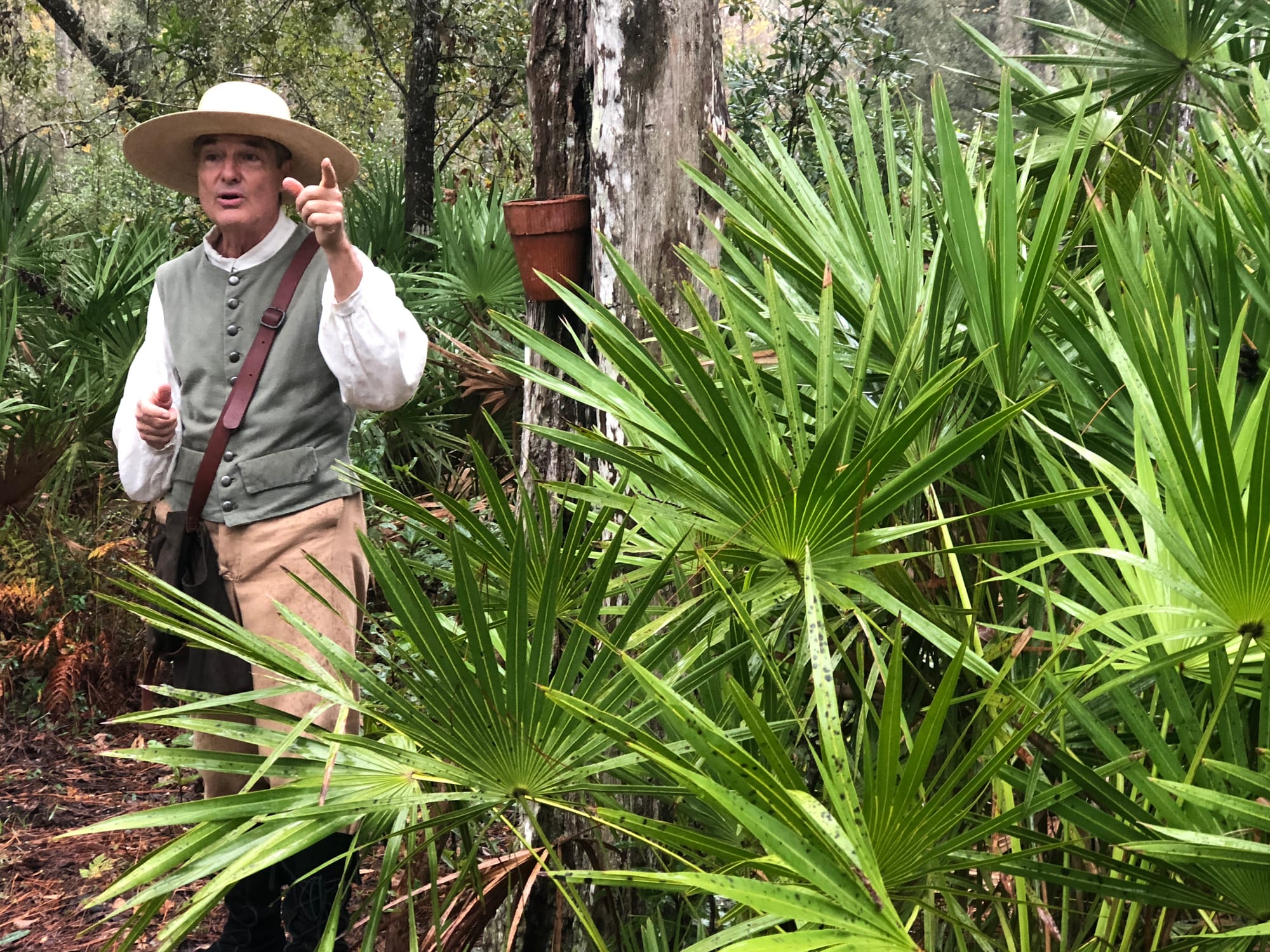
We stepped out onto a boardwalk and surveyed the sweeping view. Progress, it seems, has left the St. Johns River alone for much of its length. While cypress logging and the building of towns, farms, and bridges have changed the landscape forever from what the Bartrams saw and documented, there are still long stretches of the river that are wild. The Bartram National Recreation Trail lets you experience the river through the eyes of William and John, our earliest explorers who left a trail for us to follow.
Take the Tour
If you'd like to join a Bartram Adventure Tour, plan ahead! Except for breakfasts and a lunch or two, dining is on your own, but lodging and guides are included. Bring your own bikes (as we did) and/or kayaks, or the tour leaders can arrange a rental for you. Tour leaders take the group by van to the more far-flung locations like Welaka and Mount Royal.
You can create your own tour at your own pace by following the directions provided on the Bartram Trail in Putnam County website. Since Palatka is right along the Amtrak route, it's possible to arrive here and enjoy a tour without needing a car. From downtown lodgings, it's a few blocks to restaurants and shops.
Learn More
These are stops we documented along the tour route
 Sandra Friend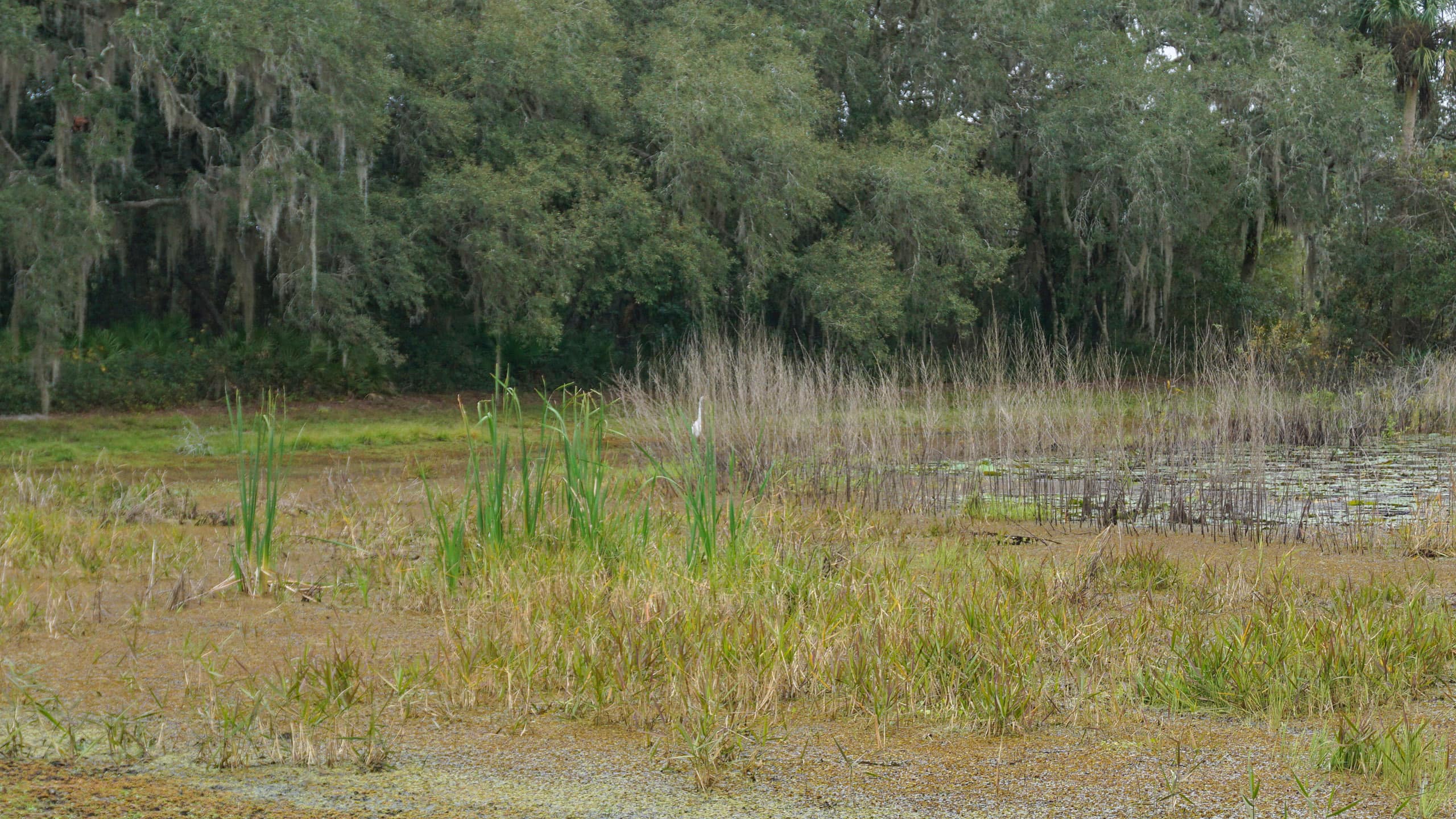
 Sandra Friend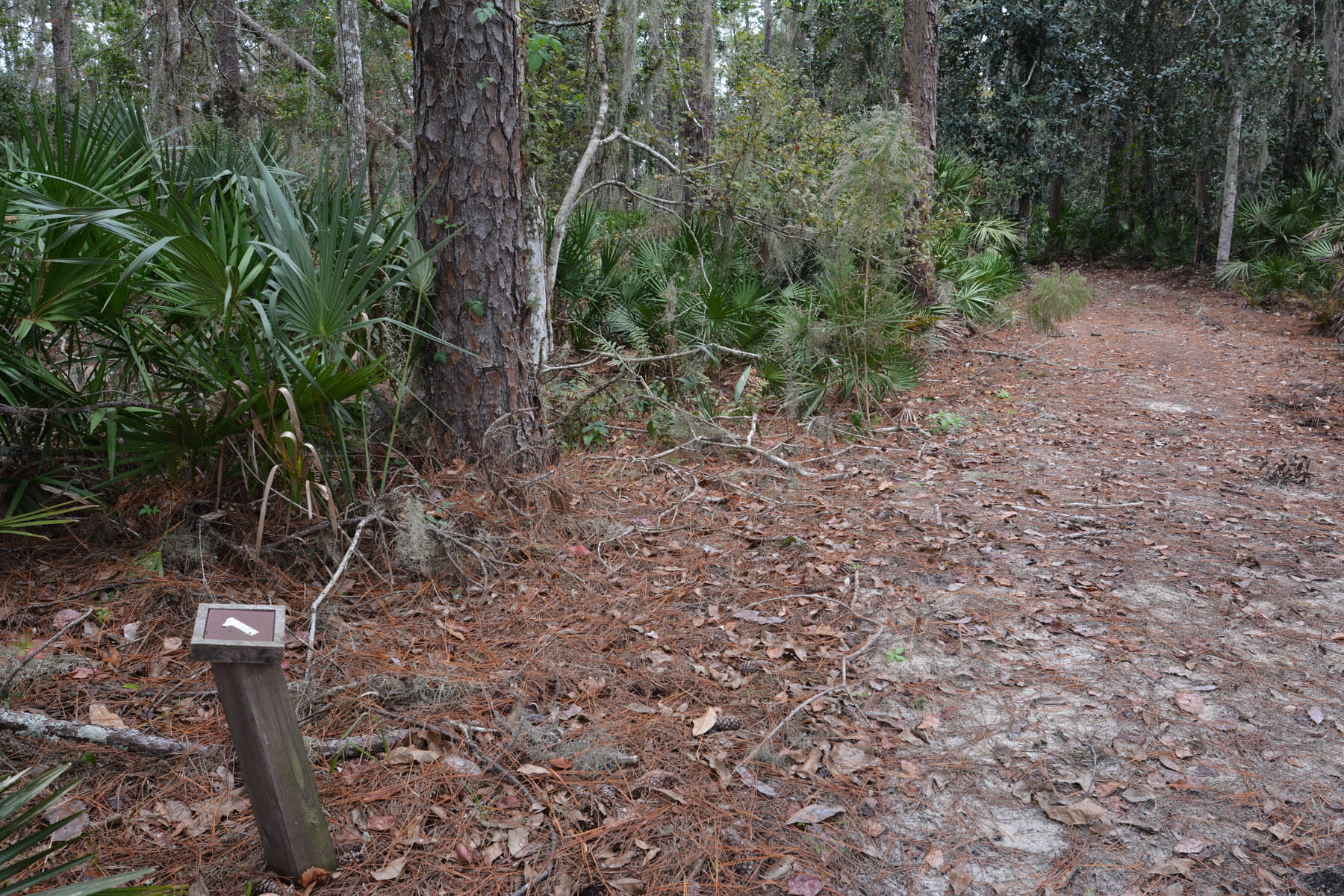
 Sandra Friend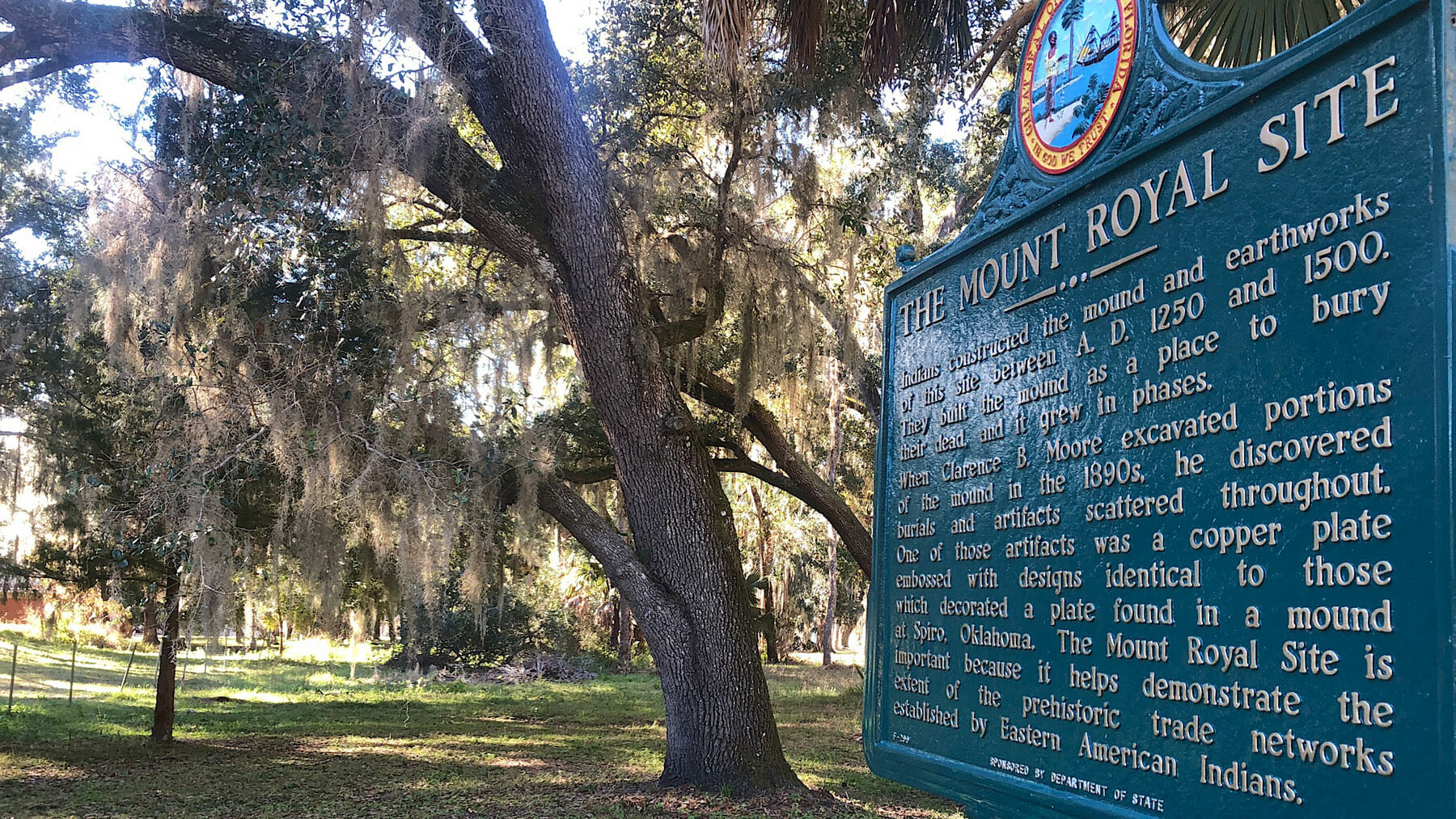
 Sandra Friend & John Keatley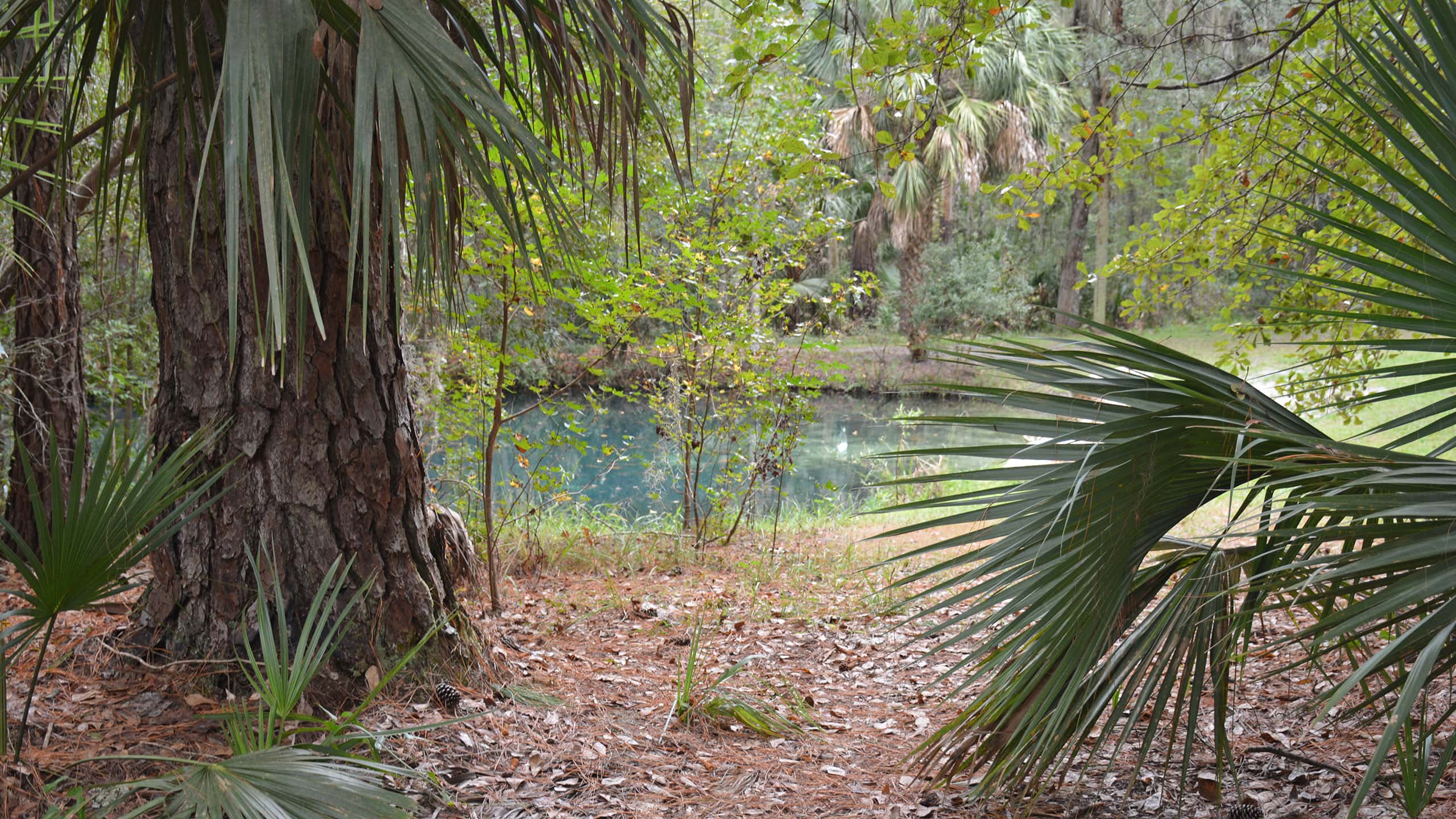
 Sandra Friend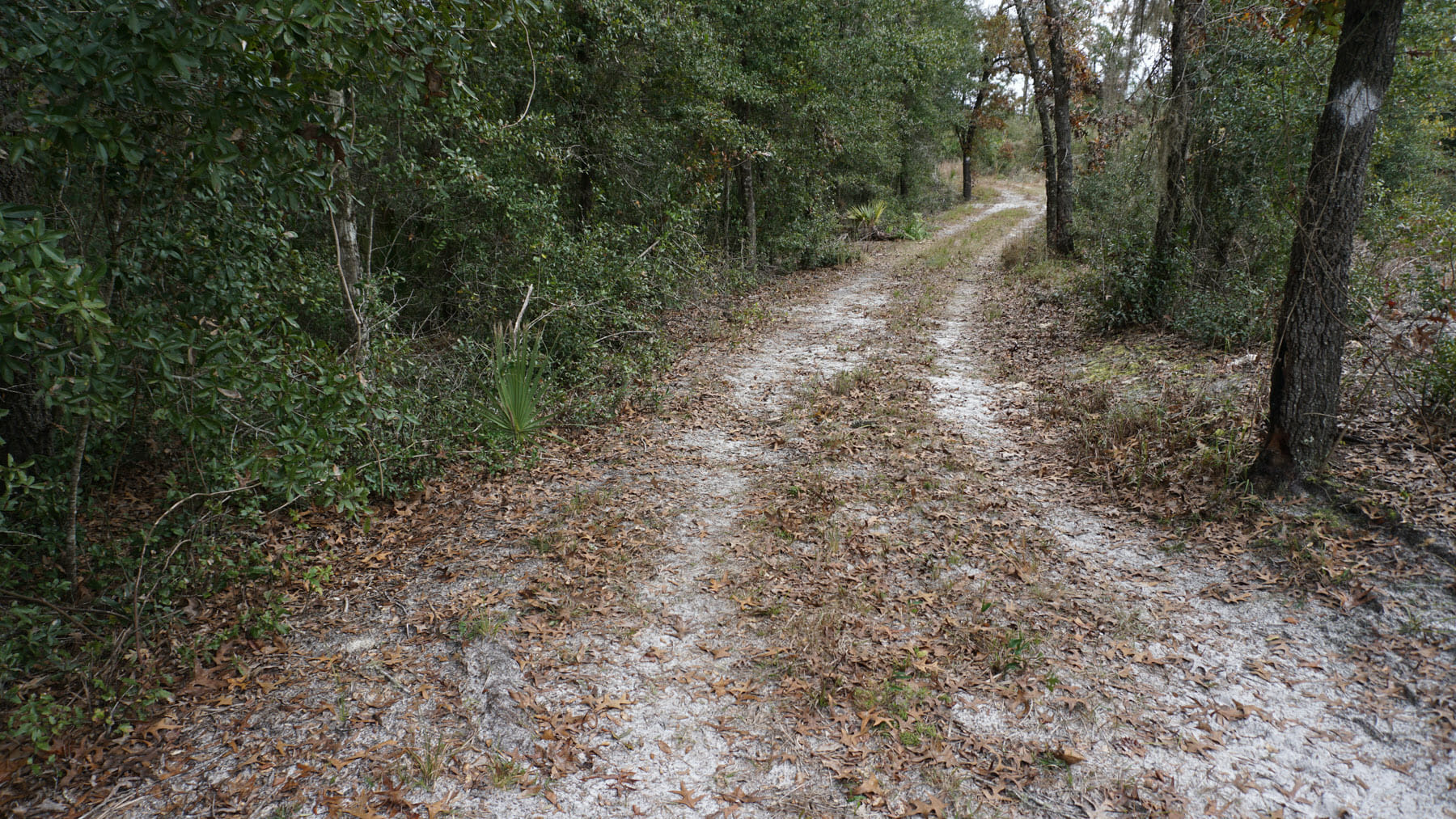
 Sandra Friend & John Keatley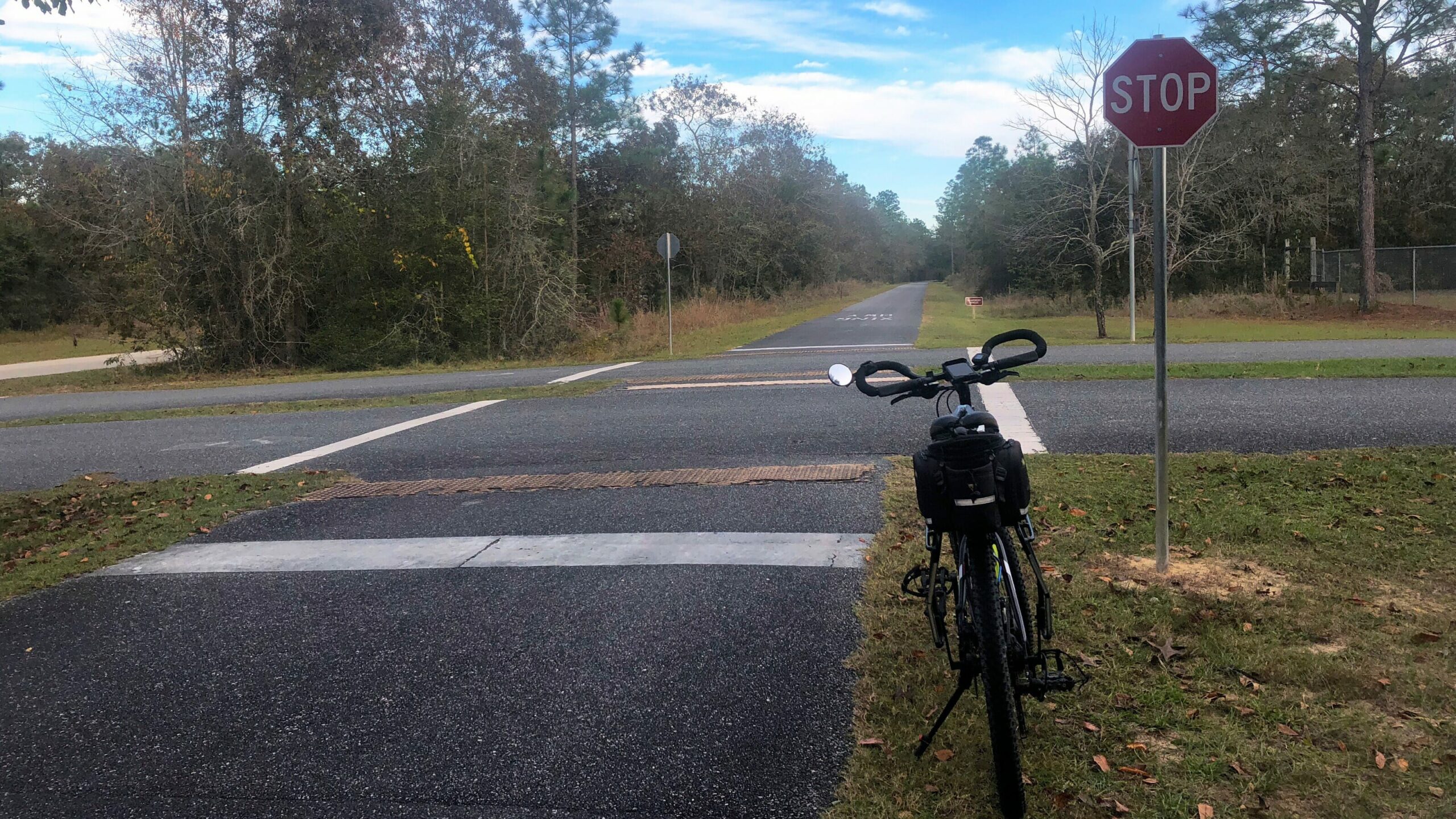
 Sandra Friend & John Keatley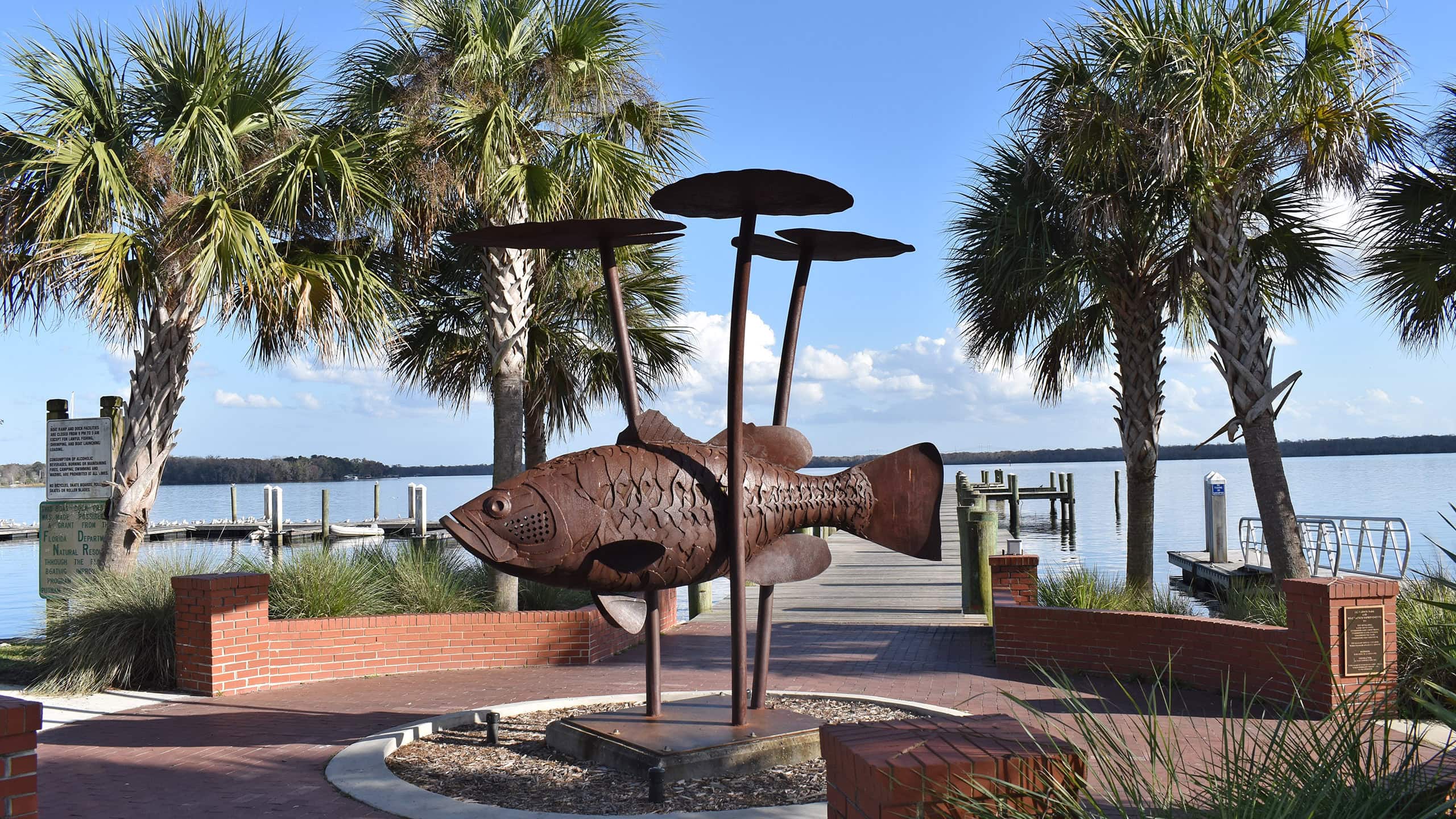
 Sandra Friend & John Keatley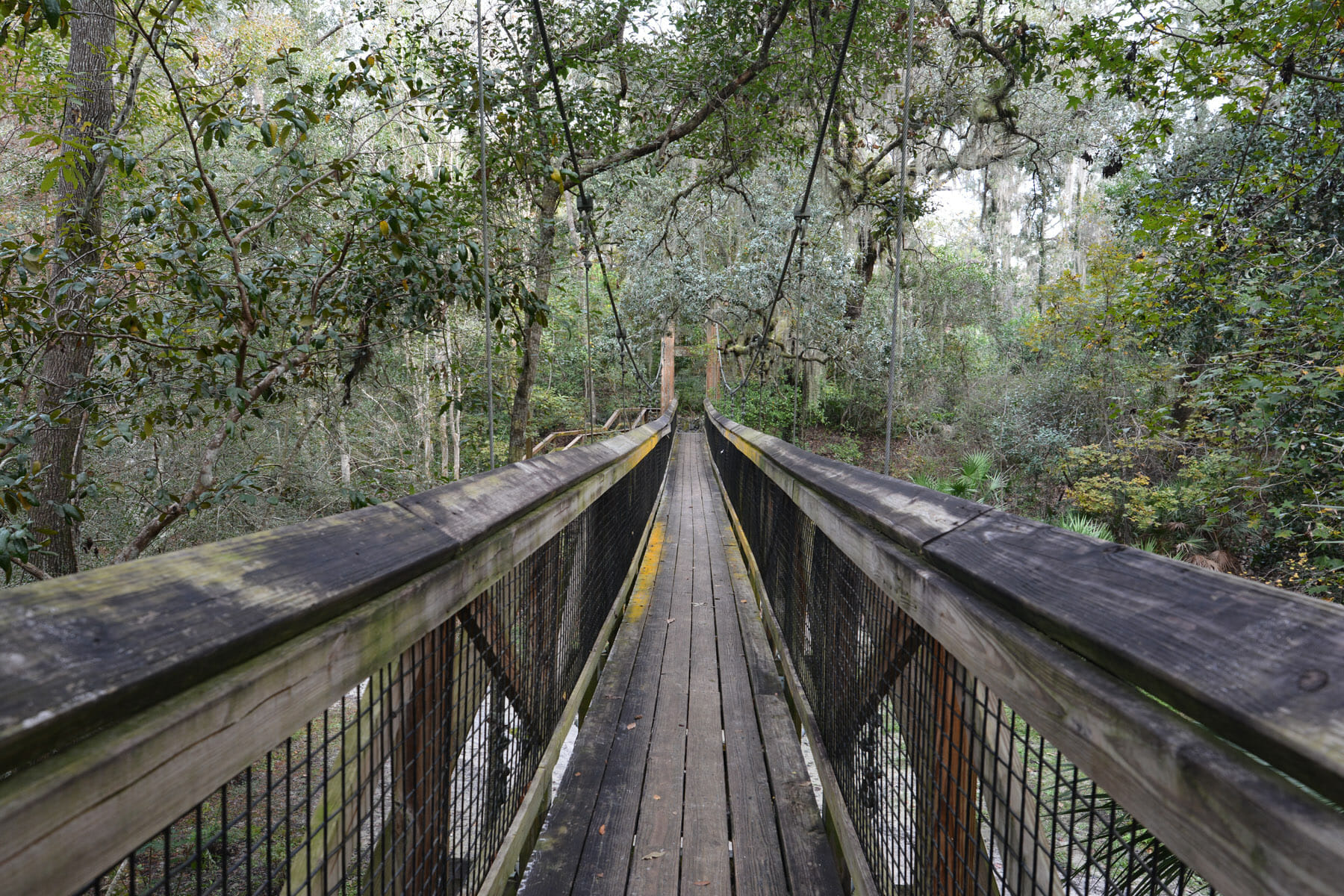
 Sandra Friend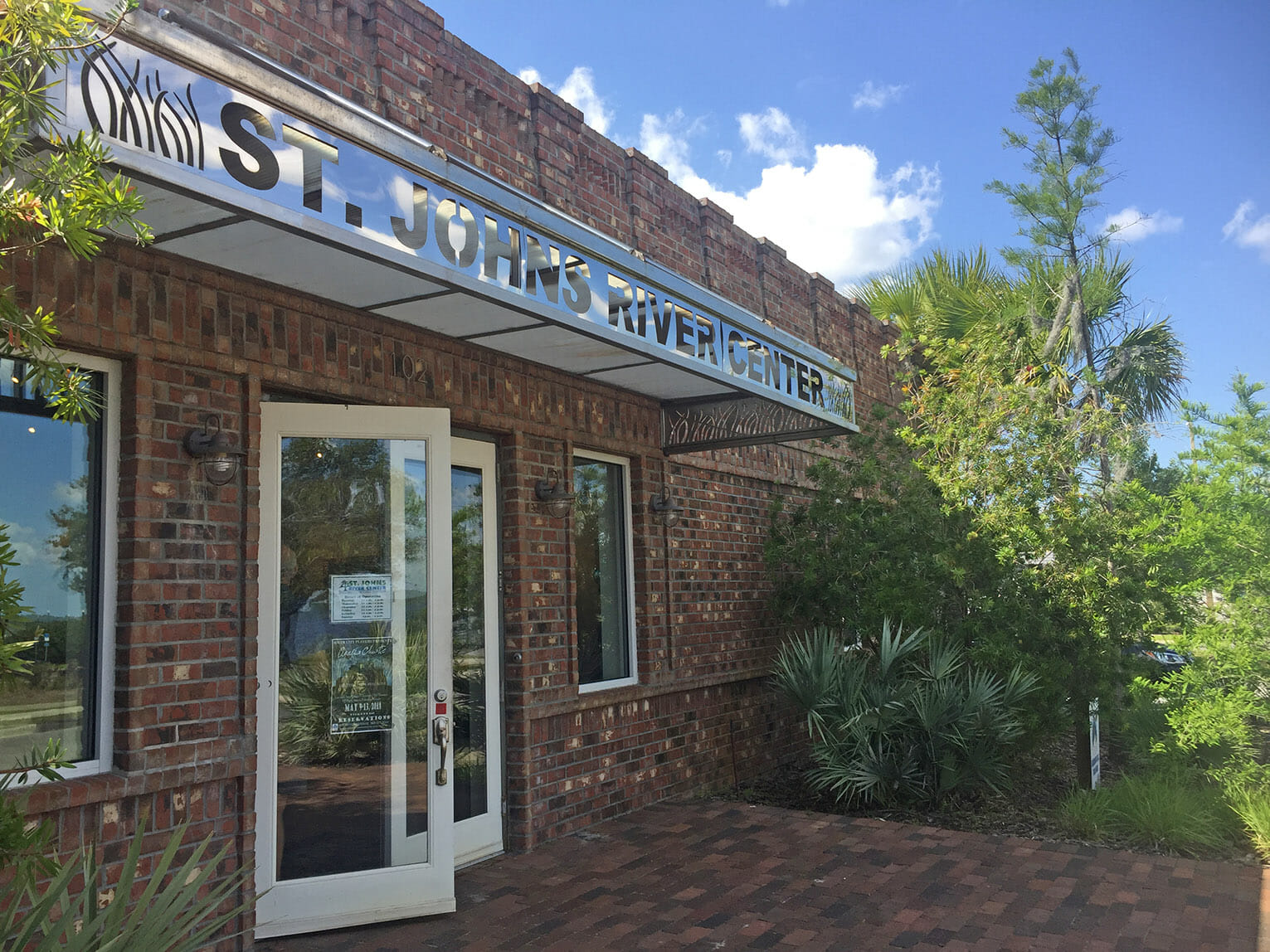
 Sandra Friend