In Gettysburg
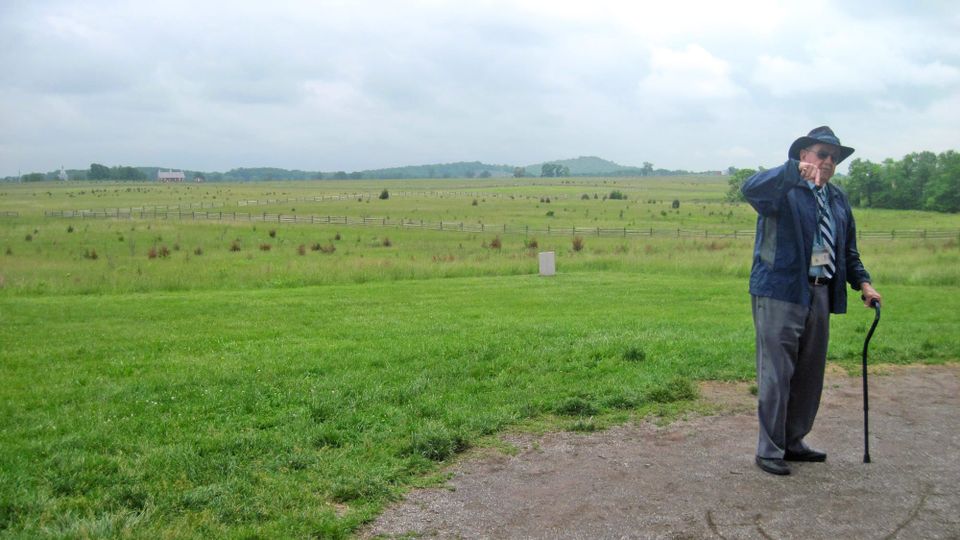
Stopped at the side of the highway as our tour bus waited at a restroom, I could see a distant cluster of towers on the mountain to the west. "Hey, that's Pen Mar!"
We're visiting Gettysburg on foot, led here by a deepening interest in the Civil War history we've discovered along the Appalachian Trail, which is only 10 miles away.
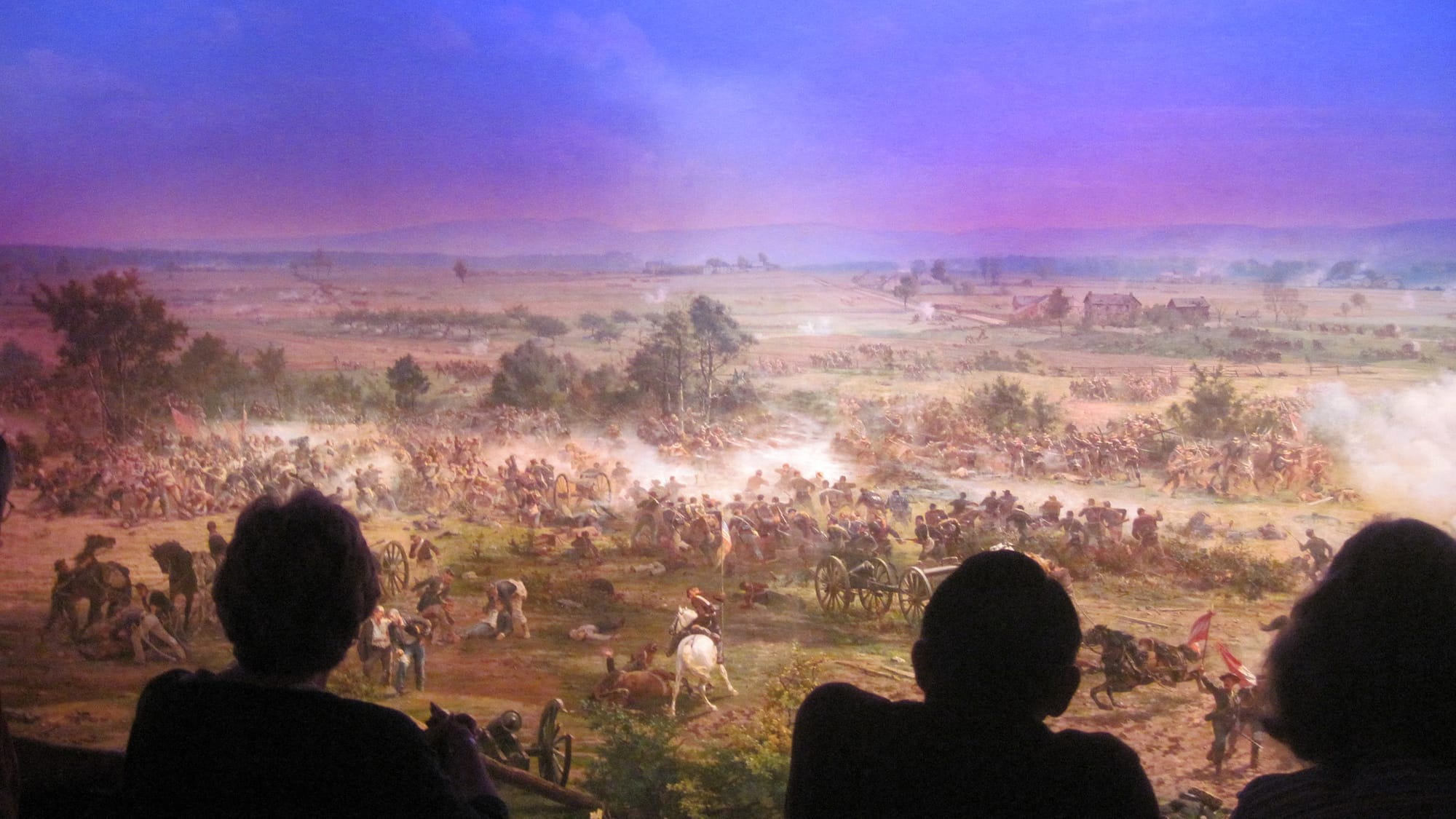
While downtown is quite walkable, it takes a trolley bus ride of 15 minutes to go explore the extensive Gettysburg National Battlefield Visitor Center, home of the Cyclorama, America's largest oil painting, and the country's largest museum devoted to the Civil War.
In lieu of the traditional auto tour, we take a bus tour, and we're in luck today. Our guide, Jim Tate, is a robust 93-year-old who's been providing tour narration since 1951, soon after the Eisenhowers bought their farm south of town.
Jim was a Boy Scout when Franklin Delano Roosevelt dedicated the Eternal Flame at the 75th anniversary of the battle, and met veterans from both sides of the war.
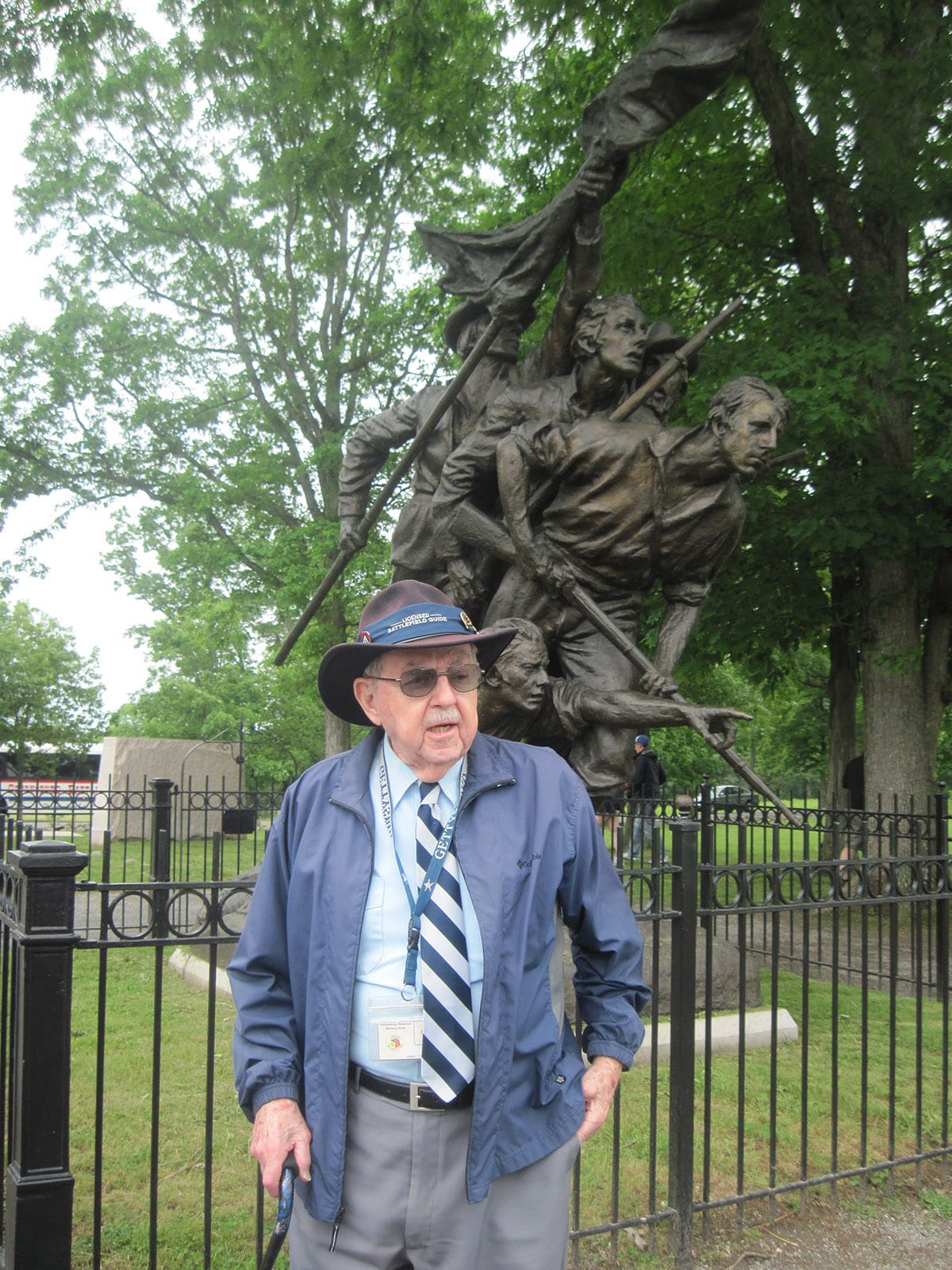
The oldest Gettysburg Guide, Jim Tate met Civil War veterans as a teenager
The 150th anniversary is coming up next year, and Jim is a living repository of Gettysburg history. Among the surprises he shares: women, dressed as men, fighting alongside their husbands on this battlefield.
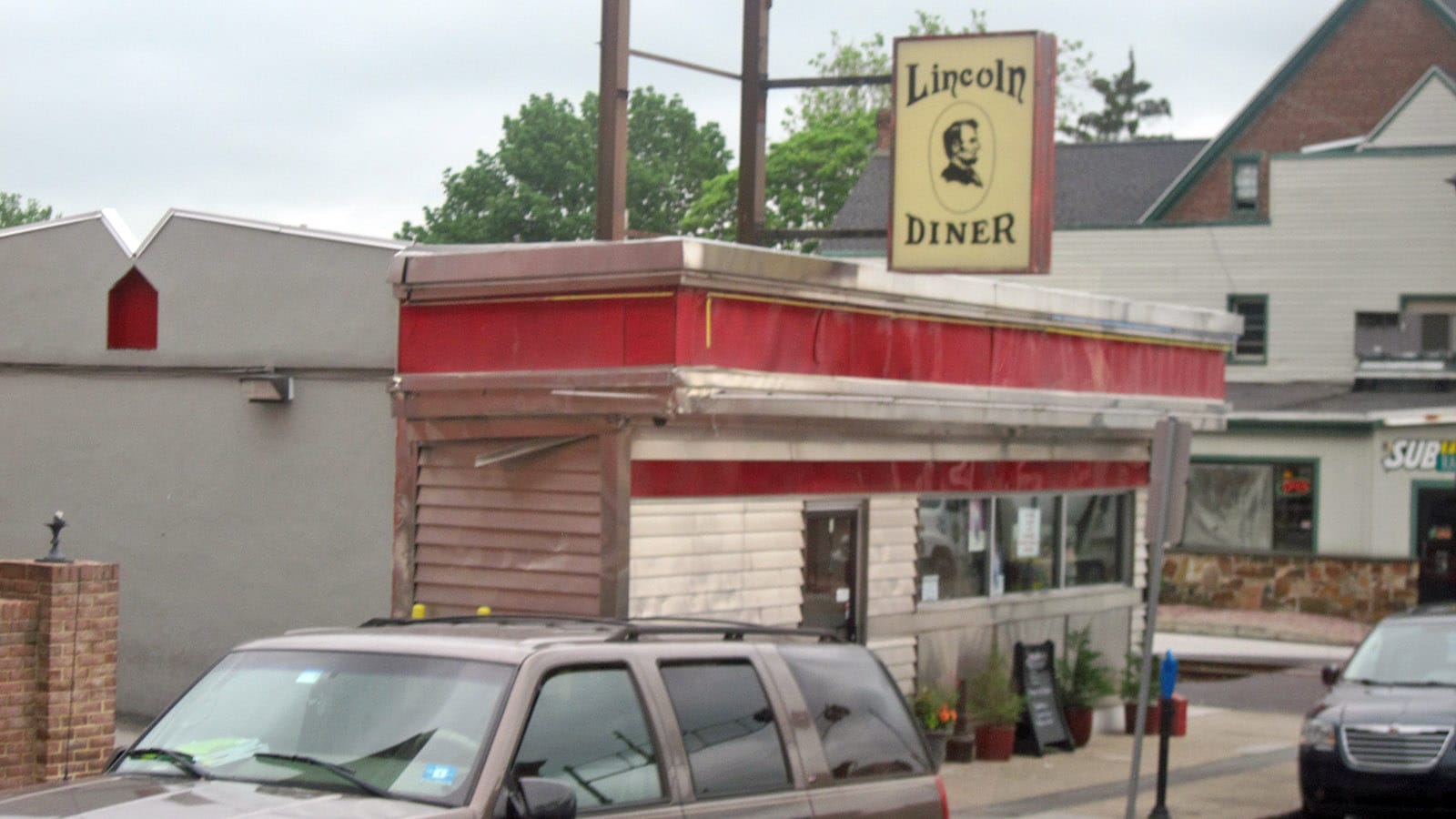
He also has a sly sense of humor. Across from the railroad station where President Abraham Lincoln arrived to dedicate the National Cemetery, giving his famed Gettysburg Address, Jim points out the retro Lincoln Diner.
"Lincoln wouldn't set foot in there. There are too many booths!"
It's an overcast day and we only stop sporadically, but during the tour we can see the mountains to the west, the ones we just spent the past few days walking.
Of course, they're cloaked in rain.
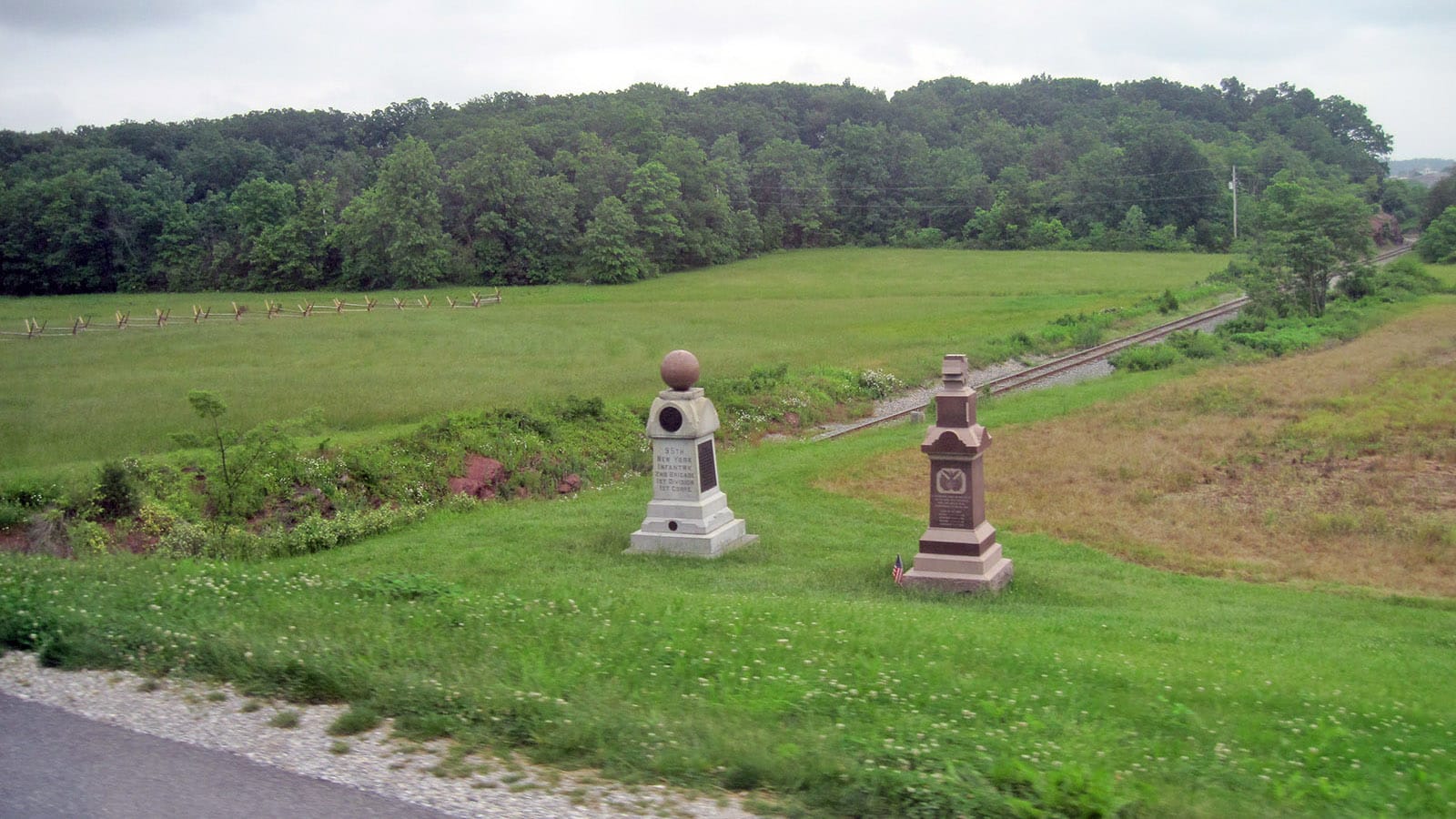
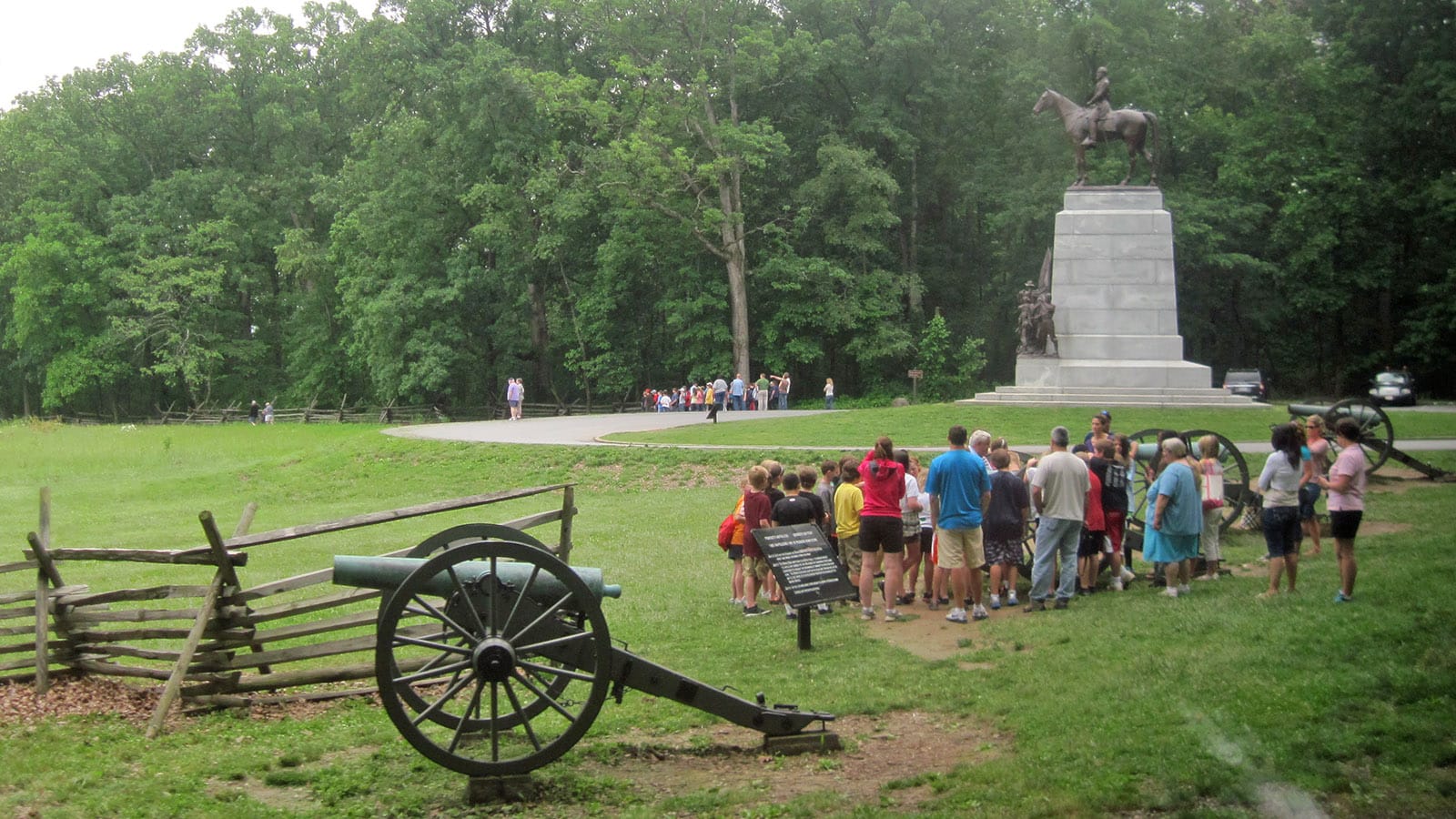
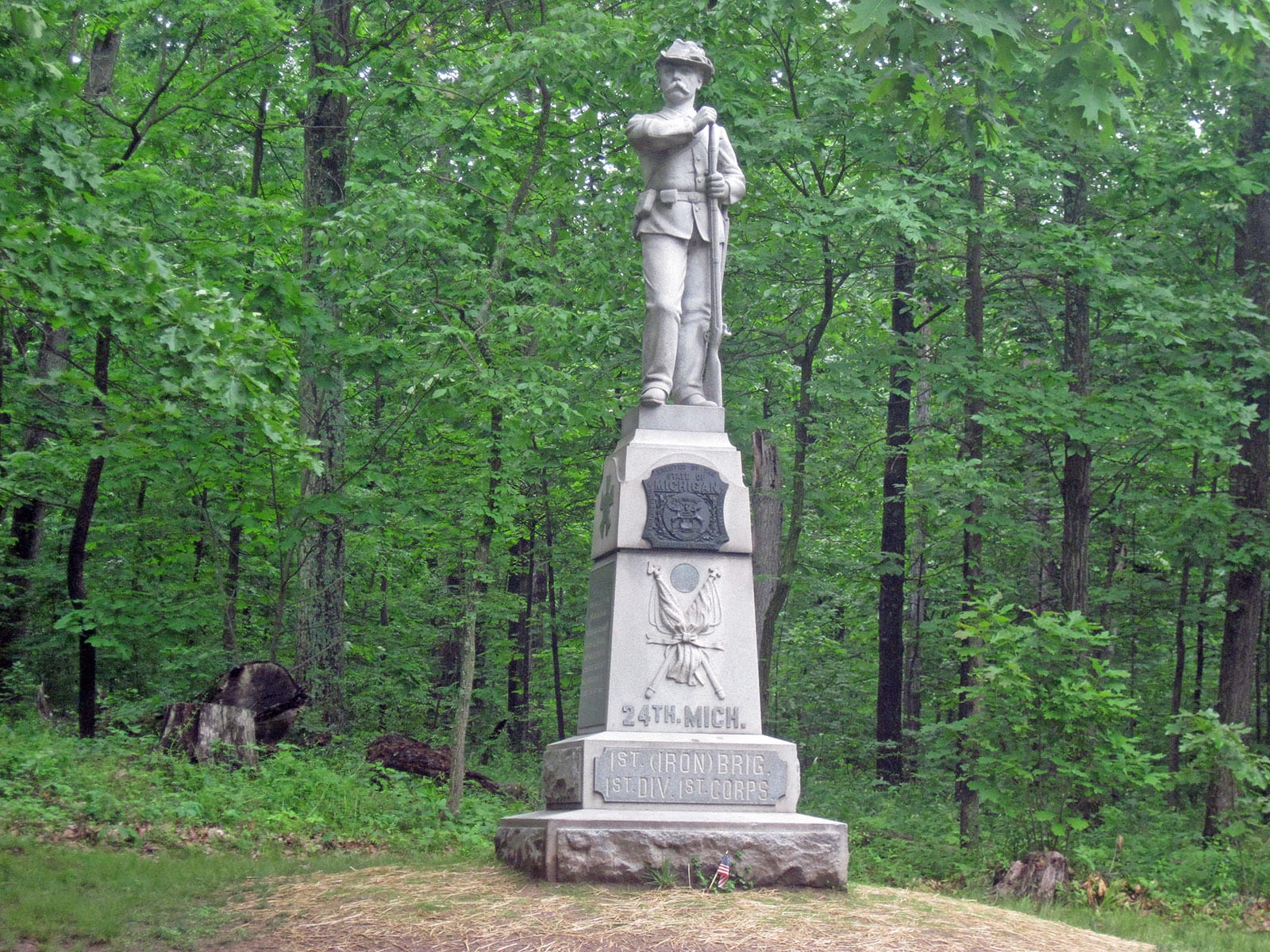
Over old wagon routes that our footsteps followed, the Confederate Army came to Gettysburg. In a mere three summer days 149 years ago, Jul 1-3, more than 51,000 soldiers lay wounded or dying on these hills.
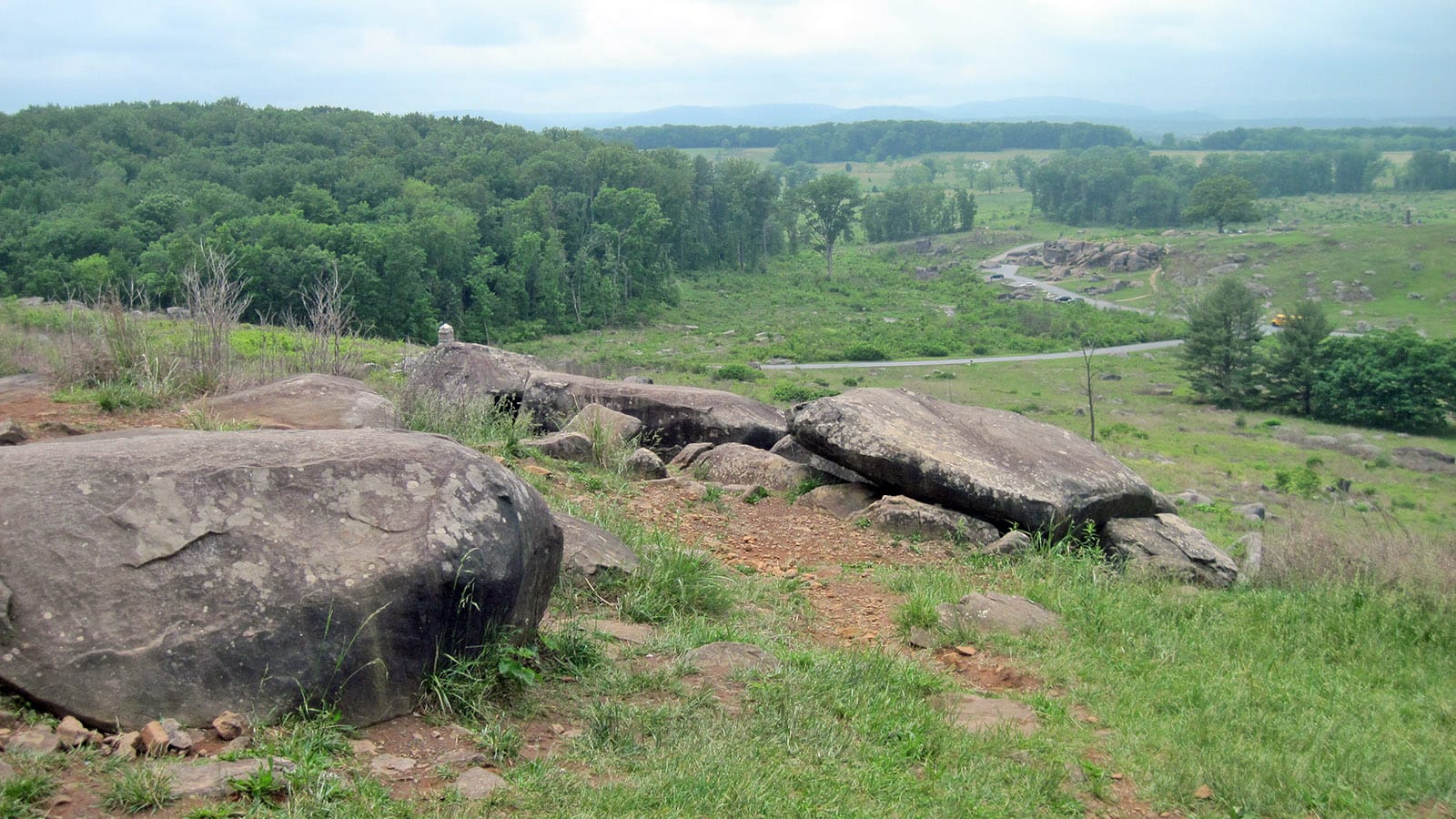
As we, and so many others who come here, feel the cost of war through the many memorials and history recounted through storytellers like Jim, we see these mountains with new eyes, an appreciation for the sacrifices of many and the importance of never forgetting the lessons learned in our country's history.
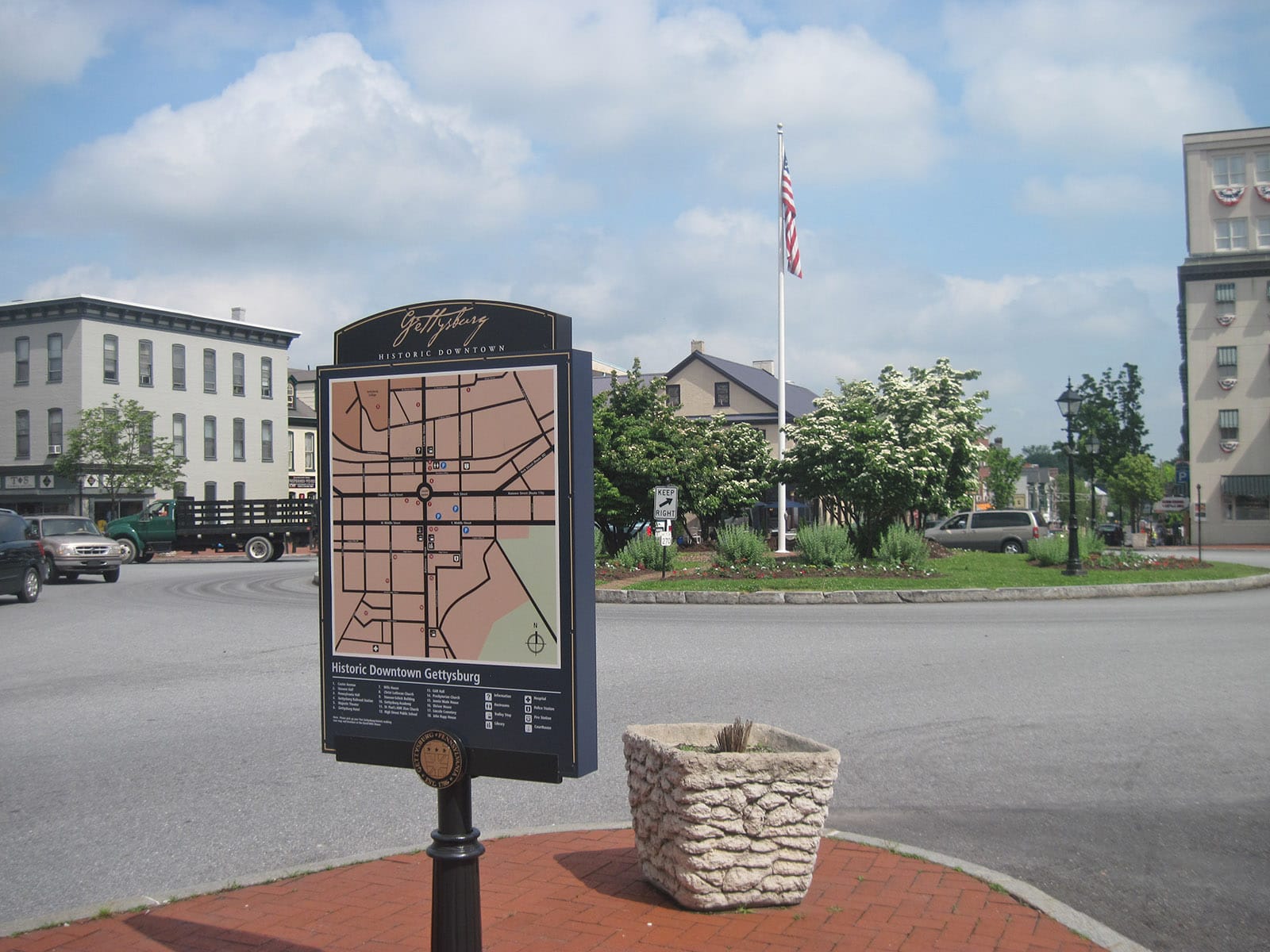
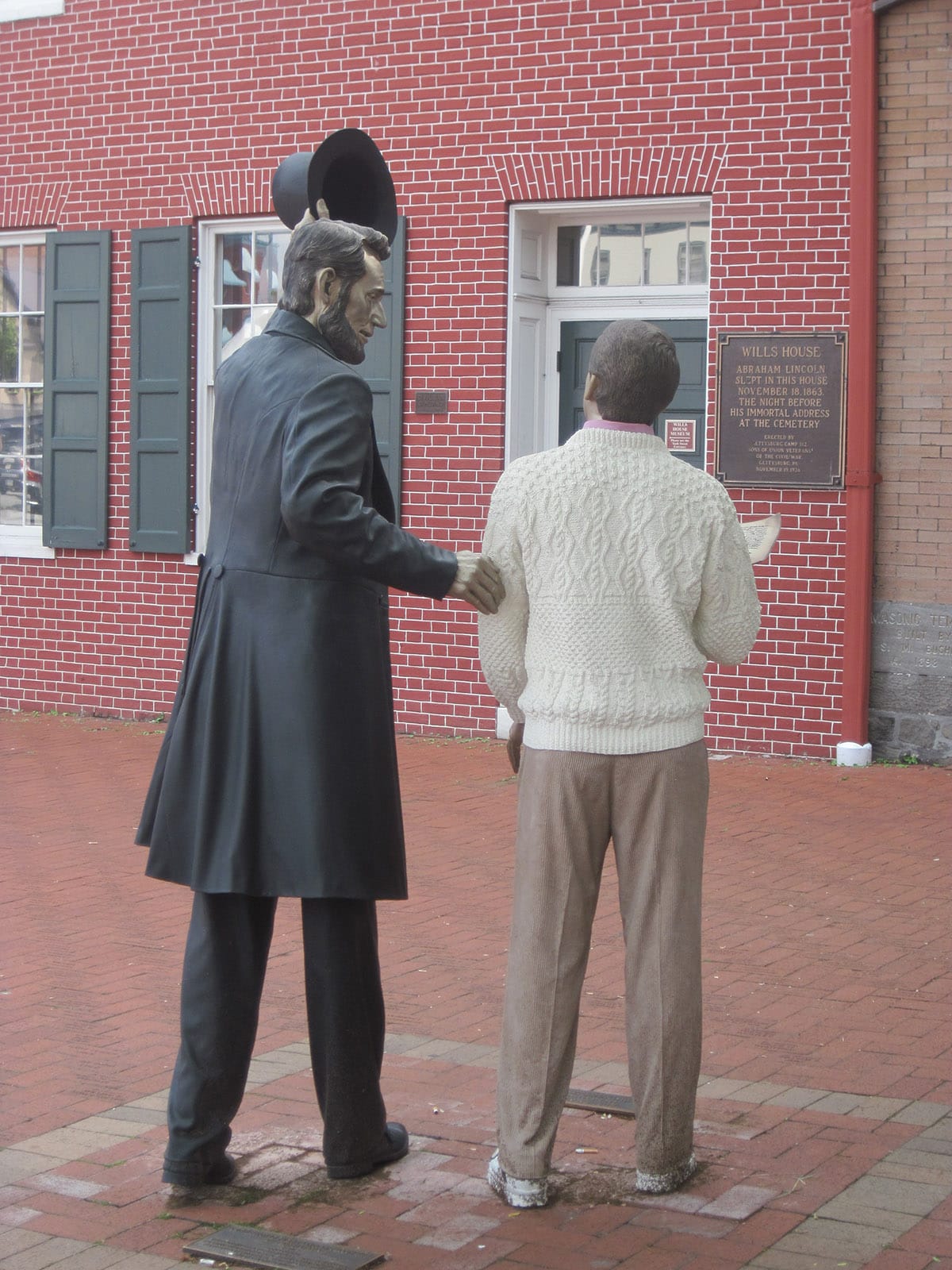
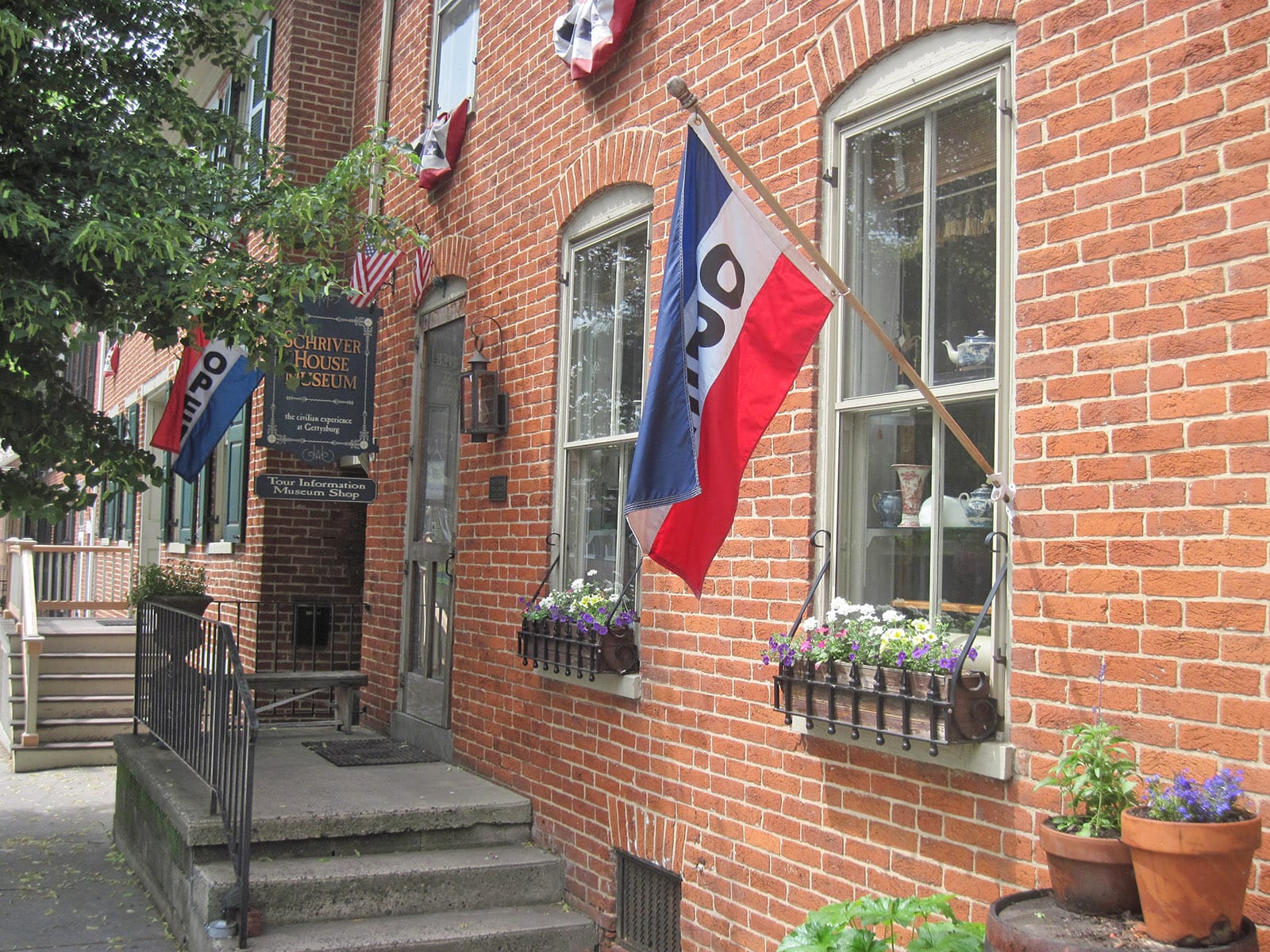
Downtown Gettysburg


Member discussion