
Jarred
Diving into the tent the night before as a violent thunderstorm met us head-on atop Cove Mountain, we ate little, instead huddling on a single air mattress as the storm raged around us. Stepping over downed limbs as we picked our way down a portion of the trail that the guidebook called out as "especially rocky," I felt a bit woozy.
Perhaps from lack of food, or the unceasing soreness of my feet, or a need for a privy run in conditions not quite appealing for it: a misty rain amid rocky terrain. It was 8 AM, and it felt like we'd been pushing all day, trying to get to the shelter we didn't make it to the night before.
A blue trail led off to the left. Expecting the shelter by now, I was confused. "That's odd," I said. "There's no sign."
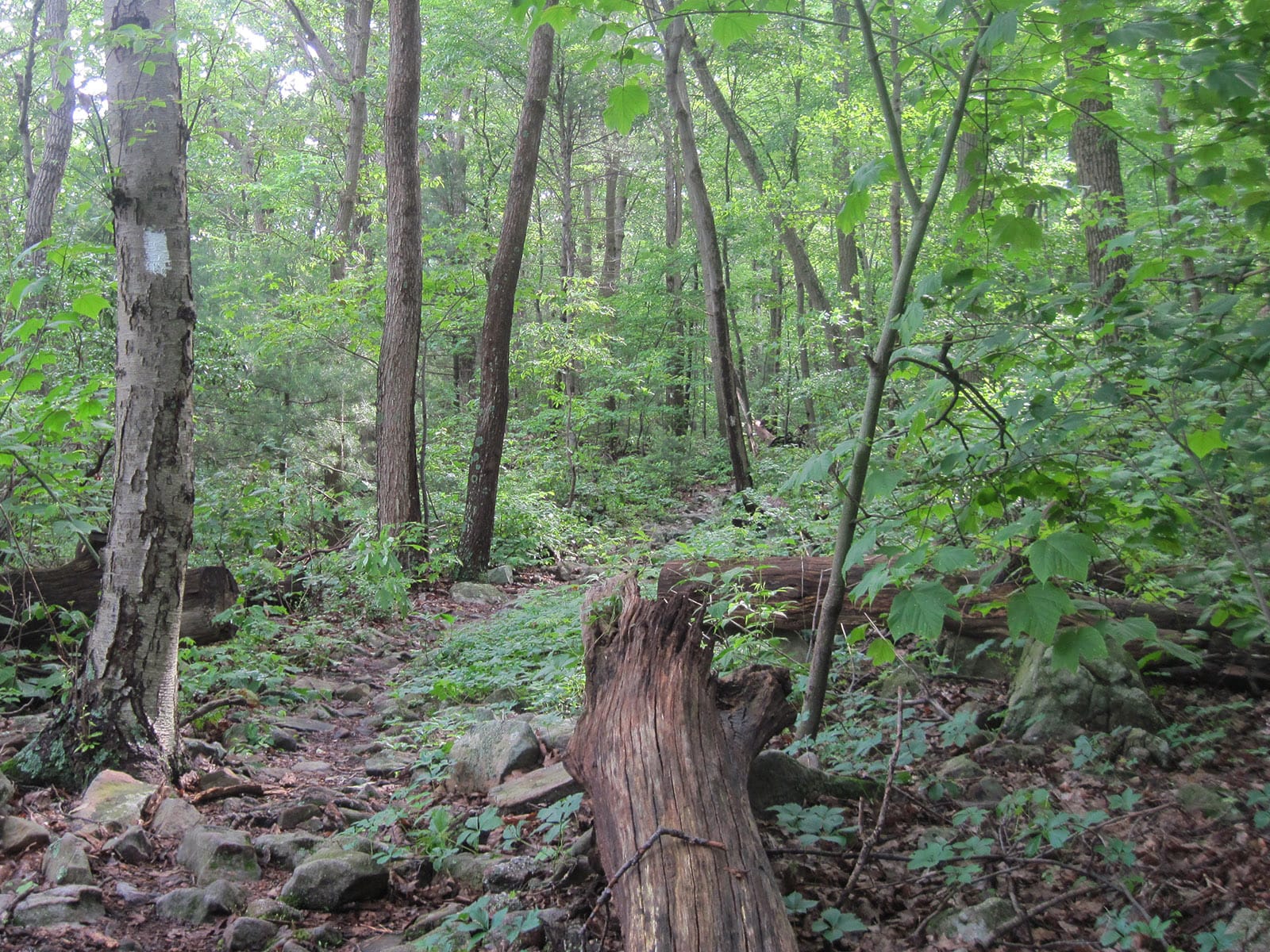
The trail made a sharp turn left and started heading steeply down the mountain. I threw down my pack and rummaged for the guidebook. "This doesn't feel right."
Sure enough, it was a side trail to a road on the wrong side of the mountain. We trudged back up to the top of the ridge.
Inching forward at a mile an hour, we'd barely covered any ground. Slippery rocks made it hard to keep even footing, and hardly a minute went by without one leg or the other stretched between two misshapen rocks. By the time we reached Cove Mountain Shelter three hours into the day - especially after the long downhill to get there - I was exhausted.
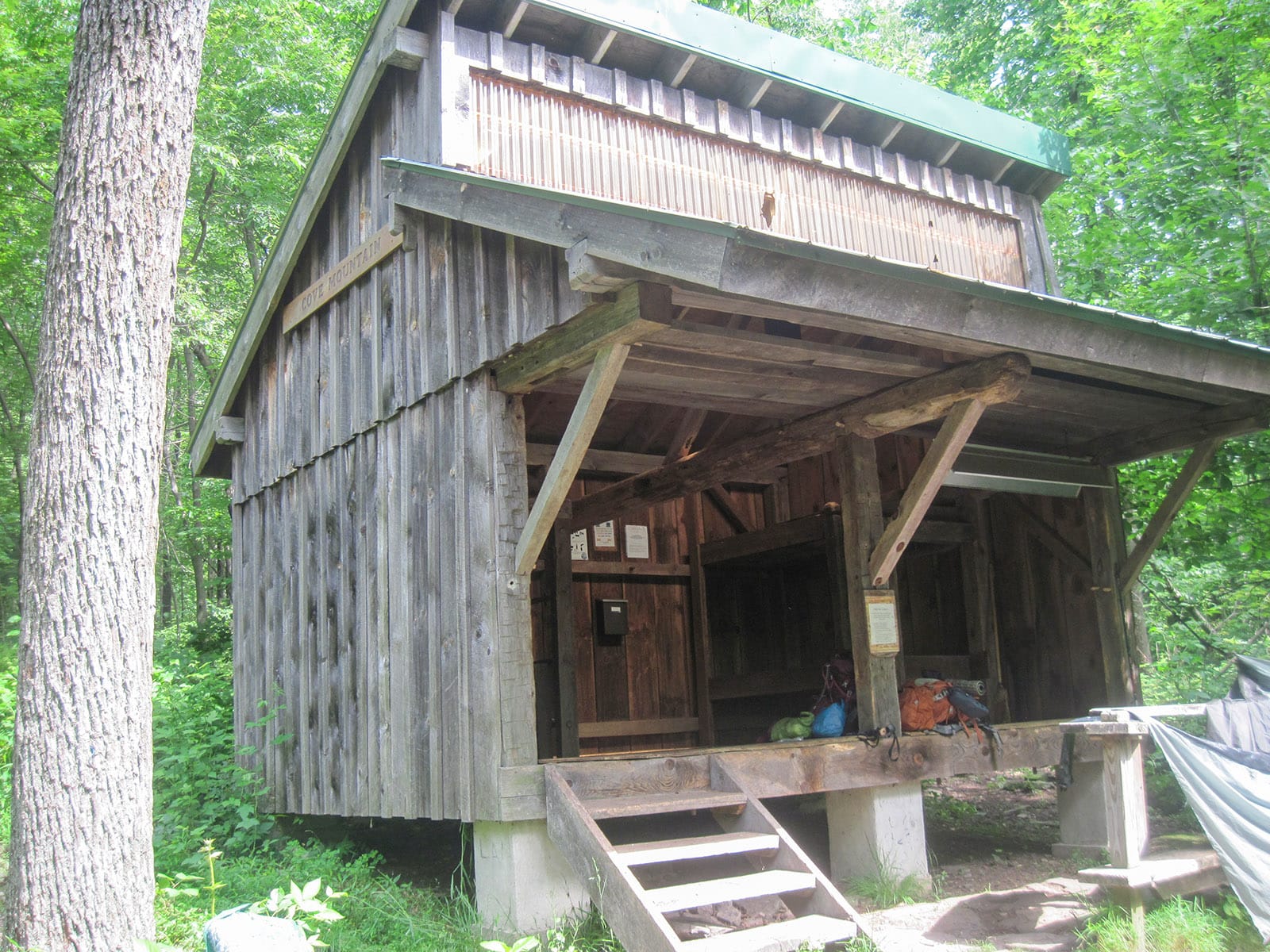
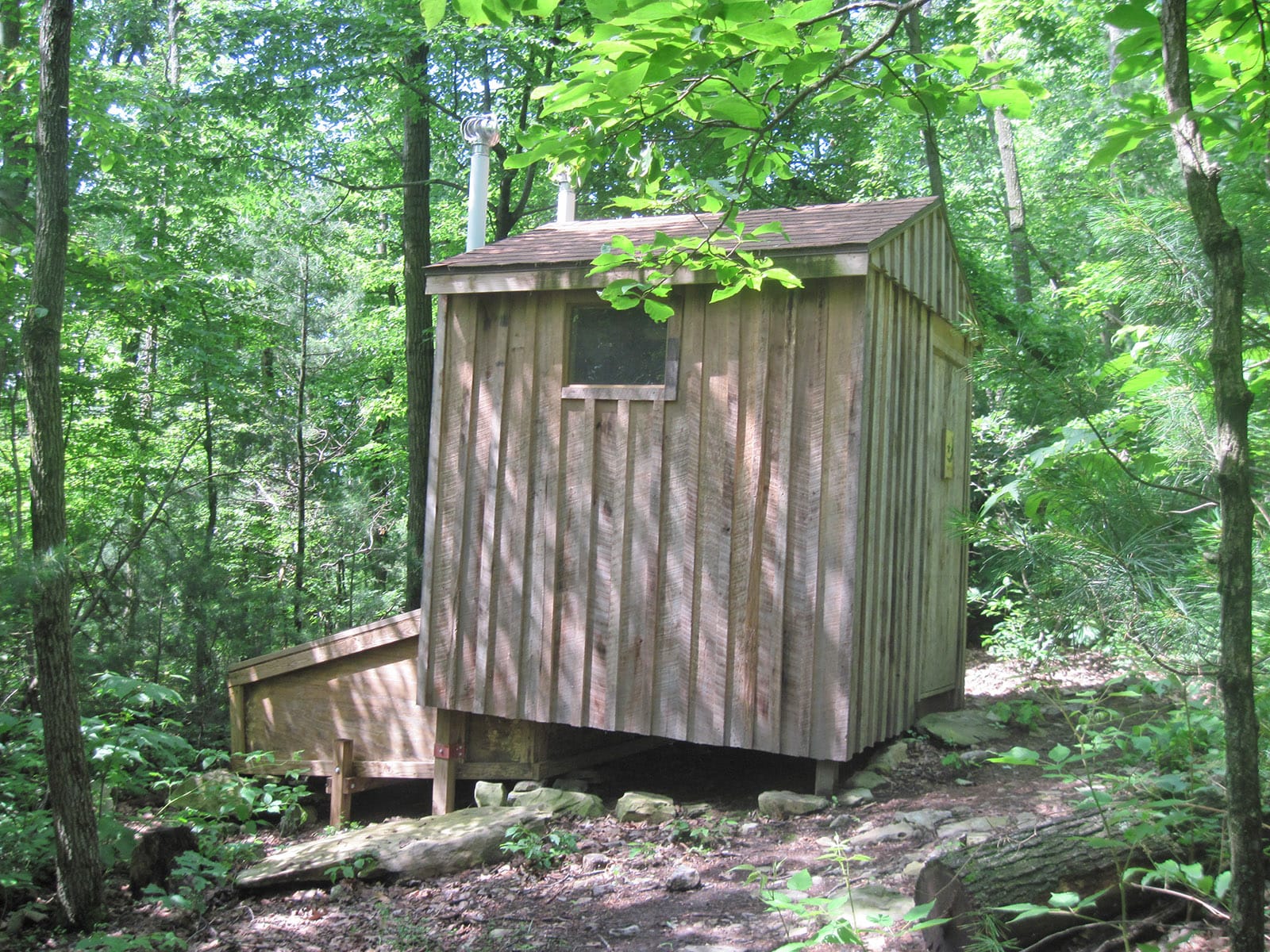
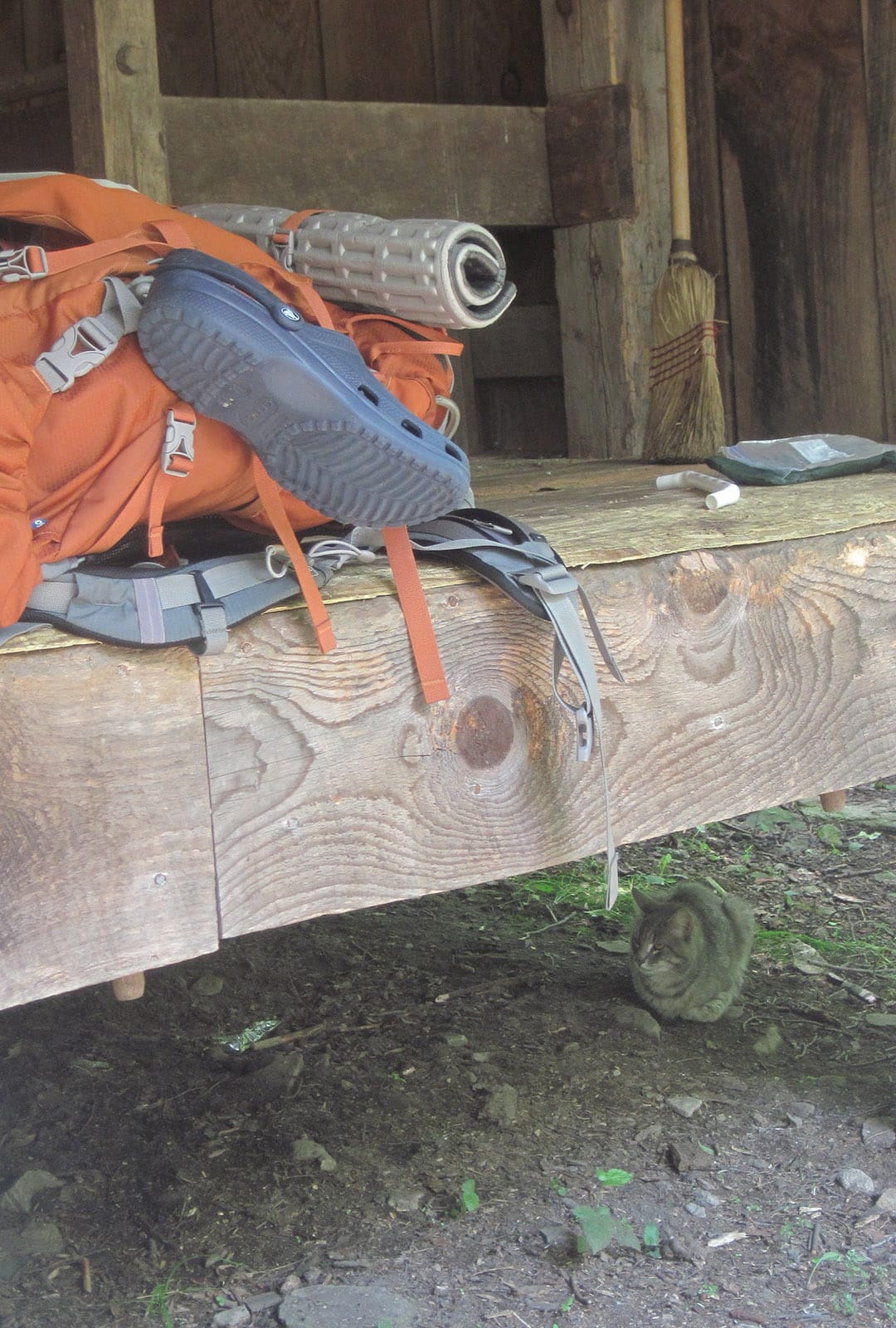
Cove Mountain Shelter had a fabulous privy. And a resident cat.
The sun finally came out, so John stretched the tent between benches to dry. "I can't make it past Duncannon," I said, lying on the shelter floor. We decided to call our friends for a ride and a time-out off the trail, even if only overnight. Breaking in new shoes under these conditions just hurt too much. At this pace, it would take another five hours to reach town.
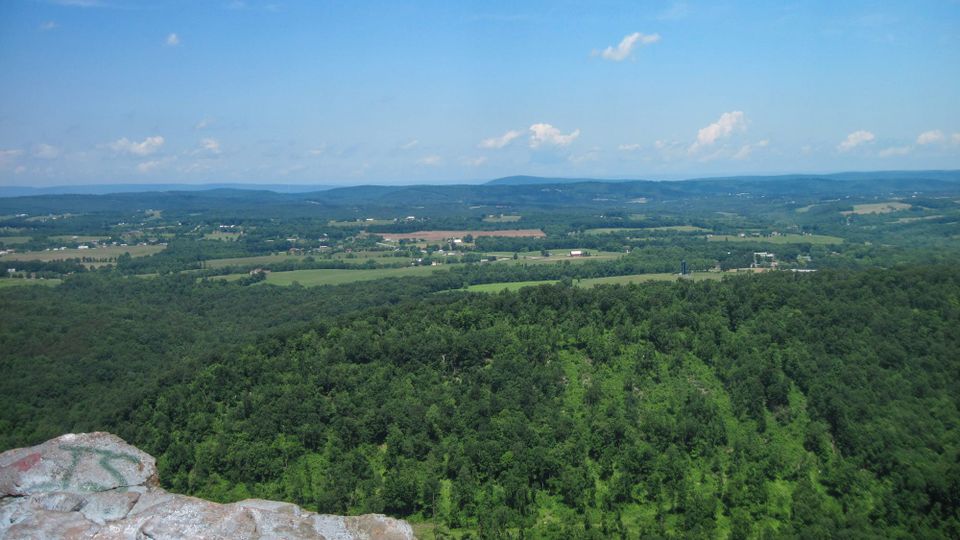
With blue skies opening up, Hawk Rock provided a panorama of the Susquehanna Valley. Like Maryland's High Rocks, it was covered in generations of graffiti.
Duncannon lay straight down there along the river, and the trail proceeded to lead us straight down. Or so it felt.
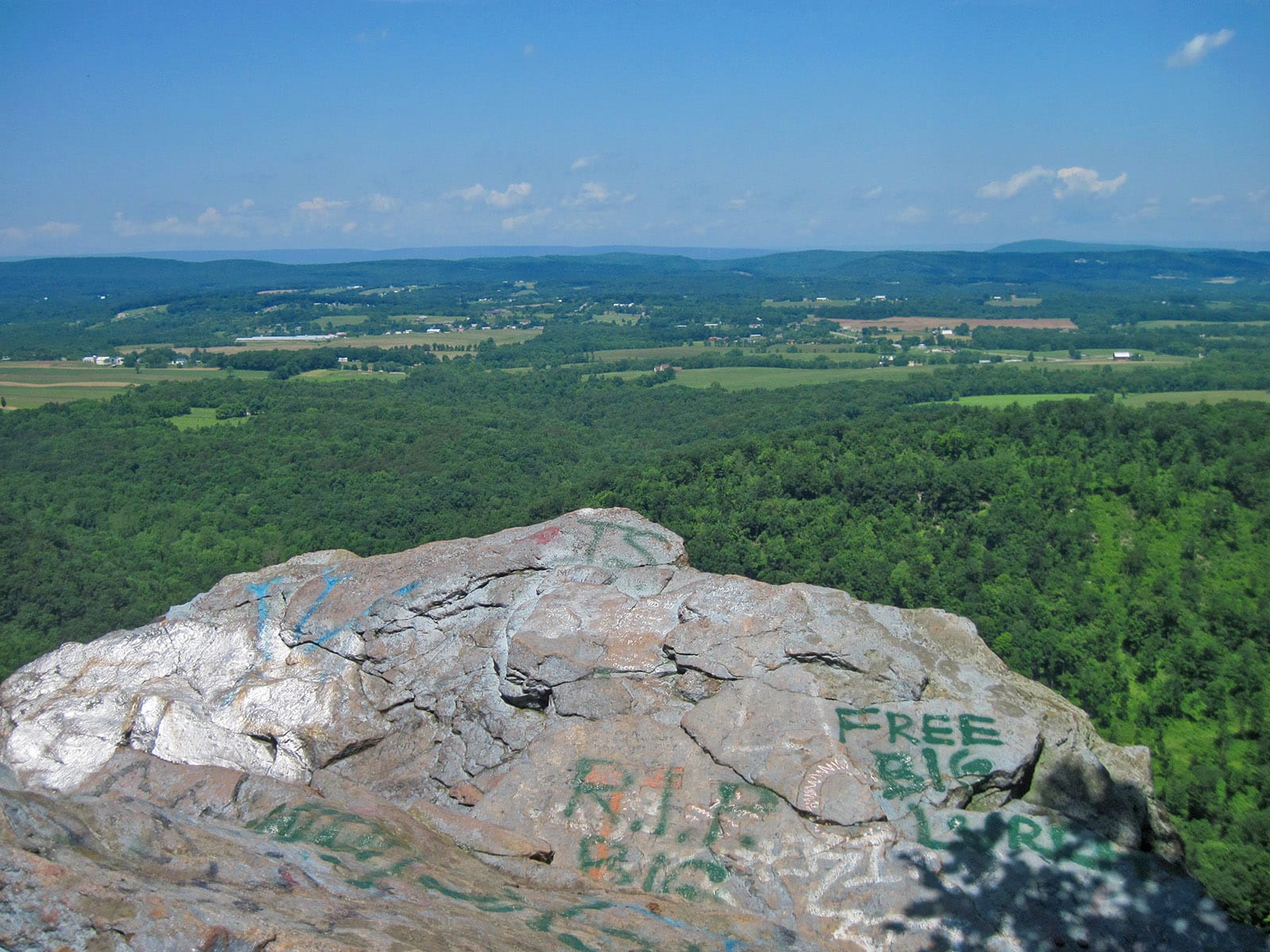
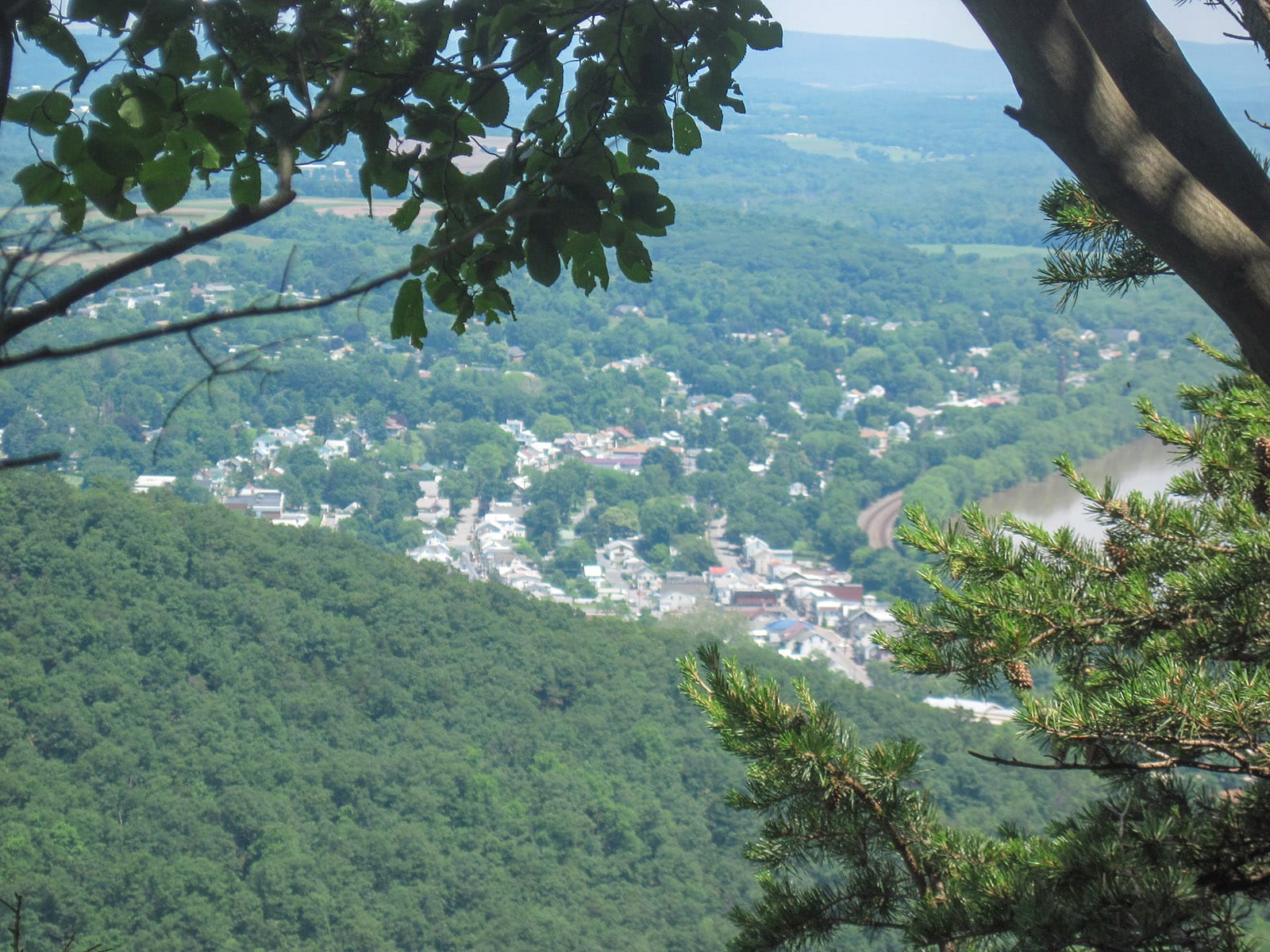
Hawk Rock and an hawk's-eye view of Duncannon below
Crossing our first real talus slope - a rockslide of football-sized rocks pouring sharply down the side of the mountain - John fell.
As I heard the sound and whirled around, putting myself in precarious balance, he caught himself in mid-air and landed on his backpack. "I feel like a turtle," he said, as I helped him back up.
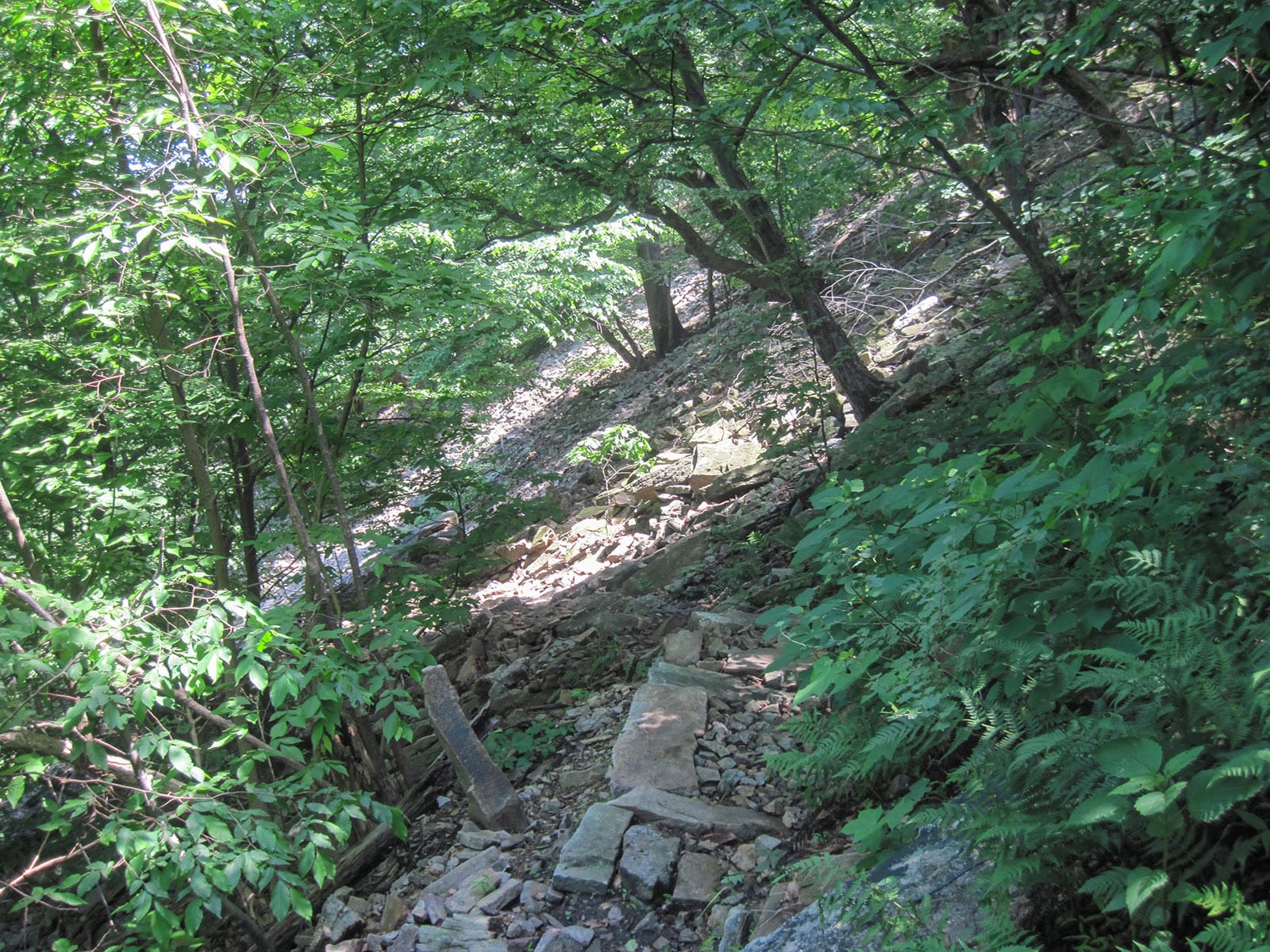
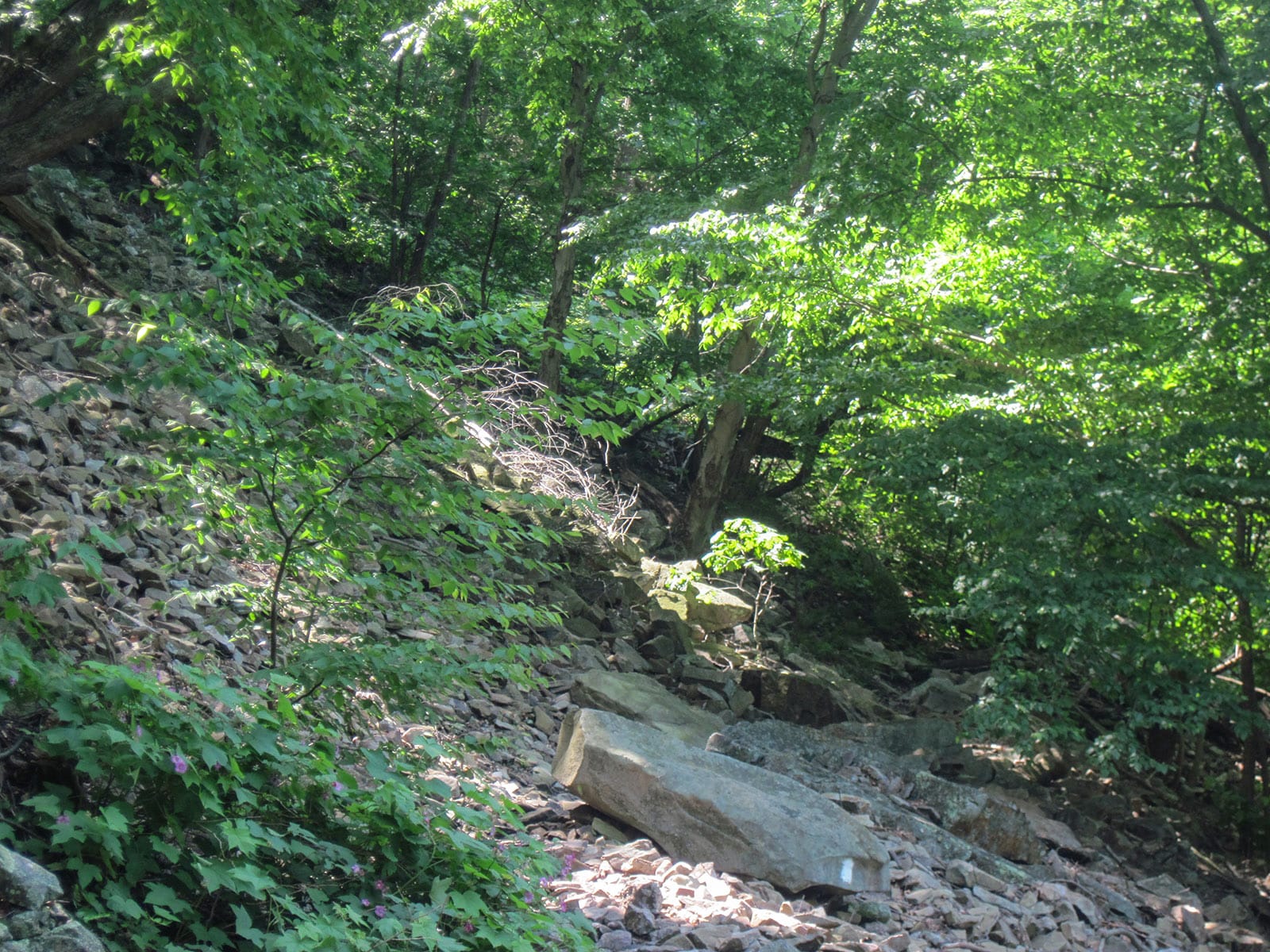
The very troublesome talus slope
We'd passed a day hiker wandering uphill earlier, and he passed us again going downhill a few minutes after this happened. "Watch for the blazes," he said. "You'd think the trail goes straight down, but it doesn't." I'd heard of pointless ups-and-downs (PUDs) on the AT before, but this one defined the term.
The trail briefly followed an old road, a comfort after the difficult hike today, which led right down into town. But no! We weren't allowed to go that way.
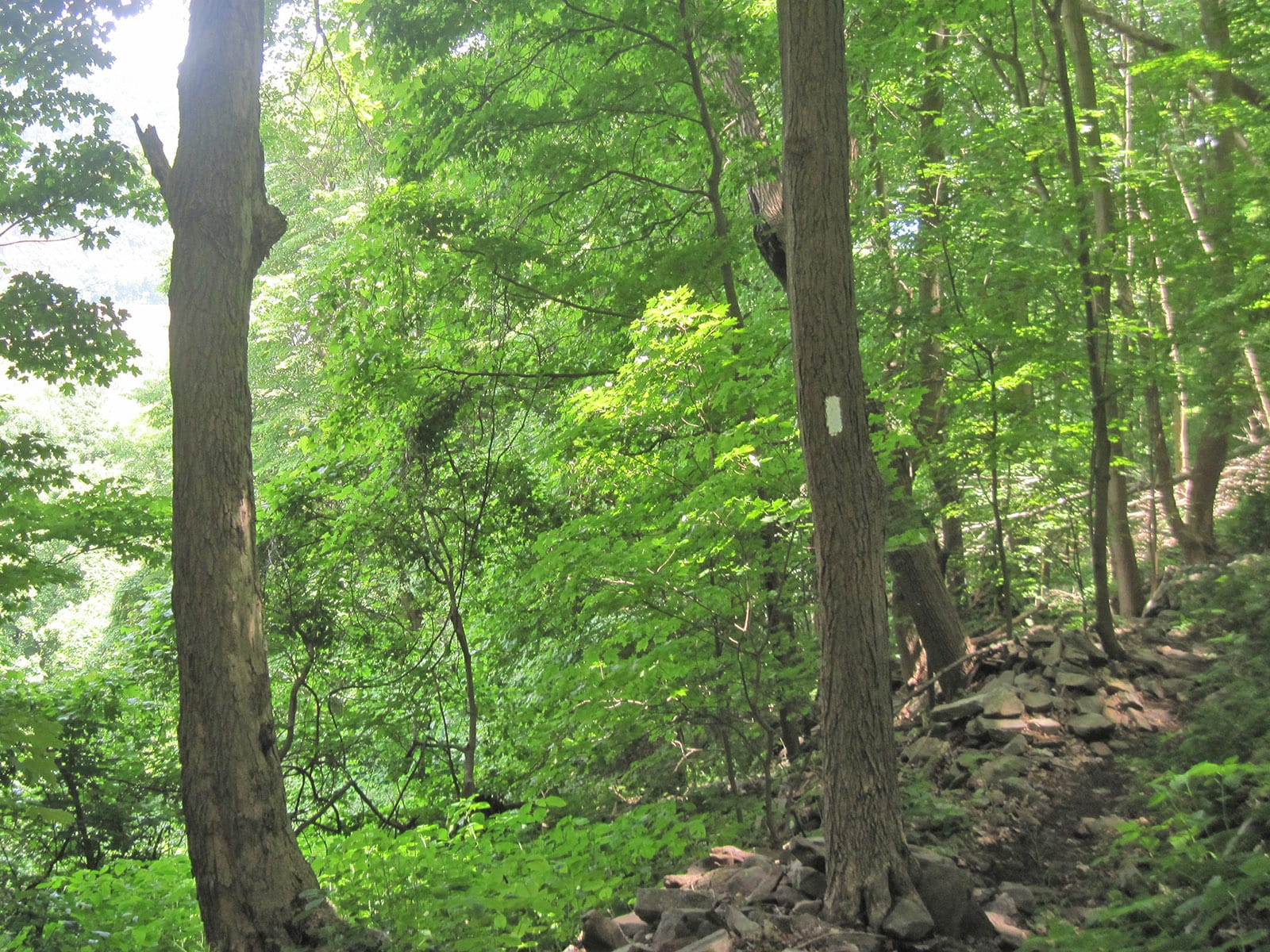
Instead, the white blazes turned right and scrambled up and over another mountain, over immense boulders and through shoulder-high poison ivy, only to drop us down sharply to the same exact road we would have reached before, extending the roadwalk by half a mile.
"This isn't the AT I expected," said John, as he'd said before. "There's no sense in what we just did." This time, I agreed.


Member discussion